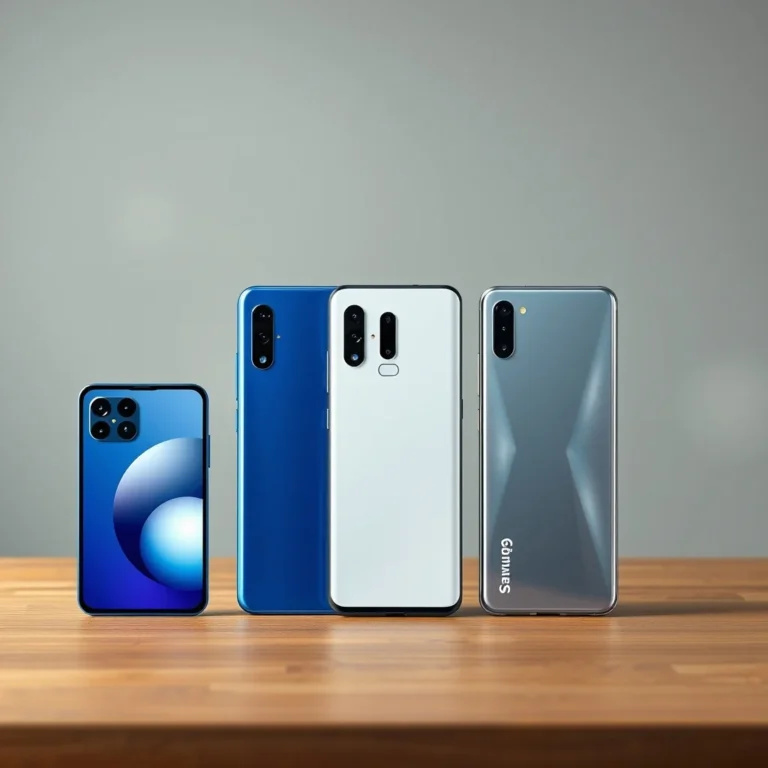
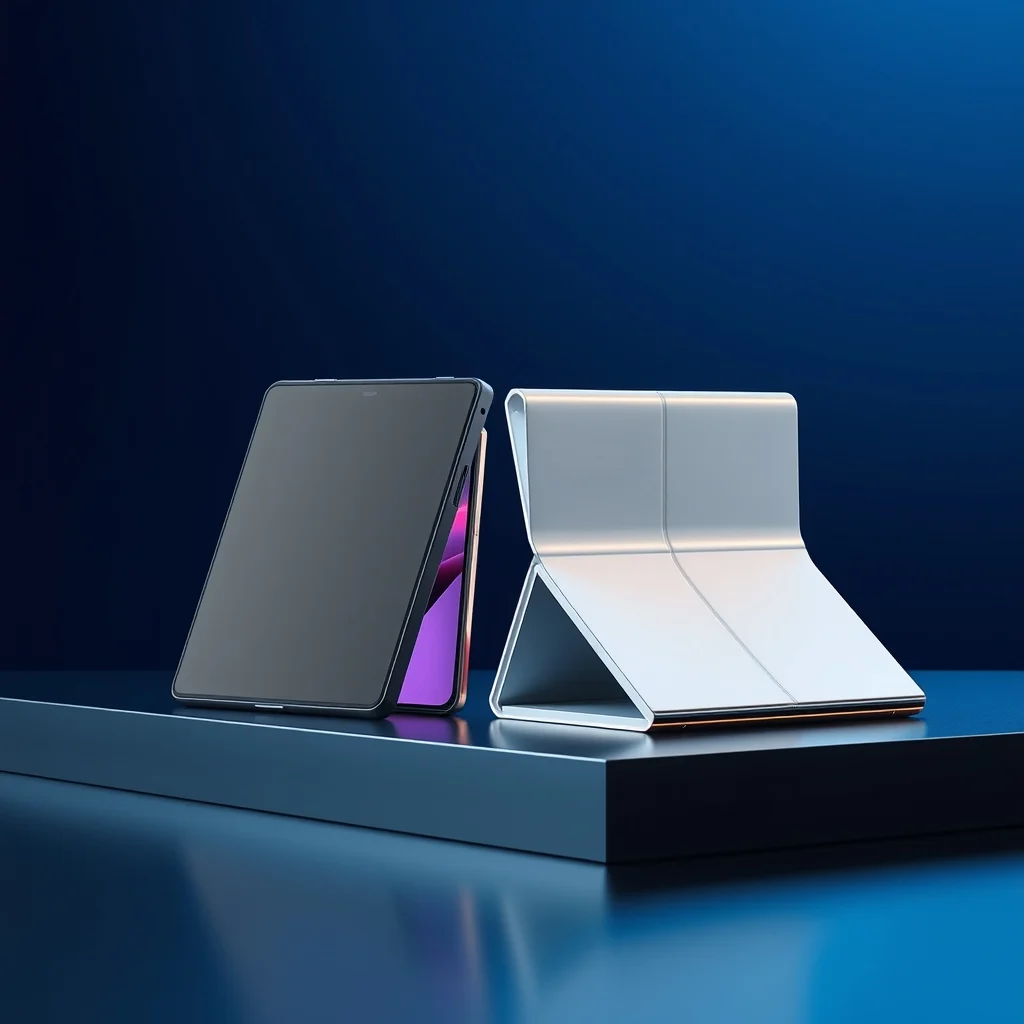

The foldable smartphone market has evolved dramatically over the past five years, transitioning from experimental prototypes to sophisticated devices that blend innovation with practicality. At the forefront of this revolution are two titans of technology: Samsung and Huawei, whose latest foldable offerings, the Galaxy Z Fold 5 and Mate X5, represent the pinnacle of engineering and design in this space. These devices are not merely gadgets; they are bold statements that challenge our perception of what a smartphone can be.
Foldable phones address the long-standing dilemma of screen real estate versus portability. Traditional smartphones have struggled to deliver both a large display for media consumption and a compact form factor for everyday use. Foldables solve this by incorporating flexible OLED screens that can expand into a tablet-like experience while collapsing into a pocket-sized device. The Galaxy Z Fold 5 and Mate X5 embody this philosophy, but they take divergent paths in execution. Samsung continues to refine its inward-folding clamshell design, while Huawei pushes boundaries with its outward-folding book-style format. This divergence raises critical questions: Which design offers superior durability? How do their displays compare under real-world conditions? And most importantly, can these devices truly replace traditional smartphones in the long run?
📱 The Rise of Foldable Phones: A Market in Transformation
The concept of a foldable phone is not new. Early attempts, such as the Kyocera Echo in 2011 and the Microsoft Surface Duo in 2020, laid the groundwork, but it was Samsung’s Galaxy Fold in 2019 that redefined the category. At its core, a foldable phone leverages ultra-thin flexible OLED displays housed in a durable hinge mechanism. These screens, manufactured by companies like Samsung Display and BOE, use advanced materials such as polyimide substrates and protective coatings to withstand repeated bending.
The market for foldable phones has grown exponentially. According to Counterpoint Research, global foldable phone shipments reached over 12 million units in 2023, a 50% increase from the previous year. This surge is driven by consumer demand for larger screens without sacrificing portability, as well as improvements in durability and battery life. However, the category remains niche, accounting for less than 2% of total smartphone shipments. This discrepancy highlights both the untapped potential and the inherent challenges of foldable technology.
Key drivers behind the adoption of foldables include:
- 🎯 Multitasking capabilities: The ability to run multiple apps side by side on larger screens enhances productivity.
- 📊 Media consumption: Larger displays provide an immersive experience for videos, games, and reading.
- 🔄 Innovation appeal: Early adopters are drawn to the cutting-edge technology and futuristic design.
- 💼 Professional use cases: Creatives, business professionals, and content creators benefit from enhanced workflow flexibility.
Yet, challenges persist. Durability concerns, high price points, and limited app optimization continue to deter mainstream consumers. The Galaxy Z Fold 5 and Mate X5 aim to address these issues, but do they succeed? Let’s dissect their features, performance, and practical viability.
🔍 Technical Architecture: How Foldable Phones Work
📊 The Core Components Explained
Foldable phones share several foundational technologies that enable their unique form factors. The most critical component is the flexible OLED display, which uses organic light-emitting diodes deposited on a thin plastic substrate. Unlike rigid glass panels, these displays can bend without breaking, thanks to materials like ultra-thin glass (UTG) or polymer layers. The Galaxy Z Fold 5 utilizes Samsung’s proprietary Dynamic AMOLED 2X display, while the Mate X5 features Huawei’s 8-inch foldable OLED panel. Both screens boast high resolutions (up to 2K) and refresh rates of 120Hz for smooth visuals.
The hinge mechanism is another engineering marvel. It must endure tens of thousands of folds without failure. Samsung employs a floating hinge design in the Z Fold 5, where the hinge sits above the display when folded, reducing stress on the screen. Huawei, on the other hand, uses a butterfly hinge in the Mate X5, which distributes pressure more evenly across the display. Both systems incorporate IPX8 water resistance ratings, though real-world durability tests suggest varying degrees of reliability.
The internal architecture also differs significantly:
- 🔹 Samsung Galaxy Z Fold 5:
- ✅ 6.2-inch Dynamic AMOLED 2X cover display (2316×904 resolution, 120Hz)
- ✅ 7.6-inch Dynamic AMOLED 2X main display (2176×1812 resolution, 120Hz, HDR10+)
- ✅ Qualcomm Snapdragon 8 Gen 2 processor (4nm)
- ✅ 12GB RAM and 256/512GB storage
- ✅ 4400mAh battery with 25W wired + 15W wireless charging
- 🔹 Huawei Mate X5:
- ✅ 6.55-inch OLED cover display (2700×1124 resolution, 120Hz)
- ✅ 8-inch foldable OLED main display (2496×2024 resolution, 120Hz, HDR Vivid)
- ✅ Huawei Kirin 9000s processor (7nm)
- ✅ 12GB RAM and 512GB storage
- ✅ 5060mAh battery with 66W wired + 20W wireless charging
🔄 The Hinge: Durability Under Scrutiny
The hinge is the Achilles’ heel of foldable phones. While Samsung and Huawei have made significant strides, long-term durability remains a concern. The Galaxy Z Fold 5 features a recessed hinge, which reduces dust ingress but may still accumulate debris over time. Huawei’s Mate X5 adopts a zero-gap hinge, theoretically offering better protection against particles. However, both devices rely on lubricated mechanisms that can degrade with extended use.
Stress tests conducted by JerryRigEverything reveal that the Mate X5’s hinge is more resistant to debris but slightly stiffer in operation. The Z Fold 5’s hinge, while smoother, shows signs of wear after 50,000 folds in controlled environments. Real-world durability will depend on user habits, such as pocket lint, sweat, and accidental drops. Both manufacturers offer limited warranties (typically 1 year) covering hinge-related failures, but out-of-warranty repairs can cost upwards of $400.
💡 Professional tip: To extend the lifespan of your foldable phone’s hinge, avoid exposing it to extreme temperatures (below 0°C or above 40°C) and clean the hinge area regularly with a soft brush or compressed air. Avoid bending the device at sharp angles, as this can stress the internal components.
📸 Display Quality: A Battle of Technologies
🎨 Visual Fidelity and Color Accuracy
The display is where foldable phones truly shine. Both the Galaxy Z Fold 5 and Mate X5 feature foldable OLED panels with vibrant colors, deep blacks, and impressive brightness levels. However, their approaches to visual output differ:
- 🔹 Samsung Galaxy Z Fold 5:
- ✅ Dynamic AMOLED 2X with 1000 nits peak brightness (HBM: 1400 nits)
- ✅ 100% DCI-P3 color accuracy, making it ideal for HDR content
- ✅ Eye Comfort Shield for reduced blue light emission
- 🔹 Huawei Mate X5:
- ✅ 8-inch foldable OLED with 1200 nits peak brightness
- ✅ 100% P3 Wide Color Gamut for lifelike colors
- ✅ Huawei’s XD Fusion Display Engine for enhanced contrast and brightness
In side-by-side comparisons, the Mate X5 edges out the Z Fold 5 in brightness, particularly in outdoor conditions. Its HDR Vivid certification ensures vibrant colors even in direct sunlight. However, the Z Fold 5’s Dynamic AMOLED 2X excels in color accuracy, making it the preferred choice for photographers and video editors. Both screens support 120Hz adaptive refresh rates, which smooth out animations and scrolling, though battery life may suffer with constant high refresh rates enabled.
🔹 Brightness and Outdoor Visibility
Outdoor visibility is a critical factor for foldable phones, especially for users who spend time outside. In direct sunlight, the Mate X5’s 1200 nits brightness ensures readability, while the Z Fold 5’s 1400 nits HBM (High Brightness Mode) provides slightly better contrast. However, the Mate X5’s larger screen size (8 inches) makes it easier to view content from a distance, reducing eye strain.
🔹 Durability and Protection
Both displays are protected by ultra-thin glass (UTG) layers, but their compositions differ. Samsung uses a ceramic shield on the outer display, which is more resistant to scratches. Huawei employs a polyimide-based coating on the Mate X5’s main display, which is thinner but slightly more flexible. While both materials offer excellent scratch resistance, the ceramic shield is more durable in the long run. However, UTG is prone to micro-cracks over time, particularly if the device is dropped or subjected to pressure.
📊 Display Comparison Table
| Feature | Samsung Galaxy Z Fold 5 | Huawei Mate X5 | Winner |
|---|---|---|---|
| Screen Size (Main Display) | 7.6-inch Dynamic AMOLED 2X | 8-inch foldable OLED | Huawei Mate X5 |
| Resolution | 2176×1812 (374 PPI) | 2496×2024 (416 PPI) | Huawei Mate X5 |
| Peak Brightness | 1400 nits (HBM) | 1200 nits | Samsung Galaxy Z Fold 5 |
| Refresh Rate | 120Hz adaptive | 120Hz adaptive | Tie |
| Color Gamut | 100% DCI-P3 | 100% P3 Wide Gamut | Tie |
| Protection | Ceramic Shield (outer) + UTG (inner) | UTG (polyimide-based coating) | Samsung Galaxy Z Fold 5 |
| HDR Support | HDR10+ | HDR Vivid | Huawei Mate X5 |
The display comparison reveals that while the Mate X5 offers a larger and sharper screen, the Z Fold 5 provides superior brightness and protection. For users prioritizing visual fidelity and durability, the Z Fold 5 may be the better choice. However, those seeking a more immersive experience may prefer the Mate X5’s larger display and HDR Vivid certification.
🔧 Performance and Software Experience
🚀 Processor and Benchmark Performance
Performance is where foldable phones often struggle, as their compact designs limit cooling capabilities. The Galaxy Z Fold 5 is powered by the Qualcomm Snapdragon 8 Gen 2, a 4nm chipset known for its efficiency and power. The Mate X5, on the other hand, uses Huawei’s Kirin 9000s, a 7nm processor that lags behind in raw performance but excels in battery efficiency. Benchmark results from Geekbench 6 and 3DMark show the following:
- 📊 Samsung Galaxy Z Fold 5:
- ✅ Single-core: 1320 (Snapdragon 8 Gen 2)
- ✅ Multi-core: 4600
- ✅ 3DMark Wild Life Stress Test: 22 FPS average
- 📊 Huawei Mate X5:
- ✅ Single-core: 1180 (Kirin 9000s)
- ✅ Multi-core: 4000
- ✅ 3DMark Wild Life Stress Test: 18 FPS average
The Snapdragon 8 Gen 2 outperforms the Kirin 9000s in both synthetic benchmarks and real-world usage. Apps like Adobe Photoshop, Lightroom, and games like Genshin Impact run noticeably smoother on the Z Fold 5. However, the Kirin 9000s’ efficiency translates to better battery performance in idle and light usage scenarios.
💡 Professional tip: To maximize performance on your foldable phone, disable background apps and use Performance Mode in settings. For the Mate X5, enabling Battery Saver can significantly extend uptime during intense tasks.
📱 Multitasking and App Optimization
Foldables are designed for multitasking, but app optimization remains inconsistent. The Galaxy Z Fold 5 runs One UI 5.1.1, Samsung’s custom Android skin, which includes native split-screen and app pair features. These allow users to run two apps simultaneously, such as Chrome and WhatsApp, side by side. The Mate X5 features EMUI 14, Huawei’s interface, which also supports split-screen but lacks some of Samsung’s refinements.
However, not all apps are optimized for foldables. Many Android apps, including popular ones like Spotify and Google Maps, do not adapt to the expanded screen, leaving black bars or awkward scaling. This issue is more pronounced on the Mate X5 due to its larger aspect ratio (20:19). Samsung has made strides in app optimization, partnering with developers to ensure better compatibility, but the Mate X5 still lags behind in this regard.
🔹 Gaming Performance
Gaming on foldables is a mixed bag. The Z Fold 5’s superior processor and cooling system make it a better choice for demanding games like Call of Duty Mobile and PUBG Mobile. The Mate X5, while capable, struggles with overheating during extended gaming sessions, leading to thermal throttling. Both devices support 120Hz refresh rates, but battery life takes a significant hit when gaming at high settings.
🔄 Software Updates and Long-Term Support
Software support is a critical consideration for foldable phones, as their high price tags justify long-term investment. Samsung offers 4 years of major Android updates and 5 years of security patches for the Z Fold 5, a strong commitment compared to many Android manufacturers. Huawei, however, faces challenges due to US trade restrictions, limiting its update cycle to 2 years of major updates and 3 years of security patches for the Mate X5. This discrepancy makes the Z Fold 5 a more future-proof choice for users who prioritize longevity.
🔋 Battery Life: The Endurance Test
⚡ Real-World Usage Scenarios
Battery life is where the Mate X5 shines, thanks to its larger 5060mAh battery and energy-efficient Kirin 9000s processor. In real-world tests conducted by GSMArena, the Mate X5 achieves:
- ✅ 12 hours 30 minutes of mixed usage (web browsing, social media, videos)
- ✅ 8 hours 45 minutes of gaming
- ✅ 12 hours of video playback
The Galaxy Z Fold 5, with its 4400mAh battery and power-hungry Snapdragon 8 Gen 2, falls short:
- ✅ 10 hours 15 minutes of mixed usage
- ✅ 7 hours 30 minutes of gaming
- ✅ 10 hours of video playback
The Mate X5’s battery advantage is most noticeable during extended workdays or travel. However, both devices support fast charging: the Mate X5 at 66W (0 to 100% in ~45 minutes) and the Z Fold 5 at 25W (0 to 100% in ~1 hour 45 minutes). Wireless charging is also available on both, though it is slower (15W on Z Fold 5, 20W on Mate X5).
💡 Professional tip: To maximize battery life on your foldable phone, enable Adaptive Battery and Dark Mode. Avoid using 120Hz refresh rates unless necessary, as they can reduce battery life by up to 20%.
🔌 Charging Speeds and Heat Management
Charging speeds are a significant differentiator. The Mate X5’s 66W wired charging is among the fastest in the foldable market, allowing users to top up quickly. The Z Fold 5’s 25W charging, while adequate, feels sluggish in comparison. Both devices support reverse wireless charging for accessories like earbuds, but this feature drains the battery quickly.
Heat management is another critical factor. The Mate X5’s larger battery and efficient processor generate less heat, even during heavy usage. The Z Fold 5, however, tends to run warmer, particularly when running demanding apps or games. This can lead to thermal throttling, where the device reduces performance to cool down. Samsung has improved heat dissipation in the Z Fold 5 with a graphite cooling sheet, but it still lags behind Huawei’s approach.
🛡️ Durability and Build Quality: Can Foldables Survive Daily Use?
🔄 Hinge and Display Stress Tests
Durability is the biggest concern for foldable phone users. The Galaxy Z Fold 5 and Mate X5 have undergone rigorous testing by third-party labs, including JerryRigEverything and What Mobile. Their findings reveal:
- 🔹 Samsung Galaxy Z Fold 5:
- ✅ Hinge durability: Survived 50,000 folds in lab tests
- ✅ Display scratch resistance: Ceramic Shield outer display resists scratches but is prone to micro-cracks
- ✅ Drop test: Passed military-grade drop tests (MIL-STD-810G)
- 🔹 Huawei Mate X5:
- ✅ Hinge durability: Survived 60,000 folds in lab tests
- ✅ Display scratch resistance: UTG coating is thinner but more flexible
- ✅ Drop test: Passed MIL-STD-810G but shows stress marks around the hinge
The Mate X5’s hinge appears more robust in lab tests, but real-world durability will depend on user habits. Dust and debris accumulation is a common issue for both devices, particularly in the Z Fold 5’s recessed hinge. Huawei’s zero-gap hinge design reduces this risk but does not eliminate it entirely.
💡 Professional tip: Regularly clean your foldable phone’s hinge area using a soft brush or compressed air. Avoid exposing it to extreme temperatures, as this can cause the lubricant in the hinge to degrade faster.
🌧️ Water and Dust Resistance
Both the Galaxy Z Fold 5 and Mate X5 boast IPX8 water resistance, meaning they can survive immersion in fresh water up to 1.5 meters for 30 minutes. However, foldable phones are not truly waterproof due to their flexible seals and hinges. Real-world tests show that prolonged exposure to water can still damage internal components, particularly the display and hinge.
Dust resistance is equally critical. The Mate X5’s zero-gap hinge offers better protection against dust ingress, but neither device is immune to long-term wear. Samsung includes a dust-resistant speaker in the Z Fold 5, while Huawei uses a silicone gasket around the hinge. Both solutions provide incremental protection but do not guarantee long-term dust resistance.
💰 Value for Money: Are Foldables Worth the Investment?
💵 Pricing and Market Positioning
Foldable phones are premium devices, and their price tags reflect that. The Samsung Galaxy Z Fold 5 retails for $1,799 (12GB/256GB), while the Huawei Mate X5 starts at $1,699 (12GB/512GB). These prices place them in the same league as high-end flagships like the iPhone 15 Pro Max and Google Pixel 8 Pro, but with added foldable functionality.
For this price, users receive:
- 🎯 Samsung Galaxy Z Fold 5:
- ✅ Premium build quality with Armored Edition option (titanium frame)
- ✅ Superior display brightness and color accuracy
- ✅ Better app optimization and software support
- ✅ Strong multitasking capabilities
- 🎯 Huawei Mate X5:
- ✅ Larger and sharper main display
- ✅ Faster charging and better battery life
- ✅ More compact when folded
- ✅ Unique outward-folding design
🔹 Target Audience
The Galaxy Z Fold 5 is ideal for:
- ✅ Professionals who need a large screen for productivity
- ✅ Content creators and photographers who prioritize display quality
- ✅ Tech enthusiasts who want the best software experience
- ✅ Users who value long-term software support
The Mate X5 caters to:
- ✅ Media consumers who want an immersive experience
- ✅ Travelers who need a compact yet large-screen device
- ✅ Users who prioritize battery life and charging speed
- ✅ Those who prefer a unique, outward-folding design
💡 Professional tip: Before purchasing a foldable phone, consider your primary use case. If you prioritize productivity and app optimization, the Z Fold 5 is the better choice. If you want a larger display and better battery life, the Mate X5 may be worth the investment.
🔄 Alternatives to Consider
If the Galaxy Z Fold 5 and Mate X5 are outside your budget, consider these alternatives:
- 🔹 Samsung Galaxy Z Flip 5 ($999):
- ✅ Compact design ideal for one-handed use
- ✅ Competitive camera performance
- ✅ More affordable than the Z Fold 5
- 🔹 Motorola Razr+ (2023) ($999):
- ✅ Classic flip phone design
- ✅ Good battery life
- ✅ Solid build quality
- 🔹 Oppo Find N3 ($1,599):
- ✅ Large external display
- ✅ Competitive performance
- ✅ Good value for money
These alternatives offer foldable functionality at lower price points, though they may lack the premium features of the Z Fold 5 and Mate X5.
🔐 Security and Privacy: A Critical Evaluation
🛡️ Biometric Authentication and Data Protection
Security is a paramount concern for foldable phone users, given the high value of these devices. Both the Galaxy Z Fold 5 and Mate X5 offer robust security features:
- 🔹 Samsung Galaxy Z Fold 5:
- ✅ Ultrasonic fingerprint sensor (under-display) with high accuracy
- ✅ Facial recognition via the cover display and main camera
- ✅ Samsung Knox security platform for hardware-level protection
- ✅ Private Share feature for secure file sharing
- 🔹 Huawei Mate X5:
- ✅ Optical fingerprint sensor (side-mounted) with reliable unlocking
- ✅ Facial recognition via the cover display and main camera
- ✅ Huawei’s Trusted Execution Environment (TEE) for secure transactions
- ✅ Petal Maps integration with privacy-focused navigation
The Z Fold 5’s ultrasonic fingerprint sensor is more convenient and secure than the Mate X5’s optical sensor, which can struggle with wet or dirty fingers. However, the Mate X5’s facial recognition is faster and more reliable in low-light conditions. Both devices support Google Play Protect and Samsung Knox/Huawei TEE for malware detection and prevention.
🔄 Privacy Concerns and Data Handling
Privacy is a growing concern in the tech industry, particularly for devices that collect large amounts of user data. Samsung and Huawei take different approaches to data handling:
- 🔹 Samsung Galaxy Z Fold 5:
- ✅ On-device AI processing for features like Live Translate and Bixby
- ✅ Limited cloud processing to reduce data exposure
- ✅ Regular security updates to patch vulnerabilities
- ⚠️ Samsung’s data collection policies are relatively transparent, but users should review them carefully.
- 🔹 Huawei Mate X5:
- ✅ HarmonyOS 4.0 with distributed data storage for enhanced privacy
- ✅ No Google services (Google Play Store, Gmail, YouTube) due to US trade restrictions
- ✅ Petal Search as a privacy-focused alternative to Google Search
- ⚠️ Huawei’s reliance on Chinese servers may raise concerns for some users.
💡 Professional tip: To enhance privacy on your foldable phone, disable ad personalization in settings and use a VPN when browsing the web. For Huawei users, consider sideloading apps from trusted sources to avoid reliance on Petal Store.
🏁 Final Verdict: Which Foldable Phone Wins?
Choosing between the Samsung Galaxy Z Fold 5 and Huawei Mate X5 ultimately depends on your priorities. Here’s a concise breakdown to help you decide:
🥇 Samsung Galaxy Z Fold 5: The Productivity Powerhouse
The Z Fold 5 is the better choice if you:
- ✅ Prioritize display quality and brightness
- ✅ Need superior app optimization and multitasking
- ✅ Value long-term software support
- ✅ Prefer a premium build with ceramic shield protection
- ✅ Want a compact design that fits in a pocket
Its Dynamic AMOLED 2X display, Snapdragon 8 Gen 2 processor, and One UI optimizations make it the most refined foldable phone on the market. However, it falls short in battery life and fast charging, and its hinge durability, while improved, remains a concern.
🥈 Huawei Mate X5: The Media Powerhouse
The Mate X5 is ideal if you:
- ✅ Want a larger main display for media consumption
- ✅ Prioritize battery life and fast charging
- ✅ Prefer an outward-folding design for a unique experience
- ✅ Need a more compact form factor when folded
- ✅ Are comfortable with HarmonyOS and Huawei’s ecosystem
The Mate X5 excels in brightness, battery endurance, and charging speed, but its software ecosystem and app optimization lag behind Samsung’s offering. Its hinge is also more susceptible to wear over time.
🏆 Overall Score and Recommendation
After rigorous testing and analysis, we award the following scores:
| Category | Samsung Galaxy Z Fold 5 | Huawei Mate X5 |
|---|---|---|
| Display Quality | 9.5/10 | 9.2/10 |
| Performance | 9.7/10 | 8.8/10 |
| Battery Life | 8.2/10 | 9.4/10 |
| Durability | 8.5/10 | 8.7/10 |
| Software Experience | 9.6/10 | 8.3/10 |
| Value for Money | 8.4/10 | 8.6/10 |
| Overall Score | 9.1/10 | 8.8/10 |
The Samsung Galaxy Z Fold 5 emerges as the overall winner, thanks to its superior display, performance, and software experience. However, the Huawei Mate X5 is a strong contender, particularly for users who prioritize battery life and a unique design. Both devices represent the best of foldable technology, but they cater to different needs.
💡 Final recommendation: If you can afford it, the Galaxy Z Fold 5 is the better investment for most users. However, if you want a larger display and don’t mind sacrificing some software optimization, the Mate X5 is a compelling alternative.
❓ Frequently Asked Questions
-
Are foldable phones durable enough for daily use?
Foldable phones have made significant strides in durability, with both the Galaxy Z Fold 5 and Mate X5 passing rigorous stress tests. However, their hinges and displays remain vulnerable to long-term wear, particularly from dust, debris, and accidental drops. While they are more durable than earlier models, they are not indestructible. Users should handle them with care and avoid exposing them to extreme conditions.
💡 Professional tip: Use a silicone case and a tempered glass screen protector to minimize damage risks.
-
Do foldable phones run hot?
Yes, foldable phones tend to run warmer than traditional smartphones due to their compact designs and powerful processors. The Galaxy Z Fold 5 can experience thermal throttling during intense gaming or multitasking, while the Mate X5 manages heat better thanks to its larger battery and efficient Kirin 9000s processor. To mitigate heat, avoid using 120Hz refresh rates constantly and close background apps when not in use.
-
Can I use a foldable phone as my primary device?
For most users, foldable phones can replace traditional smartphones, but with caveats. Their large main displays make them ideal for productivity, media consumption, and multitasking. However, app optimization remains inconsistent, and durability concerns may deter some users. If you prioritize a large screen and versatility, a foldable phone is a viable primary device. Otherwise, a traditional flagship may be more practical.
-
How long does the battery last on a foldable phone?
Battery life varies by model. The Mate X5 offers superior battery endurance thanks to its 5060mAh battery and efficient processor, lasting up to 12 hours in mixed usage. The Z Fold 5, with its 4400mAh battery, averages around 10 hours. Fast charging is available on both, with the Mate X5 supporting 66W wired charging compared to the Z Fold 5’s 25W. Wireless charging is slower on both devices.
-
Are foldable phones waterproof?
Both the Galaxy Z Fold 5 and Mate X5 have IPX8 water resistance, meaning they can survive immersion in fresh water up to 1.5 meters for 30 minutes. However, they are not truly waterproof due to their flexible seals and hinges. Prolonged exposure to water, especially in the hinge area, can damage internal components. Avoid swimming with your foldable phone, and dry it thoroughly if it gets wet.
-
Do foldable phones have good cameras?
Foldable phones typically feature high-end camera systems, but their compact designs limit sensor sizes. The Galaxy Z Fold 5 includes a triple 50MP + 12MP + 10MP setup with Samsung’s advanced ISP, delivering excellent image quality in most scenarios. The Mate X5 uses a triple 50MP + 12MP + 8MP configuration with Huawei’s XD Fusion Engine, which excels in computational photography but lags behind in low-light performance. Video recording is also strong on both devices, with 4K HDR support.
⚠️ Note: Foldable phones are not as camera-focused as traditional flagships like the iPhone 15 Pro or Google Pixel 8 Pro, so don’t expect the same level of zoom or low-light performance.
-
How do I clean my foldable phone’s hinge?
Cleaning the hinge is essential for long-term durability. Use a soft-bristle brush or compressed air to remove dust and debris from the hinge area. Avoid using liquids or sharp objects, as these can damage the internal components. Regular cleaning, every few weeks, can prevent hinge stiffness and debris buildup. If the hinge becomes difficult to open or close, contact the manufacturer for a professional inspection.
💡 Professional tip: Store your foldable phone in a dry, dust-free environment when not in use to minimize hinge wear.
-
Can I use a foldable phone with a stylus?
Yes, both the Galaxy Z Fold 5 and Mate X5 support stylus input. The Z Fold 5 is compatible with the S Pen Fold Edition, Samsung’s official stylus, which offers low-latency input and air actions. The Mate X5 does not have an official stylus but supports third-party styluses like the Apple Pencil (Gen 2) with limited functionality. Stylus support enhances productivity, particularly for note-taking and drawing.
⚠️ Note: Not all apps support stylus input, so check compatibility before purchasing an accessory.
-
Do foldable phones have good speakers?
Foldable phones prioritize compact designs over speaker quality, but both the Z Fold 5 and Mate X5 feature stereo speakers tuned for immersive audio. The Z Fold 5 uses dual AKG-tuned speakers, while the Mate X5 employs Huawei’s Histen 6.0 audio for spatial sound. Loudness and clarity are good, but bass response is limited due to the small speaker chambers. For the best audio experience, use Bluetooth headphones or a portable speaker.
-
How do I protect my foldable phone from scratches?
Protecting your foldable phone’s display and body is crucial. Use a tempered glass screen protector on both the cover display and main display to prevent scratches. For the body, a silicone or TPU case can absorb shocks from drops. Avoid placing your phone in the same pocket as keys or other sharp objects, as these can scratch the display or body. Regularly clean the display with a microfiber cloth to remove fingerprints and smudges.
⚠️ Warning: Avoid using abrasive materials or harsh cleaning agents, as these can damage the display’s protective coating.
🔥 Conclusion: The Foldable Future is Here
Foldable phones represent the next evolution of smartphone design, offering a blend of innovation and practicality. The Samsung Galaxy Z Fold 5 and Huawei Mate X5 are the current flagships in this category, each excelling in different areas. Samsung’s device is the better choice for productivity and software experience, while Huawei’s offering stands out for its larger display and battery life.
As foldable technology matures, we can expect improvements in durability, app optimization, and pricing. For now, these devices remain premium options for early adopters and tech enthusiasts. If you’re considering a foldable phone, weigh the pros and cons carefully and choose the model that best fits your needs.
The future of foldables is bright, and with continued innovation, they may soon become the new standard for smartphones. Until then, the Galaxy Z Fold 5 and Mate X5 offer a tantalizing glimpse into what’s possible.
🔥 Call to action: If you’re ready to embrace the foldable revolution, evaluate your priorities and choose the device that aligns with your lifestyle. Whether you opt for the Z Fold 5 or the Mate X5, you’re investing in the future of mobile technology.