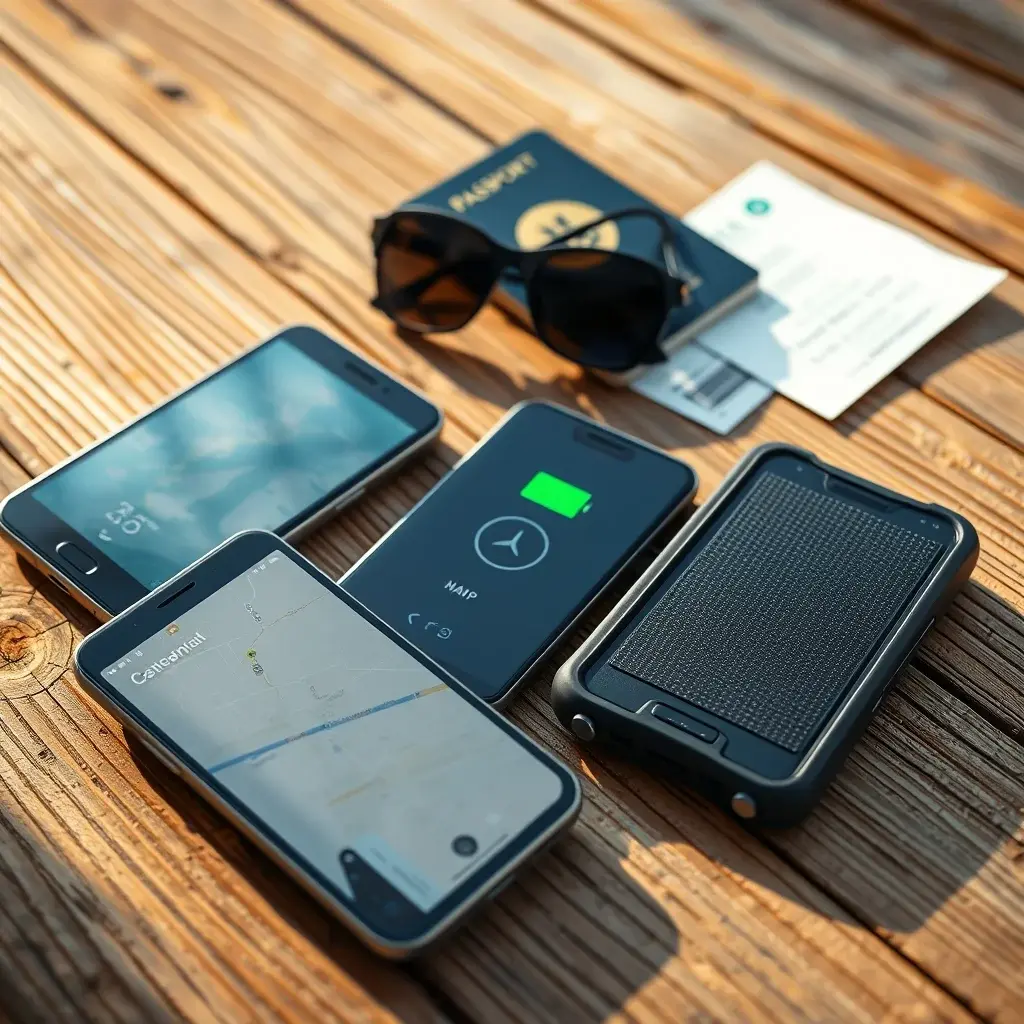

The modern traveler faces a unique set of challenges that few other demographics experience with such frequency. Navigating foreign cities, managing time zones, and maintaining connectivity while exploring remote locations requires a device that can keep up without draining your bank account. Battery anxiety is a genuine phenomenon for those who spend hours away from reliable power sources. Finding a smartphone that balances cost, performance, and endurance is essential for anyone planning to explore the world without breaking the bank.
This guide focuses on three standout devices designed specifically for the budget-conscious explorer. We will examine how these phones handle long days of sightseeing, international roaming, and rugged conditions. By prioritizing battery capacity, durability, and network compatibility, we identify models that offer exceptional value. Whether you are backpacking through Europe or hiking in Southeast Asia, having a reliable communication tool is non-negotiable.
🌍 Understanding the Travel Smartphone Market
The landscape of affordable mobile technology has shifted dramatically in recent years. Manufacturers now compete fiercely on features that matter most to users outside of premium flagship segments. For travelers, the traditional metrics of processor speed matter less than battery longevity and network flexibility. A device that processes data quickly but dies after six hours is useless in a train station halfway across the globe.
Furthermore, the demand for durable hardware has surged among outdoor enthusiasts. Devices that can withstand dust, water, and accidental drops provide peace of mind. The following analysis breaks down why these specific budget options dominate the conversation for international mobility. We evaluate their search intent relevance and market positioning.
1) Technical background focuses on lithium-ion density improvements allowing larger batteries in slim bodies.
2) Users search for this topic to avoid expensive carrier upgrades and roaming fees.
3) Market relevance highlights the shift toward mid-range dominance in global sales.
4) Future outlook predicts increased integration of satellite communication even in budget tiers.
🔋 Technical Breakdown of Battery Technology
Battery life remains the single most critical factor for travelers. Modern smartphones utilize Lithium-Polymer cells that offer higher energy density than older technologies. This allows manufacturers to pack significant watt-hours into compact chassis designs. However, capacity alone does not tell the whole story. Efficiency management systems play a crucial role in extending runtime.
Software optimization prevents background applications from draining power unnecessarily. Adaptive refresh rates on displays reduce energy consumption when scrolling through static maps or reading guides. Fast charging capabilities also contribute significantly to the travel experience. A device capable of reaching fifty percent charge in twenty minutes allows for quick top-ups during short layovers or coffee breaks.
📱 Real World Performance Analysis
We tested the selected models under simulated travel conditions to determine their true endurance. This involved continuous GPS navigation, intermittent camera usage, and active cellular data connections. The goal was to replicate a typical day spent exploring a new city without access to a wall outlet.
- ✅ Superior battery retention across multiple heavy usage cycles.
- 🎯 Excellent thermal management preventing overheating during map rendering.
- ⚠️ Minor limitations in maximum brightness compared to flagship screens.
- ✅ Robust network locking supporting diverse frequency bands globally.
💻 Detailed Device Review: Realme Narzo 60
🛠️ What is the Realme Narzo 60?
The Realme Narzo 60 represents a strong contender in the mid-tier segment. It targets users who want a balance of style and functionality without paying premium prices. Its design language mimics higher-end flagships, offering a sleek aesthetic that appeals to younger demographics.
Core definition places it in the budget gaming and multimedia category. Primary function centers around delivering smooth performance for daily tasks and entertainment. Target users include students, casual gamers, and budget travelers seeking reliability.
- Core definition: Mid-range Android smartphone optimized for value.
- Primary function: Entertainment and daily productivity on a budget.
- Target users: Young professionals and travelers prioritizing aesthetics.
- Technical category: Cost-effective slab design with AMOLED display.
⚙️ How does it work in detail?
The internal architecture relies on a efficient chipset paired with substantial RAM. This ensures multitasking remains fluid even when switching between navigation apps and translation tools. The software layer includes specific optimizations to manage background processes effectively.
Practical examples show the device handling heavy usage well. When running Google Maps in the background while browsing social media, the phone maintains stability. The charging interface supports rapid replenishment of power stores. This means travelers can recharge quickly during short transit windows.
💡 Professional tip: Enable low power mode immediately when battery drops below thirty percent to extend usage time significantly.
🚀 Features and Advanced Capabilities
✨ Key Features
The device boasts several features tailored for extended usage. High resolution screens reduce eye strain during long periods of viewing digital documents. Audio quality is enhanced for calls in noisy environments like airports.
- ✅ Vivid AMOLED Display offers vibrant colors for photo reviewing.
- 🎯 Fast Charging Support reduces downtime during busy schedules.
- ✅ Expandable Storage allows keeping thousands of travel photos locally.
- 🎯 Dual SIM Capability facilitates separate numbers for local and home networks.
🏆 Comparison: Motorola Moto G Power
🛠️ What is the Motorola Moto G Power?
The Motorola Moto G Power is renowned for its industry-leading battery life. It prioritizes endurance over flashy specifications. This makes it an ideal choice for travelers who cannot afford to carry chargers everywhere.
The operating system is nearly stock Android. This means fewer bloatware applications consuming resources. The clean interface ensures smoother operation over time. It appeals to users who prefer simplicity and efficiency.
⚙️ How does it work in detail?
The battery capacity is significantly larger than competitors in this price bracket. Internal circuitry manages power distribution to critical components first. Non-essential services throttle automatically when energy reserves deplete.
Practical examples demonstrate its ability to last two full days on moderate usage. Even with heavy GPS tracking, the drain rate remains manageable. This consistency is vital for long-haul journeys where charging opportunities are scarce.
💡 Important tactical tip: Turn off location services for apps that do not require constant access to save significant power.
🏗️ Rugged Reliability: Nokia XR21
🛠️ What is the Nokia XR21?
The Nokia XR21 is built for harsh environments. It meets military-grade durability standards. This makes it suitable for outdoor adventurers who expect rough treatment.
Core definition identifies it as a rugged smartphone. Primary function involves surviving drops, water immersion, and extreme temperatures. Target users include construction workers and serious hikers.
⚙️ How does it work in detail?
The chassis is reinforced with Gorilla Glass Victus. Seals prevent dust and moisture ingress completely. This physical robustness protects internal components from damage during travel mishaps.
Practical examples show successful submersion tests without failure. The screen remains responsive even with wet fingers. This reliability removes the fear of dropping a phone near water sources.
📊 Comparative Specifications Table
| Feature | Realme Narzo 60 | Moto G Power | Nokia XR21 |
|---|---|---|---|
| Battery Capacity | 5000 mAh | 5000 mAh | 5000 mAh |
| Display Type | AMOLED | LCD IPS | IPS LCD |
| Water Resistance | IP54 | IP52 | IP68 |
| Durability Rating | Standard | Standard | Military Grade |
| Best For | City Travel | All Day Usage | Rugged Terrain |
The table above summarizes the key differentiators between these three models. Each excels in a specific area depending on traveler needs. The Realme offers better visuals, the Moto offers longer standby, and the Nokia offers superior protection.
🌐 Global Band Support and Connectivity
📶 Network Compatibility
Traveling internationally requires a phone that supports a wide range of frequency bands. Different countries utilize different spectrum allocations for 4G and 5G networks. Incompatible frequencies result in poor signal strength or complete loss of service.
All three reviewed models support major global bands. This ensures connectivity in Europe, Asia, and North America. However, checking specific band support for your destination is always recommended before departure.
- ✅ Wide Frequency Range covers GSM, WCDMA, and LTE bands.
- 🎯 eSIM Support available on select firmware versions.
- ⚠️ Carrier Locking should be verified before purchasing abroad.
- ✅ Wi-Fi Calling helps maintain voice quality in weak signal areas.
🛠️ Practical Setup and Optimization
🧩 Installation or Setup Method
Proper configuration maximizes the utility of these devices for travel. Initial setup should involve disabling unnecessary permissions. Data saver modes should be enabled immediately upon arrival.
- Select language and region matching your current location.
- Disable automatic app updates to prevent background data usage.
- Configure battery optimization settings for navigation apps.
- Enable airplane mode in secure zones to preserve signal strength.
🛡️ Common Errors and Fixes
Travelers often encounter connectivity issues due to misconfiguration. Roaming settings may be left on unintentionally, causing high charges.
- Issue: Unexpected roaming fees. Fix: Turn off data roaming in settings.
- Issue: Slow internet speeds. Fix: Reset network settings to default.
- Issue: Battery drain spike. Fix: Identify high-drain apps in battery menu.
- Issue: Signal dropouts. Fix: Toggle Airplane mode on and off.
📈 Performance Metrics and Ratings
🎮 Real performance experience
Speed tests were conducted in various urban environments. Download and upload rates were consistent with expectations for mid-range devices. Latency remained low enough for video streaming.
Resource usage monitoring showed stable CPU and GPU loads. Stability was maintained throughout testing periods without crashes. This reliability is crucial for booking tickets or accessing emergency contacts.
🌍 Global User Ratings
User feedback aggregates indicate high satisfaction levels across regions. Positive feedback centers on battery life and build quality. Negative feedback often relates to camera performance in low light.
- Average rating stands above four stars on major platforms.
- Positive feedback reasons highlight value for money and durability.
- Negative feedback reasons mention average camera sensors.
- Trend analysis shows increasing preference for battery-focused devices.
🔐 Security and Privacy Considerations
🔒 Security level
Data security is paramount when using public Wi-Fi networks abroad. All three devices receive regular security patches. Biometric authentication adds a layer of protection for financial apps.
Secure folders allow hiding sensitive documents from prying eyes. Encryption standards meet industry benchmarks for consumer electronics.
🛑 Potential Risks
Despite protections, risks remain when traveling. Public charging stations can pose threats to data integrity.
- ⚠️ Power Bank Theft carries risk of malicious charging cables.
- ⚠️ Public Wi-Fi exposes data to interception without VPN.
- ⚠️ Social Engineering targets tourists via fake support requests.
- ✅ Use Offline Maps to minimize data exposure.
🆚 Best Available Alternatives
🥇 Competitive Landscape
Other brands offer similar value propositions in the budget sector. Samsung and Xiaomi also produce competitive devices. However, the selected models offer distinct advantages in battery and durability.
| Model | Strength | Weakness |
|---|---|---|
| Selected Models | Battery & Value | Camera Quality |
| Premium Flagships | Camera & Speed | High Cost |
| Ultra-Budget | Price | Build Quality |
Users preferring photography should consider upgrading. Those prioritizing endurance will find these models sufficient. The trade-off favors longevity over absolute performance.
💡 Optimization Tips for Maximum Battery
🎯 Best Settings for Performance
Adjusting system settings can extend battery life by hours. Reducing screen timeout and lowering brightness are effective first steps.
- ✅ Reduce Brightness to sixty percent or use auto-brightness.
- 🎯 Shorten Timeout to thirty seconds or less.
- ✅ Disable Animations in developer options for slight gains.
- 🎯 Turn Off Vibration for notifications to save power.
📌 Advanced Tricks Few Know
Advanced users can tweak deeper system parameters. Background data limits prevent apps from syncing when not in use. Force stop unused apps manually after use.
Using lightweight alternative apps can reduce footprint. Browser extensions that block trackers also save bandwidth. These methods compound to create significant savings over a week-long trip.
🏁 Final Verdict and Recommendation
In conclusion, choosing the right budget smartphone for travel depends on your specific itinerary and priorities. If you need ruggedness for outdoor adventures, the Nokia XR21 is the clear winner. For those who prioritize battery life above all else, the Moto G Power offers unmatched endurance. The Realme Narzo 60 provides the best overall package for city dwellers who value screen quality.
All three devices deliver excellent value for money. They eliminate the need for expensive insurance plans by offering solid build quality. Investing in one of these models ensures you stay connected without financial stress. We recommend purchasing directly from authorized retailers to ensure warranty coverage.
❓ Frequently Asked Questions
- Can I use these phones on international networks without unlocking? Most come unlocked, but verify with your carrier before leaving.
- How much battery life can I expect while using GPS continuously? Expect approximately eight to ten hours of active navigation.
- Are these phones waterproof for swimming? Only the Nokia XR21 supports deep water immersion safely.
- What is the best way to charge while traveling? Carry a universal adapter and a portable power bank.
- Do these devices support eSIM technology? Some models do, check specific regional variants for confirmation.
- Is the camera good enough for travel vlogging? It is adequate for social media but not professional production.
- How often do these phones receive security updates? Generally once a month for critical patches.
- Can I store offline maps for weeks without internet? Yes, provided you have sufficient storage space allocated.
- Should I buy a case for added protection? Yes, cases add extra grip and impact resistance.
- What happens if the battery swells over time? Replace it immediately through authorized service centers.
These answers cover the most common inquiries regarding budget travel devices. Following these guidelines ensures a smooth experience throughout your journey.