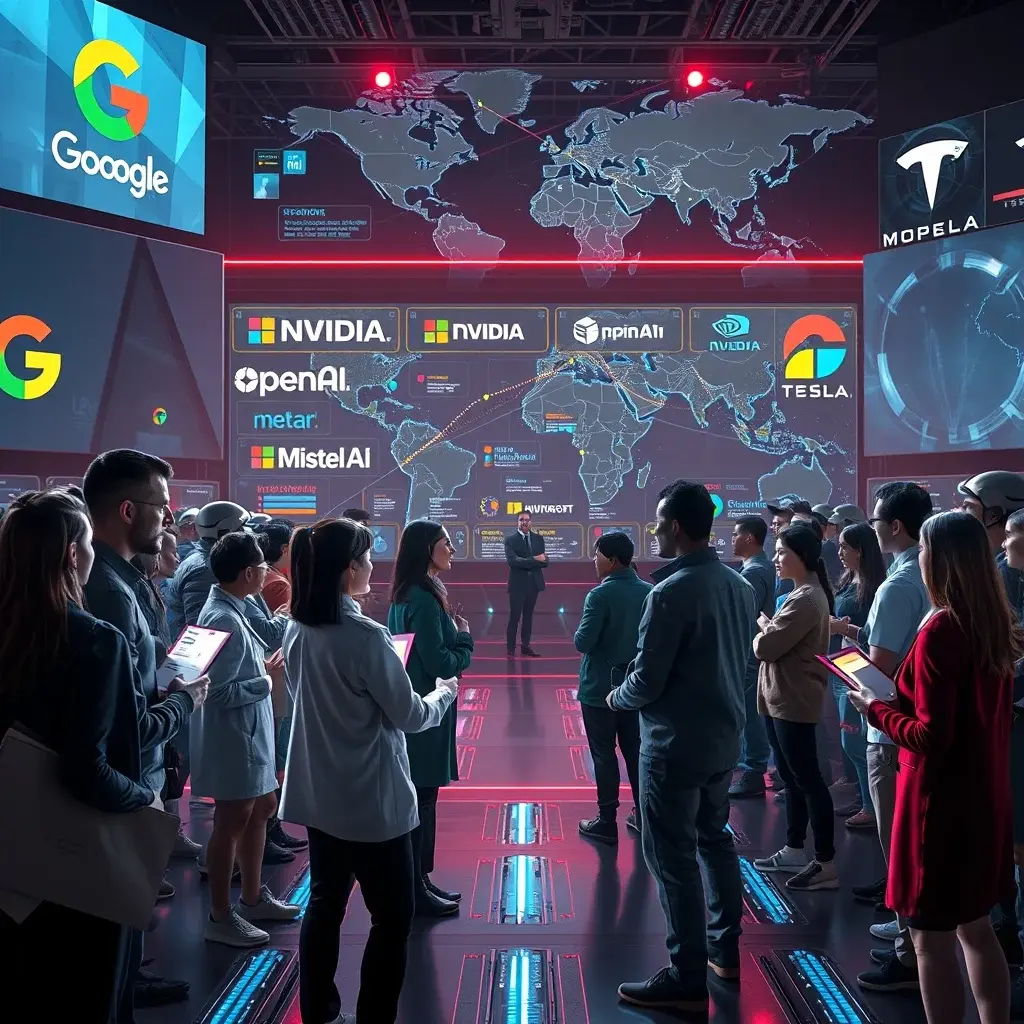

The artificial intelligence revolution is not just about algorithms and data—it’s about the people who build, refine, and deploy these technologies. Behind every breakthrough in machine learning, neural networks, and autonomous systems lies a critical resource: AI talent. As industries across the globe race to integrate AI into their operations, the demand for skilled professionals has reached unprecedented levels. Tech giants like Google, Meta, and NVIDIA are locked in a high-stakes war to recruit and retain the brightest minds in the field. Meanwhile, startups and universities are deploying innovative strategies to compete in this crowded landscape.
This intense competition is reshaping the tech ecosystem, driving up salaries, accelerating research, and even influencing geopolitical dynamics. The global AI talent shortage has become one of the most pressing challenges of the 21st century, with millions of positions remaining unfilled. Governments, corporations, and educational institutions are scrambling to address this gap, but the battle is far from over. In this article, we’ll explore the strategies tech companies and startups are using to attract top AI researchers, the role of universities in AI education, and the broader economic implications of this talent war.
📰 The Global AI Talent Shortage: Why It Matters
The AI talent shortage is not a fleeting trend—it’s a structural problem that threatens to slow down innovation across industries. According to a 2026 report by the McKinsey Global Institute, the global demand for AI professionals is growing at an annual rate of 19%, but the supply of qualified candidates is struggling to keep pace. This imbalance is particularly acute in fields like deep learning, computer vision, and natural language processing, where expertise is scarce and competition is fierce.
Several factors are driving this shortage:
– Rapid technological advancement: AI is evolving at an exponential pace, requiring professionals who can keep up with cutting-edge developments.
– High barriers to entry: Mastering AI requires advanced degrees in computer science, mathematics, or data science, making it inaccessible for many.
– Ethical and regulatory complexities: As AI becomes more integrated into society, professionals must navigate bias, privacy, and accountability—adding layers of complexity to their roles.
– Geopolitical competition: Countries like the United States, China, and the United Kingdom are investing heavily in AI, creating a brain drain from academia and smaller firms to tech giants.
The consequences of this shortage are far-reaching. Companies that fail to secure top talent risk falling behind in innovation, losing market share, and missing out on multi-billion-dollar opportunities. Meanwhile, startups and academic institutions struggle to compete with the financial firepower of tech giants, leading to a concentration of power in the hands of a few dominant players.
🔍 How Tech Giants Are Dominating the AI Talent Market
The FAANG companies—Facebook (Meta), Amazon, Apple, Netflix, and Google—have long been the primary employers of AI talent. However, in recent years, other tech behemoths like NVIDIA, Microsoft, and Tesla have entered the fray, each deploying unique strategies to attract and retain the best minds. Let’s break down how these companies are leading the charge.
One of the most effective strategies is aggressive recruitment. Tech giants are not just waiting for talent to come to them—they’re actively scouting universities, research labs, and even competitors. Google’s Brain Team, for example, has a dedicated recruitment pipeline that identifies promising PhD candidates before they even graduate. Similarly, NVIDIA has built a reputation for acquiring AI startups and their entire teams, a practice known as acqui-hiring.
📊 Key Recruitment Strategies of Tech Giants
Tech companies are employing a variety of tactics to secure top AI talent:
- ✅ Competitive compensation packages: Salaries for AI professionals at top companies can exceed $500,000 per year, including stock options and bonuses. NVIDIA, for instance, offers some of the highest compensation in the industry, often surpassing even Google and Meta.
- 🎯 Research freedom and resources: Unlike academia, where funding is often limited, tech giants provide researchers with unlimited computational resources, access to proprietary datasets, and the ability to publish groundbreaking work without bureaucratic hurdles.
- ⚠️ Stock options and equity: Many AI professionals at startups and mature companies alike receive equity as part of their compensation, aligning their financial success with the company’s growth.
- 🔥 High-impact projects: Working on cutting-edge projects like autonomous vehicles, AI-driven healthcare, or next-generation chips is a major draw for top talent.
Another strategy is collaboration with academia. Companies like Google, Microsoft, and IBM have established partnerships with universities to fund research labs, sponsor PhD programs, and even co-develop curricula. These partnerships not only help companies access fresh talent but also ensure that academic research aligns with industry needs.
🚀 How Startups Are Competing in the AI Talent War
While tech giants have the financial resources to dominate the AI talent market, startups are not without their own advantages. Agility, innovation, and mission-driven work are compelling factors that attract many AI professionals to smaller companies. However, startups face significant challenges in attracting top-tier talent, particularly when competing with the lucrative offers from established firms.
One of the most effective strategies for startups is to leverage mission and vision. Unlike large corporations, which often prioritize profit and market share, startups tend to focus on solving specific problems or disrupting industries. For example, OpenAI, despite its recent pivot, initially attracted top talent by promising to develop safe and beneficial AI for humanity.
🛠️ Startup Strategies for Attracting AI Talent
Startups are employing creative tactics to compete with tech giants:
- ✅ Equity and ownership: Offering substantial equity in the company can be a major incentive, as it aligns employees’ financial success with the startup’s growth potential.
- 🎯 Flexible work environments: Many startups offer remote work options, flexible hours, and a collaborative culture that appeals to younger professionals.
- ⚠️ Direct impact on products: Unlike large corporations, where employees may work on small parts of a larger project, startups allow professionals to see the direct impact of their work on the company’s success.
- 🔥 Seed funding and grants: Startups that secure significant funding can offer higher salaries and better benefits, making them more competitive in the talent market.
Another advantage for startups is their ability to specialize in niche AI domains. While tech giants spread their resources across multiple projects, startups often focus on specific applications like AI for healthcare, climate modeling, or robotics. This specialization can be attractive to professionals who want to deeply master a particular field rather than working on generic AI solutions.
🎓 The Role of Universities in AI Education
Universities are the bedrock of AI education, producing the next generation of researchers, engineers, and entrepreneurs. However, the AI talent shortage has put immense pressure on academic institutions to adapt their curricula, expand their faculty, and foster innovation. Let’s explore how universities are responding to this challenge.
The first step is expanding AI-focused programs. In recent years, universities like Stanford, MIT, and Carnegie Mellon have launched dedicated AI and machine learning departments. These programs offer specialized courses in deep learning, reinforcement learning, and AI ethics, ensuring that students graduate with the skills needed to thrive in the industry.
📌 AI Education: What Universities Are Doing Differently
To keep pace with industry demands, universities are implementing several key strategies:
- ✅ Interdisciplinary programs: AI is not just about computer science—it intersects with mathematics, neuroscience, cognitive science, and ethics. Universities are increasingly offering cross-disciplinary degrees to prepare students for the complex challenges of AI development.
- 🎯 Industry partnerships: Collaborations with companies like Google, Microsoft, and NVIDIA allow universities to offer internships, research funding, and real-world projects to students.
- ⚠️ Online and hybrid learning: To accommodate working professionals and international students, universities are expanding their online AI programs. Platforms like Coursera, edX, and Udacity offer AI courses in partnership with top universities.
- 🔥 Entrepreneurship and innovation hubs: Many universities have established AI incubators and startup accelerators to help students commercialize their research.
However, universities also face significant challenges. One of the biggest is faculty shortages. As AI becomes more specialized, many universities struggle to hire qualified professors who can teach advanced courses. Additionally, funding constraints limit the ability of some institutions to invest in cutting-edge research facilities.
📊 The Global AI Talent Pipeline: A Comparative Analysis
To understand the state of AI education worldwide, let’s compare the top universities and their contributions to the AI talent pipeline:
| University | AI Program Strengths | Notable Alumni | Industry Partnerships |
|---|---|---|---|
| Stanford University | Strong focus on AI ethics, robotics, and natural language processing | Yann LeCun (AI pioneer), Fei-Fei Li (AI researcher) | Google, NVIDIA, IBM |
| MIT | Emphasis on mathematical foundations of AI and reinforcement learning | Andrew Ng (AI pioneer), Demis Hassabis (DeepMind CEO) | Microsoft, Amazon, Tesla |
| Carnegie Mellon University | Known for computer vision and robotics | Tom Mitchell (AI researcher), Sebastian Thrun (Stanford AI Lab) | Google, Facebook, Uber |
| Tsinghua University | Leading AI research in China, with strong government support | Yuandong Tian (AI researcher), Jian Sun (AI executive) | Baidu, Huawei, Tencent |
| ETH Zurich | Focus on AI for healthcare and autonomous systems | Juergen Schmidhuber (AI pioneer), Luc Julia (AI researcher) | Google, IBM, ABB |
The table above highlights the diverse strengths of top AI programs around the world. While Stanford and MIT lead in research and innovation, Tsinghua University is rapidly emerging as a global hub for AI, thanks to China’s aggressive investment in technology. Meanwhile, ETH Zurich is making waves in AI applications for healthcare and robotics.
However, the AI talent pipeline is not just about universities. Governments are also playing a crucial role in shaping the future of AI education. Countries like the United States, China, and the European Union are investing billions in AI research funding, scholarships, and public-private partnerships to ensure a steady supply of talent.
💰 The Economic Implications of the AI Talent Shortage
The battle for AI talent is not just a technical issue—it has profound economic implications. The AI-driven economy is projected to generate $15.7 trillion in global GDP by 2030, according to PwC. However, this growth is contingent on the availability of skilled professionals. Without enough AI talent, companies will struggle to innovate, governments will fall behind in global AI leadership, and entire industries could face stagnation.
One of the most immediate effects of the shortage is rising salaries. In the United States, the average salary for an AI engineer is now over $150,000 per year, with senior roles commanding $300,000 or more. This trend is not limited to the US—AI professionals in Europe and Asia are also seeing significant salary increases. While higher wages are beneficial for individual professionals, they also drive up the cost of innovation for companies, particularly startups with limited budgets.
📉 The Impact on Innovation and Startups
The shortage of AI talent is particularly damaging to startups, which often lack the resources to compete with tech giants on compensation. Many startups struggle to hire the core AI team they need to develop their products, leading to delays in product launches and funding rounds. In some cases, startups are forced to outsource AI development to third-party firms, which can result in higher costs and less control over their technology.
This bottleneck is already visible in sectors like biotechnology, fintech, and autonomous vehicles, where AI is a critical component. For example, self-driving car companies like Waymo and Cruise have had to delay their commercial rollout due to a lack of qualified AI engineers. Similarly, biotech startups developing AI-driven drug discovery platforms are struggling to find the talent needed to advance their research.
🌍 Geopolitical Competition for AI Talent
The battle for AI talent is not just a corporate issue—it’s a geopolitical one. Countries are increasingly recognizing that AI leadership will determine their economic and military dominance in the 21st century. As a result, governments are implementing aggressive policies to attract and retain top AI professionals.
In the United States, the National AI Initiative Act of 2026 has allocated $2.2 billion in funding to support AI research, education, and workforce development. The government is also offering visa incentives for foreign AI professionals, making it easier for tech companies to hire international talent. Similarly, China has launched the Next Generation Artificial Intelligence Development Plan, which aims to make the country a global leader in AI by 2030.
However, this competition is not without its downsides. The brain drain from academia and smaller firms to tech giants and government-funded labs is exacerbating the talent shortage in less competitive regions. Additionally, the concentration of AI talent in a few key hubs—like Silicon Valley, Boston, and Beijing—could lead to regional disparities in AI innovation.
🔧 How Companies Are Adapting to the Talent Shortage
Faced with the AI talent shortage, companies are exploring a variety of strategies to secure the skills they need. Some are investing in upskilling their existing workforce, while others are turning to automation and AI tools to reduce their reliance on human talent. Let’s examine these approaches in detail.
🛠️ Upskilling and Reskilling Employees
One of the most effective ways for companies to address the talent shortage is by upskilling their current employees. Rather than relying solely on external hires, organizations are investing in training programs that teach AI and machine learning skills to their existing workforce. This approach has several advantages:
- ✅ Cost-effective: Upskilling existing employees is often cheaper than hiring new talent.
- 🎯 Retention: Employees who receive training and development opportunities are more likely to stay with the company.
- ⚠️ Cultural alignment: Internal candidates already understand the company’s values and goals, making them easier to integrate into existing teams.
- 🔥 Flexibility: Employees can apply their new skills to multiple projects, increasing the company’s agility.
For example, IBM has launched the IBM SkillsBuild program, which offers free AI and data science courses to employees and the public. Similarly, Microsoft has partnered with universities to create AI-focused degree programs that train employees in emerging technologies.
🤖 The Rise of AI-Augmented Development
Another way companies are coping with the talent shortage is by leveraging AI-augmented development tools. These tools use machine learning to automate repetitive tasks, generate code, and even assist in debugging. While these tools cannot replace human expertise, they can significantly reduce the workload for AI professionals.
Some of the most popular AI-augmented development tools include:
- ✅ GitHub Copilot: An AI-powered code completion tool that suggests code snippets based on natural language prompts.
- 🎯 DeepCode: An AI-driven code review tool that identifies bugs and suggests fixes.
- ⚠️ TensorFlow Extended (TFX): An end-to-end machine learning platform that automates model deployment and monitoring.
- 🔥 AutoML: Tools like Google’s AutoML and H2O.ai automate the process of training and deploying machine learning models.
These tools are particularly useful for junior developers and data scientists, who can use them to accelerate their learning and reduce the time spent on repetitive tasks. However, they also raise concerns about job displacement and the devaluing of human expertise.
🌐 Remote Work and Global Talent Pools
The shift to remote work has opened up new opportunities for companies to tap into global talent pools. With the rise of distributed teams, companies are no longer limited to hiring talent in their local area. This has several benefits:
- ✅ Access to diverse perspectives: Remote teams bring together professionals from different cultural and educational backgrounds, fostering innovation and creativity.
- 🎯 Cost savings: Companies can hire talent in lower-cost regions, reducing their operational expenses.
- ⚠️ 24/7 productivity: Distributed teams can work across different time zones, ensuring round-the-clock productivity.
- 🔥 Talent retention: Remote work allows companies to retain employees who may otherwise leave due to geographic constraints.
However, remote work also presents challenges, such as time zone differences, communication barriers, and cultural misunderstandings. Companies must carefully manage their remote teams to ensure productivity and collaboration.
🔍 The Future of AI Talent: Trends and Predictions
The battle for AI talent is far from over. As AI continues to evolve, new trends are emerging that will shape the future of the talent market. Let’s explore some of the most significant developments and what they mean for professionals, companies, and governments.
📈 The Rise of Niche AI Specializations
As AI becomes more integrated into industries, the demand for niche specialists is growing. While general AI knowledge remains valuable, companies are increasingly seeking professionals with expertise in specific domains. Some of the most in-demand specializations include:
- ✅ AI Ethics and Governance: Professionals who understand the ethical implications of AI and can develop responsible AI frameworks.
- 🎯 AI for Healthcare: Experts in medical imaging, drug discovery, and personalized medicine.
- ⚠️ AI for Finance: Specialists in algorithmic trading, fraud detection, and risk assessment.
- 🔥 AI for Climate Science: Professionals who can develop AI models for climate modeling and sustainability.
- 🌍 AI for Robotics: Engineers with expertise in autonomous systems, computer vision, and robotics.
This trend is already visible in the job market. According to LinkedIn’s 2026 Workforce Report, job postings for AI ethics specialists have increased by 300% since 2023, while roles in AI-driven healthcare have grown by 250%.
🤖 The Role of AI in Reducing the Talent Shortage
Ironically, the very technology that is driving the demand for AI talent may also help alleviate the shortage. AI itself is being used to automate parts of the talent acquisition process, making it easier for companies to find and hire the right candidates. Some of the most innovative applications include:
- ✅ AI-powered recruitment tools: Platforms like HireVue and Pymetrics use machine learning to screen resumes, conduct video interviews, and even assess candidates’ cognitive abilities.
- 🎯 AI-driven talent matching: Tools like Eightfold.ai and SeekOut use natural language processing to match candidates with job openings based on their skills and experience.
- ⚠️ AI for skill gap analysis: Companies like Degreed and Cornerstone OnDemand use AI to identify skill gaps in their workforce and recommend training programs.
- 🔥 AI for employee retention: Tools like Glint and Peakon use AI to analyze employee engagement and predict turnover, allowing companies to take proactive measures to retain talent.
These AI-driven solutions are not only making the recruitment process more efficient but also helping companies identify hidden talent that might otherwise be overlooked. For professionals, this means that demonstrating your AI skills can significantly boost your employability.
📊 The Impact of AI on the Job Market
The integration of AI into the workforce is expected to reshape the job market in profound ways. While some roles will become obsolete, new roles will emerge, creating both challenges and opportunities for professionals. According to a 2026 World Economic Forum report, 85 million jobs may be displaced by AI by 2026, but 97 million new roles will be created.
Some of the most resilient job roles include:
- ✅ AI trainers and explainability experts: Professionals who can train AI models and explain their decisions to stakeholders.
- 🎯 AI product managers: Individuals who can bridge the gap between technical teams and business stakeholders.
- ⚠️ AI ethicists: Experts who can navigate the ethical implications of AI deployment.
- 🔥 AI auditors: Professionals who can assess the fairness and transparency of AI systems.
- 🌍 AI translators: Individuals who can translate complex AI concepts into accessible language for non-technical audiences.
For companies, the rise of AI means a shift in the types of talent they need to hire. While technical expertise remains crucial, there is also a growing demand for professionals who can manage AI projects, communicate with stakeholders, and ensure ethical compliance.
💡 Tips for Aspiring AI Professionals
If you’re considering a career in AI, now is an exciting time to enter the field. However, the competition is fierce, and the learning curve is steep. Here are some tips to help you stand out in the AI talent market.
🎯 Best Ways to Break into AI
Breaking into the AI industry requires a combination of education, practical experience, and networking. Here’s a step-by-step guide to help you get started:
- Build a strong foundation in math and programming: Master linear algebra, calculus, probability, and statistics. Learn programming languages like Python, R, and Julia.
- Pursue formal education: Consider enrolling in an AI or machine learning degree program. If you’re already working, explore online courses and certifications from platforms like Coursera, edX, and Udacity.
- Gain hands-on experience: Work on personal projects, participate in Kaggle competitions, and contribute to open-source AI projects.
- Network with professionals: Join AI communities, attend conferences, and connect with industry experts on LinkedIn and Twitter.
- Apply for internships and entry-level roles: Gain real-world experience by working in research labs, startups, or tech companies.
🛠️ Essential Skills Every AI Professional Needs
While technical skills are essential, successful AI professionals also need a mix of soft skills and domain expertise. Here are some of the most valuable skills for AI professionals in 2026:
- ✅ Programming: Python is the most widely used language for AI, but knowledge of C++, Java, and Julia can also be beneficial.
- 🎯 Machine Learning: A deep understanding of supervised learning, unsupervised learning, and reinforcement learning is crucial.
- ⚠️ Deep Learning: Proficiency in frameworks like TensorFlow, PyTorch, and Keras is essential for building neural networks.
- 🔥 Data Science: Skills in data preprocessing, feature engineering, and statistical analysis are highly valued.
- 🌍 AI Ethics: Knowledge of bias, fairness, transparency, and accountability in AI systems is increasingly important.
- 📊 Business Acumen: Understanding the business applications of AI can help you communicate effectively with stakeholders.
🚀 Advanced Career Paths in AI
Once you’ve established a foundation in AI, you can explore more advanced career paths. Some of the most lucrative and impactful roles include:
- ✅ AI Research Scientist: Conduct cutting-edge research in areas like neural networks, reinforcement learning, and generative AI.
- 🎯 AI Engineer: Design and deploy AI models and systems in production environments.
- ⚠️ AI Product Manager: Lead the development of AI-powered products and ensure they meet business and user needs.
- 🔥 AI Ethics Specialist: Develop responsible AI frameworks and ensure compliance with regulations.
- 🌍 AI Entrepreneur: Found your own AI startup and bring innovative solutions to market.
Each of these roles requires a unique combination of skills and experiences. For example, an AI Research Scientist typically holds a PhD in AI or a related field, while an AI Engineer may have a master’s degree in computer science or equivalent experience.
🏁 The Future of the AI Talent War: What’s Next?
The battle for AI talent is far from over. As AI continues to evolve, the demand for skilled professionals will only grow, intensifying the competition among tech giants, startups, and governments. To stay ahead, companies must adopt innovative strategies, while professionals must continuously upskill and adapt to remain competitive.
The future of the AI talent market will be shaped by several key trends:
- ✅ Increased investment in AI education: Governments and corporations will continue to fund AI degree programs, scholarships, and research initiatives.
- 🎯 Expansion of global talent pools: The rise of remote work and distributed teams will enable companies to tap into talent from emerging markets.
- ⚠️ Focus on AI ethics and governance: As AI becomes more integrated into society, professionals with expertise in AI ethics and regulatory compliance will be in high demand.
- 🔥 Automation of talent acquisition: AI-driven tools will continue to streamline recruitment and onboarding processes, making it easier for companies to find the right candidates.
- 🌍 Geopolitical shifts: Countries will compete to attract top AI talent through visa incentives, research funding, and policy changes.
For professionals, the key to success will be continuous learning and adaptability. The AI landscape is evolving rapidly, and those who can keep pace with new technologies and industry trends will be the most in demand.
❓ Frequently Asked Questions
-
What is the average salary for an AI professional in 2026?
As of 2026, the average salary for an AI engineer in the United States is approximately $175,000 per year, with senior roles commanding $350,000 or more. In Europe, salaries range from €80,000 to €150,000, while in Asia, professionals can earn between $50,000 and $120,000 depending on the country and experience level.
-
How can startups compete with tech giants for AI talent?
Startups can compete by offering equity, flexible work environments, and mission-driven work. Highlighting the direct impact of the employee’s contributions can also be a major draw. Additionally, startups can leverage remote work to access global talent pools without the high costs of office space in major tech hubs.
-
What are the most in-demand AI specializations in 2026?
The most in-demand AI specializations include AI ethics, AI for healthcare, AI for finance, AI for climate science, and AI for robotics. Professionals with expertise in these areas are highly sought after by companies and governments alike.
-
How is AI being used to address the talent shortage?
AI is being used to automate parts of the talent acquisition process, such as resume screening, interview scheduling, and candidate matching. AI-driven tools like HireVue, Pymetrics, and Eightfold.ai are helping companies find and hire the right candidates more efficiently. Additionally, AI is being used to upskill employees through personalized learning platforms.
-
What role do universities play in addressing the AI talent shortage?
Universities are expanding their AI programs, partnering with industry leaders, and offering online and hybrid learning options to make AI education more accessible. They are also focusing on interdisciplinary programs that combine AI with fields like ethics, neuroscience, and business.
-
What are the economic implications of the AI talent shortage?
The AI talent shortage could lead to stagnation in innovation, rising costs for companies, and geopolitical imbalances. If the shortage persists, entire industries could face slower growth and reduced competitiveness. Governments and corporations must invest in AI education and workforce development to mitigate these risks.
-
How can companies upskill their existing workforce for AI roles?
Companies can upskill their workforce by offering in-house training programs, partnering with online learning platforms, and providing mentorship opportunities. Programs like IBM SkillsBuild and Microsoft’s AI degree initiatives are examples of how corporations are investing in employee development.
-
What are the most effective strategies for attracting remote AI talent?
To attract remote AI talent, companies should invest in communication and collaboration tools, offer flexible work hours, and provide clear career growth opportunities. Highlighting the company’s mission and impact can also make the role more appealing to remote candidates.
-
What is the future of AI education, and how will it evolve?
The future of AI education will likely involve more interdisciplinary programs, online learning options, and industry partnerships. Universities and companies will continue to collaborate on research initiatives and workforce development programs. Additionally, AI-augmented learning tools will become more prevalent, allowing students to learn at their own pace.
-
How can AI professionals future-proof their careers?
AI professionals can future-proof their careers by developing niche specializations, focusing on soft skills like communication and project management, and staying updated with industry trends. Obtaining certifications in emerging AI technologies and building a strong online portfolio can also help professionals stay competitive in the job market.