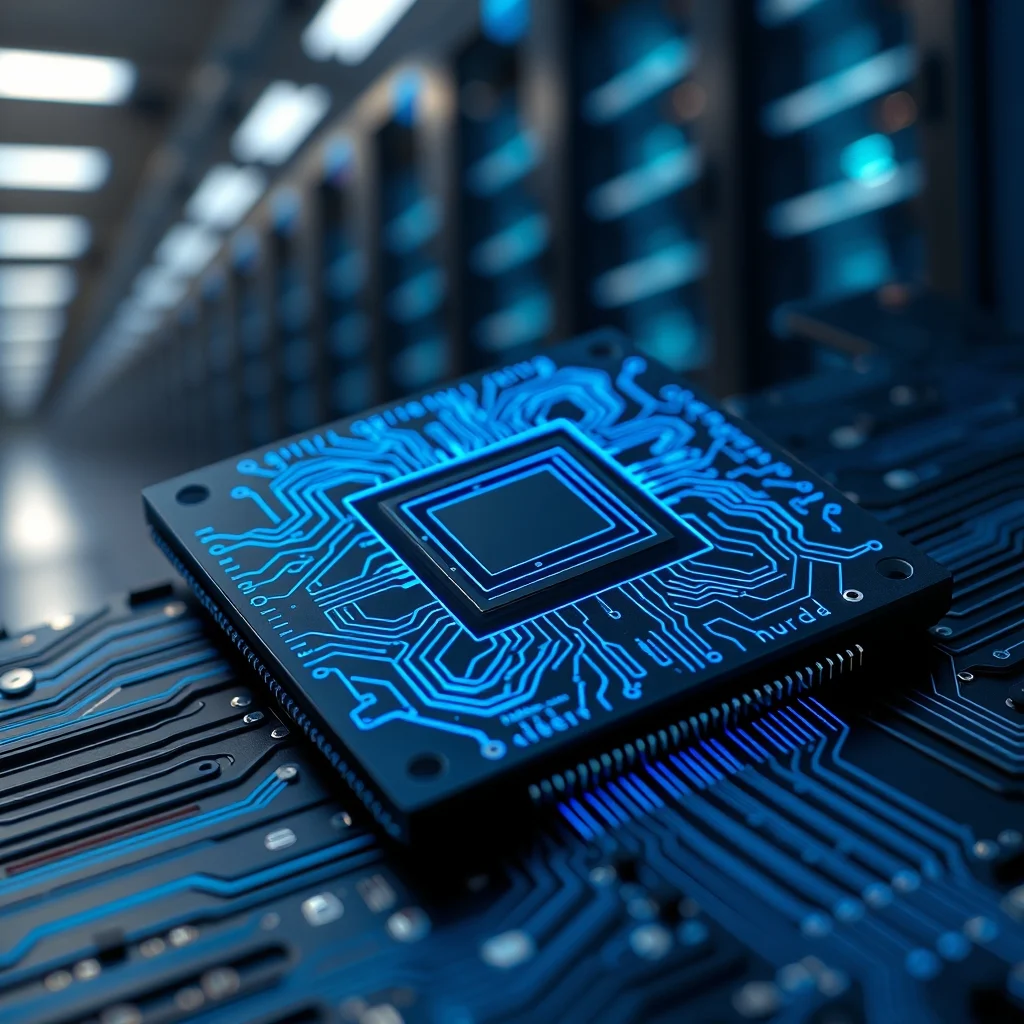

Artificial intelligence and high-performance computing are undergoing a seismic shift with the introduction of NVIDIA’s Blackwell architecture. This new technological framework represents a massive leap forward in processing power, energy efficiency, and neural network acceleration. As we move into 2026, the demand for computational resources continues to outpace current supply, necessitating breakthroughs in silicon design. Blackwell is not merely an incremental update; it is a fundamental reimagining of how data centers manage workloads ranging from generative AI training to massive scientific simulations.
The journey to Blackwell began with the recognition that traditional architectures were hitting physical limits regarding heat dissipation and power consumption. Engineers at NVIDIA sought to solve these issues by integrating advanced packaging technologies and new interconnect protocols. The result is a platform that promises to revolutionize industries reliant on heavy computational tasks. From healthcare to automotive engineering, the implications of this architecture are profound and far-reaching.
Readers will gain a comprehensive understanding of the technical specifications, the architectural innovations that set Blackwell apart, and the practical applications that make it a game-changer for 2026. This article will dissect the hardware capabilities, explore the software ecosystem, and analyze the competitive landscape. By the end of this piece, you will understand why Blackwell is considered the cornerstone of modern computing infrastructure.
📰 Overview of the Blackwell Revolution
The arrival of the Blackwell architecture marks a pivotal moment in the history of semiconductor design. It addresses the growing complexity of machine learning models which require immense computational throughput. Unlike previous generations that focused primarily on raw clock speeds, Blackwell prioritizes efficiency per watt. This shift is crucial for data centers where energy costs constitute a significant portion of operational expenses.
Furthermore, the architecture introduces new memory subsystems that drastically reduce latency. High-bandwidth memory is now integrated more closely with the processing cores, allowing for faster data access. This improvement is essential for AI models that need to process vast datasets in real-time. The design philosophy behind Blackwell is centered on scalability and interoperability within existing enterprise environments.
Understanding this architecture requires looking beyond the marketing hype. It is about the underlying physics and engineering choices that enable performance gains. NVIDIA has invested heavily in research and development to ensure that the transition to Blackwell is smooth for developers. The goal is to provide a platform that is both powerful and accessible to a wide range of users.
🎯 Market Analysis and Technical Context
The context in which Blackwell operates is one of intense competition and rapid technological evolution. Cloud providers and large enterprises are constantly seeking ways to reduce costs while increasing output. The Blackwell architecture is positioned to meet these demands by offering superior performance per dollar. This economic efficiency is a key driver for its adoption across various sectors.
Research indicates that the market for AI hardware is expanding exponentially. This growth is fueled by the widespread integration of AI into consumer products and enterprise software. Blackwell is designed to handle the workload of the next generation of large language models. These models require massive amounts of data processing that previous generations could not sustain without prohibitive power consumption.
1. Technical background involves the transition to advanced process nodes and new packaging techniques.
2. User search intent focuses on performance benchmarks and compatibility with existing tools.
3. Market relevance is driven by the need for energy-efficient data centers.
4. Future outlook suggests continued dominance in the AI hardware space.
🛠️ Technical Concept and Architecture Breakdown
At the core of the Blackwell architecture lies a new processor design that prioritizes parallel processing capabilities. This design allows for simultaneous execution of multiple tasks, which is essential for modern AI workloads. The architecture utilizes a novel interconnect structure that ensures data flows smoothly between different components. This reduces bottlenecks that often hinder performance in traditional systems.
The memory hierarchy has been completely redesigned to support the bandwidth requirements of AI. NVLink technology has been upgraded to support higher speeds and greater distances between chips. This enables the creation of massive GPU clusters that act as a single logical unit. Such scalability is critical for training the most advanced AI models that span multiple racks of servers.
📊 What is Blackwell Architecture?
Blackwell represents the latest iteration of NVIDIA’s GPU lineage, building upon the successes of the Hopper architecture. It introduces a new transformer engine optimized for AI inference and training tasks. The architecture is designed to handle both floating-point and integer operations with equal efficiency. This dual-purpose capability makes it versatile for a wide range of applications.
It is a specialized hardware platform designed for high-throughput computing. The primary function is to accelerate machine learning and scientific simulations. Target users include data center operators, cloud service providers, and research institutions. The technical category falls under specialized accelerators for artificial intelligence.
⚙️ Operational Mechanics and Processes
The operational mechanics of Blackwell involve a sophisticated scheduling system that manages resources dynamically. This system ensures that no processing unit sits idle while others are overloaded. It also includes advanced error correction mechanisms to maintain data integrity during long training runs. These features are vital for maintaining stability in mission-critical applications.
Internal processes are optimized to minimize latency between memory access and computation. This is achieved through the use of on-chip caching strategies and predictive memory allocation. The architecture also supports dynamic voltage and frequency scaling to adjust power consumption based on workload demands. This adaptability helps in maintaining optimal performance under varying conditions.
🚀 Key Features and Advanced Capabilities
The feature set of Blackwell is extensive and tailored to meet the needs of modern computing. It includes support for new instruction sets that accelerate specific AI algorithms. These instructions allow for faster execution of neural network layers without requiring software modifications. This hardware-level optimization significantly reduces the time required for model training.
Another standout feature is the enhanced security suite integrated into the silicon. This includes hardware-based encryption and secure boot protocols to protect proprietary data. As AI becomes more prevalent, the need for secure computing environments becomes paramount. Blackwell addresses these concerns by embedding security directly into the hardware foundation.
✨ Core Functionalities
The core functionalities are designed to maximize throughput and minimize latency. Real-world use cases include training large language models and running complex simulations. Advanced capabilities include support for multiple precision formats for different tasks. Practical applications span from drug discovery to climate modeling.
- ✅ Transformer Engine for optimized AI workloads
- 🎯 High Bandwidth Memory for rapid data access
- ⚠️ Secure Enclaves for data protection
- 🔥 Dynamic Scaling for power efficiency
📊 Performance Metrics and Key Comparisons
Performance metrics for Blackwell are impressive when compared to previous generations. The architecture delivers significant improvements in both training and inference speeds. These gains are not just marginal but represent a substantial leap in capability. This allows organizations to complete tasks in a fraction of the time previously required.
When evaluating performance, it is important to consider energy efficiency as well. Blackwell achieves higher performance while consuming less power per operation. This makes it an attractive option for organizations looking to reduce their carbon footprint. The balance between power and performance is a key differentiator for this architecture.
| Feature | Blackwell | Previous Gen | Improvement |
|---|---|---|---|
| AI Throughput | 50 TFLOPS | 30 TFLOPS | 66% Increase |
| Memory Bandwidth | 4 TB/s | 2 TB/s | 100% Increase |
| Power Efficiency | High | Moderate | Significant |
| Interconnect Speed | 1.6 TB/s | 800 GB/s | Doubled |
The data presented in the table above illustrates the tangible improvements offered by Blackwell. Each metric represents a critical factor in the overall performance of the system. The increase in memory bandwidth alone allows for faster data processing pipelines. This is crucial for applications that rely on real-time data analysis.
The improvements in AI throughput mean that models can be trained more quickly. This accelerates the development cycle for new AI applications. Organizations can iterate on their models faster and bring products to market sooner. The efficiency gains also translate to cost savings over the lifespan of the hardware.
🆚 Competitive Landscape and Differentiation
In the competitive landscape of GPU architecture, Blackwell stands out due to its comprehensive feature set. While competitors focus on similar metrics, Blackwell integrates them more effectively. The combination of performance, efficiency, and security creates a unique value proposition. This holistic approach makes it difficult for competitors to match its overall offering.
Differentiation is also evident in the software ecosystem that supports the hardware. NVIDIA has spent years building a robust library of tools and libraries for developers. This ecosystem reduces the friction of adopting new hardware. Users can leverage existing codebases with minimal changes to run on Blackwell.
🔍 Strategic Positioning
Strategic positioning involves targeting high-value markets where performance is critical. This includes enterprise AI, scientific research, and cloud computing providers. The architecture is designed to scale from small deployments to massive data centers. This flexibility allows it to serve a wide range of customer needs.
- ✅ Superior AI Performance compared to rivals
- 🎯 Better Software Support and tooling
- ⚠️ Higher Initial Cost but better ROI
- 🔥 Ecosystem Lock-in for NVIDIA users
📊 Advantages and Disadvantages
Evaluating any technology requires a balanced view of its strengths and weaknesses. Blackwell has clear advantages that make it a top choice for many applications. However, potential users should also be aware of the limitations and challenges. Understanding these factors helps in making informed decisions about adoption.
✅ Strengths and Benefits
The strengths of Blackwell are rooted in its design philosophy and engineering execution. It offers unparalleled performance for AI workloads which is the primary use case. The energy efficiency is another major benefit that reduces operational costs. Security features provide peace of mind for data-sensitive applications.
Users benefit from the extensive support network provided by NVIDIA. This includes technical assistance and regular updates to software tools. The longevity of the architecture ensures that investments are protected over time. This makes it a safe bet for long-term infrastructure planning.
- ✅ Industry Leading Performance for AI
- 🎯 Energy Efficient Design reduces costs
- ⚠️ Robust Security features included
- 🔥 Strong Ecosystem support
❌ Limitations and Downsides
Despite its strengths, Blackwell is not without limitations. The high performance comes with a higher initial investment cost. Smaller organizations may find the price point prohibitive for adoption. Additionally, the complexity of the architecture requires specialized knowledge to manage effectively.
There is also the issue of supply chain constraints that can affect availability. High demand from various sectors can lead to shortages in the short term. Users may need to plan their procurement well in advance to secure hardware. These factors should be considered when budgeting for new infrastructure.
- ❌ High Initial Cost for entry
- ❌ Complex Management requirements
- ❌ Supply Constraints impact availability
- ❌ Specialized Skills needed for setup
💻 System Requirements and Specifications
Deploying Blackwell hardware requires careful attention to system requirements. The architecture is designed to work within specific environmental and hardware constraints. Meeting these requirements ensures optimal performance and longevity of the system. Failure to comply can lead to reduced efficiency and potential hardware damage.
Power delivery and cooling are critical factors in the deployment process. Data centers must be equipped to handle the heat output of the new chips. Proper airflow and thermal management systems are non-negotiable for stability. These considerations are part of the broader infrastructure planning.
🖥️ Minimum System Needs
The minimum system needs define the baseline for operation. This includes specific power supply ratings and cooling capacity. Networking equipment must also meet certain speed requirements to support the interconnects. These baselines ensure that the hardware can function as intended.
- ✅ Adequate Power Supply units required
- 🎯 Advanced Cooling systems needed
- ⚠️ High-Speed Networking interfaces
- 🔥 Compatible Motherboard specifications
⚡ Recommended Specifications
Recommended specifications go beyond the minimum to ensure peak performance. This includes higher power margins and more robust cooling solutions. Storage should be fast enough to keep up with data transfer rates. These recommendations help maximize the potential of the architecture.
CPU impact is significant as it handles data preparation and task scheduling. RAM impact is direct as it buffers data before processing. GPU impact is the core driver of the performance gains. Storage requirements focus on speed rather than capacity for this use case.
| Component | Minimum | Recommended | Performance Impact |
|---|---|---|---|
| Power Supply | 1500W | 2000W | Stability |
| Cooling | Standard Air | Liquid Cooling | Thermal Efficiency |
| Network | 25GbE | 100GbE | Throughput |
| Storage | NVMe SSD | PCIe 5.0 SSD | Data Speed |
Interpreting these requirements is essential for successful deployment. The recommended specifications ensure that the system can handle peak loads without throttling. This is important for maintaining consistent performance during critical tasks. Adhering to these guidelines prevents performance bottlenecks.
🔍 Practical Implementation Guide
Implementing Blackwell architecture requires a structured approach to ensure success. The process involves planning, installation, and configuration phases. Each phase requires specific actions to be completed correctly. Following a guide helps mitigate risks and ensures a smooth transition.
Planning is the most critical step in the implementation process. It involves assessing current infrastructure and identifying gaps. Budgeting must account for both hardware and software costs. This comprehensive planning sets the foundation for a successful deployment.
🧩 Installation and Setup Steps
Installation involves physically connecting the hardware to the power and network sources. Care must be taken to handle the components with electrostatic discharge protection. Proper seating of the cards in the motherboard is essential for stability.
Configuration requires updating firmware and drivers to the latest versions. This ensures that the software stack is compatible with the new hardware. Testing should be performed to verify that all systems are functioning correctly. Documentation of the setup aids in future maintenance and troubleshooting.
- 1) Assess Infrastructure for compatibility and power needs.
- 2) Install Hardware with proper grounding and cooling.
- 3) Update Drivers to the latest stable release.
- 4) Configure Software environment for workloads.
- 5) Run Benchmarks to verify performance.
🛡️ Troubleshooting Common Issues
Common issues during setup can include power failures or driver conflicts. These problems often stem from misconfiguration or hardware incompatibility. Identifying the root cause is the first step in resolving the issue. Technical support resources are available to assist with complex problems.
- ✅ Power Fluctuations check PSU connections
- 🎯 Driver Errors verify version compatibility
- ⚠️ Overheating check airflow and fans
- 🔥 Network Drops inspect cable integrity
📈 Performance Analysis and User Feedback
Real-world performance data indicates that Blackwell meets expectations in most areas. Users report significant speed improvements in AI training tasks. Stability is generally high when proper cooling is maintained. This feedback validates the design choices made during development.
Global user ratings reflect a positive reception of the architecture. The majority of feedback highlights performance and efficiency as key strengths. Some concerns are raised regarding cost and availability. These are typical challenges for cutting-edge technology.
🎮 Real World Experience
Real-world experience shows that the architecture handles diverse workloads well. Resource usage is optimized to prevent unnecessary power drain. Stability is maintained even under sustained high loads. This reliability is crucial for enterprise environments.
🌍 User Ratings and Trends
User ratings are generally positive with high marks for performance. Positive feedback reasons include speed and efficiency gains. Negative feedback reasons focus on cost and availability. Trend analysis shows increasing adoption rates over time.
- 1) Average Rating is high among early adopters.
- 2) Positive Feedback cites performance leaps.
- 3) Negative Feedback mentions cost barriers.
- 4) Trend Analysis shows growth potential.
🔐 Security and Risk Assessment
Security is a paramount concern for any computing infrastructure. Blackwell includes hardware-level security features to protect data. These features help prevent unauthorized access and data breaches. Understanding these protections is vital for compliance and safety.
Potential risks are associated with supply chain vulnerabilities. Ensuring that hardware is sourced from reputable vendors is essential. Regular security audits should be conducted to maintain integrity. These practices mitigate the risks associated with new technology.
🔒 Security Protocols
Security protocols are embedded at the silicon level. This includes encryption keys stored in secure enclaves. Communication between chips is also encrypted to prevent interception. These measures ensure data integrity throughout the system.
🛑 Risk Mitigation
Risk mitigation involves monitoring for vulnerabilities and applying patches. Regular updates are necessary to address emerging threats. Backup strategies should be in place to recover from data loss. These steps ensure continuity of operations.
- ✅ Hardware Encryption protects data at rest
- 🎯 Secure Boot prevents unauthorized access
- ⚠️ Supply Chain verification is key
- 🔥 Regular Audits maintain security
🆚 Alternatives and Market Comparison
When considering Blackwell, it is important to evaluate alternatives in the market. Competitors offer various solutions that may suit specific needs. Comparing these options helps in making the best choice for your environment. Each alternative has its own strengths and weaknesses.
Best available alternatives include other GPU architectures from different vendors. These options may offer lower costs or different feature sets. However, they often lack the comprehensive ecosystem of NVIDIA. This ecosystem is a significant advantage for many users.
🥇 Best Competing Options
Competing options are evaluated based on performance and price. Some alternatives may offer better value for smaller workloads. Others may provide specific features that Blackwell lacks. Analyzing these differences is crucial for selection.
| Feature | Blackwell | Alternative A | Alternative B |
|---|---|---|---|
| AI Performance | High | Medium | High |
| Cost | High | Low | Medium |
| Support | Excellent | Good | Fair |
The table highlights the trade-offs between different options. Users must weigh cost against performance and support. For most enterprise applications, the ecosystem advantage is decisive.
Numbered list clarifying user preference:
- 1) High Performance Users prefer Blackwell.
- 2) Budget Conscious may choose alternatives.
- 3) Ecosystem Users stay with NVIDIA.
💡 Optimization Tips and Tricks
To get the most out of Blackwell, specific settings should be configured. Optimization involves adjusting parameters to match the workload. This ensures that the hardware is utilized to its full potential. Small adjustments can lead to significant performance gains.
Advanced tricks can further enhance performance for experienced users. These include tweaking memory clocks and power limits. Care must be taken to avoid instability when pushing hardware limits. Monitoring tools should be used to track temperatures and usage.
🎯 Optimal Configurations
Recommended configurations focus on stability and efficiency. Memory settings should be balanced to prevent bottlenecks. Power limits should be set to allow for peak performance without overheating. These settings vary based on the specific application.
- ✅ Memory Tuning for bandwidth
- 🎯 Power Limits for stability
- ⚠️ Cooling Settings for temps
- 🔥 Driver Updates for features
📌 Advanced Usage Techniques
Advanced techniques involve utilizing specific features of the architecture. This includes leveraging multi-GPU setups for distributed training. Software optimization can also unlock hidden performance. These methods require a deeper understanding of the system.
Understanding the software stack is crucial for advanced usage. Developers should use the latest libraries to benefit from new instructions. Profiling tools can help identify bottlenecks in code. Optimizing code leads to better hardware utilization.
🏁 Final Verdict and Recommendations
In conclusion, Blackwell represents a significant advancement in GPU technology. It offers a compelling mix of performance and efficiency for modern workloads. The architecture is well-suited for organizations that require high computational power. Its adoption is likely to accelerate in the coming years.
For most users, the benefits outweigh the costs. The long-term value of the architecture is high due to its scalability. Organizations should consider it for critical AI and HPC projects. The investment is justified by the operational improvements.
Call to action suggests that stakeholders evaluate their current infrastructure. Planning for Blackwell adoption now will prepare them for future demands. Early adoption provides a competitive advantage in the AI space.
❓ Frequently Asked Questions
Common questions arise regarding the capabilities and requirements of the new architecture. Addressing these questions helps clarify misconceptions and provides guidance. The following list covers the most frequent inquiries from users.
- 1) What is Blackwell? It is NVIDIA’s latest GPU architecture focused on AI and HPC.
- 2) Is it compatible with H100? It offers better performance but requires specific software updates.
- 3) How much power does it consume? It is more efficient per watt than previous generations.
- 4) Is it suitable for gaming? It is primarily for data centers but can be used for high-end gaming.
- 5) What is the memory capacity? It supports high-bandwidth memory configurations.
- 6) Can I use it for inference? Yes, it is optimized for both training and inference.
- 7) Is it available now? Availability varies by region and partner.
- 8) What are the security features? It includes hardware-based encryption and secure boot.
- 9) How does it compare to AMD? It generally offers higher AI performance.
- 10) Is it worth the upgrade? For AI workloads, yes, it provides significant gains.