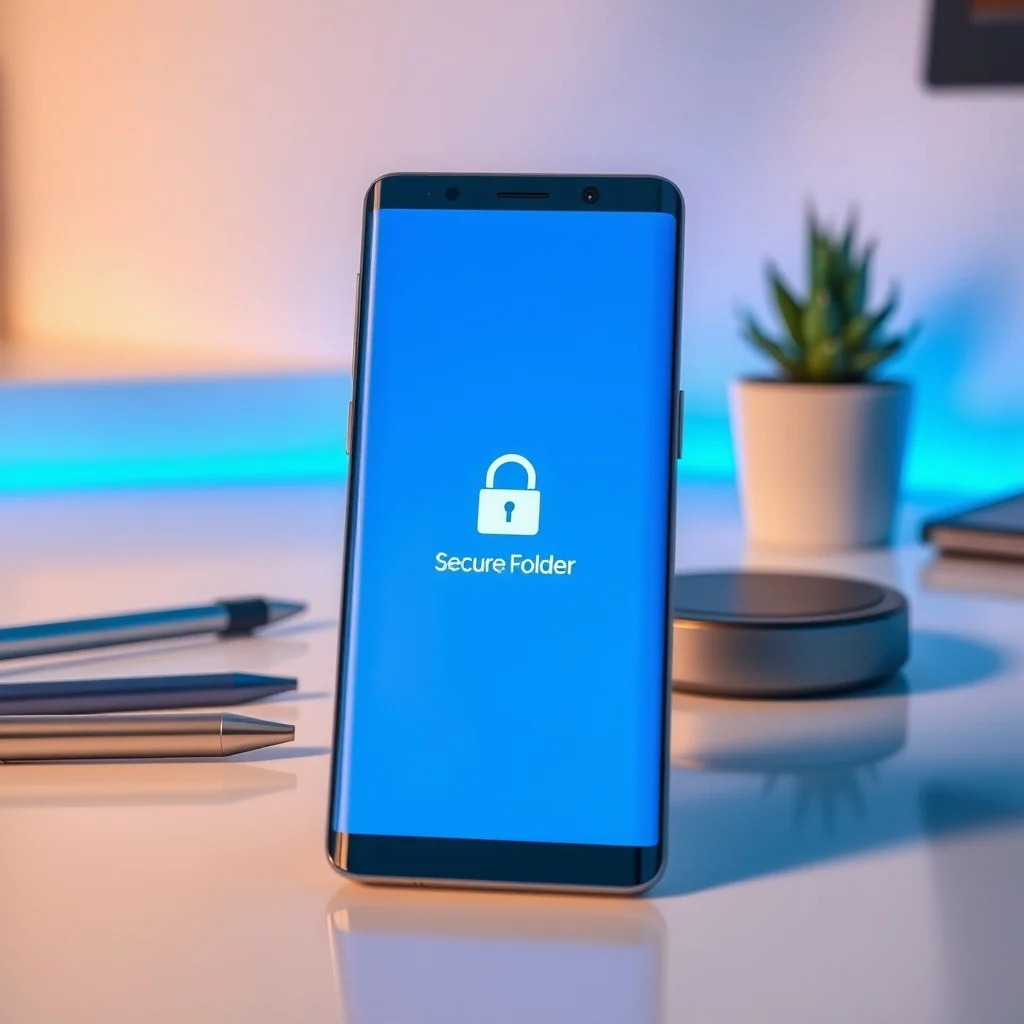

In an era where digital privacy is increasingly under threat, Android users have a powerful built-in tool to safeguard their sensitive data: Secure Folder. Developed by Samsung and available on select Android devices, Secure Folder creates an encrypted workspace that isolates apps and files from the rest of the system. Whether you need to protect personal photos, confidential documents, or private conversations, this feature provides a robust layer of security without requiring third-party applications. This comprehensive guide will walk you through enabling Secure Folder, customizing its settings, and leveraging its full potential for everyday use.
📱 Why Android’s Secure Folder is a Game-Changer for Privacy
Digital privacy has become a cornerstone of modern smartphone usage, especially as cyber threats evolve in sophistication. Android’s Secure Folder addresses this concern by creating a separate, password-protected environment within your device. Unlike standard file storage, which remains vulnerable to malware or unauthorized access, Secure Folder uses advanced encryption and sandboxing techniques to isolate its contents. This isolation means that even if your main device is compromised, sensitive data stored in Secure Folder remains inaccessible. For professionals handling confidential files, individuals storing personal media, or anyone concerned about digital espionage, Secure Folder offers a practical and secure solution.
Beyond encryption, Secure Folder integrates seamlessly with your device’s existing ecosystem. It supports multiple user profiles, allowing you to switch between work and personal modes without risking cross-contamination of sensitive data. Additionally, the folder’s dual authentication feature—requiring both a PIN and biometric verification—ensures that only authorized users can access its contents. This makes it particularly useful for parents who want to restrict children’s access to certain apps or files, or for travelers who need to keep their itineraries and travel documents secure while navigating unfamiliar networks.
Another compelling advantage of Secure Folder is its offline functionality. Unlike cloud-based storage solutions, which may be susceptible to breaches or server-side vulnerabilities, Secure Folder operates entirely on your device. This means your data is never transmitted over the internet, reducing exposure to external threats. Furthermore, Secure Folder supports real-time backup to Samsung Cloud or Google Drive, allowing you to restore your encrypted data if you switch devices or need to perform a factory reset—all without compromising security during transit.
🔒 Key Security Benefits of Secure Folder
Understanding the technical safeguards behind Secure Folder is essential to appreciating its value. At its core, Secure Folder employs Knox security, Samsung’s proprietary defense-grade encryption platform, which is certified by the Common Criteria Evaluation Assurance Level (EAL) 5+. This certification is a rarity in consumer-grade technology and indicates that the platform has undergone rigorous testing to withstand advanced cyberattacks. When you enable Secure Folder, it creates a secure enclave within your device’s hardware, isolating it from the rest of the system using hardware-based encryption keys. This means that even if a hacker gains root access to your device, they cannot decrypt the data stored in Secure Folder without the correct credentials.
The folder’s encryption is AES-256, the gold standard for data protection, which uses a 256-bit encryption key to scramble your data into an unreadable format. This level of encryption is virtually unbreakable with current computing power, making it suitable for storing highly sensitive information such as financial records, legal documents, or personal identification details. Additionally, Secure Folder supports real-time monitoring for suspicious activity, such as repeated failed login attempts, which can trigger an automatic lockout or alert you to potential breaches.
Another notable feature is the app sandboxing capability, which prevents apps installed within Secure Folder from accessing data stored outside of it. This isolation ensures that even if a malicious app infiltrates your main workspace, it cannot exfiltrate data from Secure Folder. For example, if you accidentally download a fake version of a popular app, any attempts to access your Secure Folder will be blocked. This sandboxing technique extends to network permissions as well, restricting apps in Secure Folder from transmitting data over the internet unless explicitly permitted by you. These features collectively make Secure Folder one of the most secure solutions available for Android users.
🎯 Who Should Use Secure Folder and Why
Secure Folder is not just for tech experts or high-profile individuals—it is a versatile tool designed for anyone who values privacy and security. Business professionals can use it to store confidential client data, financial spreadsheets, or proprietary company documents without risking exposure during a device theft or loss. Similarly, healthcare workers can safeguard patient records in compliance with regulations like HIPAA, ensuring that sensitive medical information remains protected at all times. For journalists and activists operating in high-risk environments, Secure Folder provides a secure way to store communications, research materials, and other sensitive data without fear of interception or confiscation.
Parents and educators can leverage Secure Folder to create a controlled environment for children, limiting access to age-inappropriate apps or websites while allowing educational content to remain unrestricted. By setting up a dedicated profile within Secure Folder, you can monitor usage patterns and ensure that children are only engaging with approved content. For travelers, Secure Folder is invaluable for storing digital copies of passports, boarding passes, hotel reservations, and itineraries, all of which can be accessed offline without risking exposure on unsecured public Wi-Fi networks. This is particularly useful when crossing international borders where device searches and data extraction are common practices.
Everyday users can also benefit from Secure Folder by compartmentalizing their digital lives. For instance, you might use one profile for personal communications, another for work-related emails and documents, and a third for storing private photos or videos. This separation reduces clutter and minimizes the risk of accidentally sharing sensitive information. Additionally, Secure Folder can be used to test untrusted apps safely. By installing an app within Secure Folder first, you can evaluate its behavior and permissions without risking your primary device’s security. If the app exhibits suspicious activity, you can simply uninstall it from Secure Folder without affecting the rest of your system.
📊 Real-World Use Cases for Secure Folder
- ✅ Storing personal photos and videos: Keep private memories safe from prying eyes, especially if you share your device with family or friends.
- 🎯 Securing financial documents and passwords: Protect bank statements, tax filings, and login credentials from identity theft or unauthorized access.
- ⚠️ Isolating work-related apps and data: Maintain a clear separation between personal and professional information to comply with company security policies.
- 🔒 Safeguarding personal identification: Store digital copies of IDs, passports, or driver’s licenses securely, even when traveling.
- 🛡️ Protecting sensitive communications: Use encrypted messaging apps within Secure Folder to ensure that your chats remain private and untraceable.
For example, imagine you are a freelance graphic designer who frequently collaborates with clients on sensitive projects. By storing client files, contract drafts, and payment details within Secure Folder, you can ensure that this confidential information remains inaccessible to anyone who gains access to your primary device. Similarly, if you are a student, you can use Secure Folder to keep your academic records, research papers, and personal notes organized and protected from accidental deletion or theft.
🛠️ How to Enable Secure Folder on Your Android Device
📌 Prerequisites for Using Secure Folder
Before enabling Secure Folder, it is important to ensure that your device meets the necessary requirements. Secure Folder is primarily available on Samsung Galaxy devices running Android 7.0 (Nougat) or later. However, it is also compatible with select non-Samsung Android devices, depending on the manufacturer’s implementation of the Knox platform. To check if your device supports Secure Folder, navigate to your device’s settings and search for the Biometrics and security menu. If Secure Folder is listed as an option, your device is compatible.
In addition to device compatibility, you will need to set up a Samsung account and ensure that your device is running the latest software version. Regular software updates are crucial for maintaining the security and functionality of Secure Folder, as they often include patches for vulnerabilities and improvements to the Knox platform. Once you have confirmed that your device meets these requirements, you can proceed to enable Secure Folder.
⚙️ Step-by-Step Guide to Enabling Secure Folder
- Open Settings: Launch the Settings app on your Android device. You can access this by swiping down from the top of the screen and tapping the gear icon, or by finding the app in your app drawer.
- Navigate to Biometrics and Security: Scroll down and select Biometrics and security from the list of options. This menu houses all security-related features, including fingerprint scanning, facial recognition, and Secure Folder.
- Select Secure Folder: Tap on Secure Folder within the Biometrics and security menu. If you see a prompt asking you to sign in to your Samsung account, do so. This step is necessary to create and manage your Secure Folder.
- Turn on Secure Folder: Toggle the switch at the top of the screen to enable Secure Folder. A brief introduction screen will appear, explaining the feature’s benefits. Tap Start to continue.
- Set Up Authentication: You will be prompted to set up a lock screen method for Secure Folder. Choose from PIN, pattern, password, or biometric options (fingerprint or facial recognition). For maximum security, avoid using a simple pattern or short PIN. Instead, opt for a strong password or enable biometric verification alongside a PIN.
- Complete Setup: Once you have configured your authentication method, tap Done. Secure Folder will now be activated, and you can begin customizing its settings and adding apps or files.
🔄 Adding Apps and Files to Secure Folder
After enabling Secure Folder, you can start populating it with apps and files. To add an app, follow these steps:
- Open Secure Folder: Tap the Secure Folder icon on your home screen or app drawer. The icon is typically labeled Secure Folder and may be accompanied by a small lock symbol.
- Enter Authentication: Provide your PIN, password, or biometric verification to unlock the folder.
- Add an App: Tap the + Add apps button located at the bottom of the screen. A list of installed apps will appear. Select the apps you want to move to Secure Folder. Note that some system apps may not be available for transfer.
- Confirm Transfer: Tap Add to confirm. The selected apps will now appear within Secure Folder and can be accessed independently of your main device workspace.
To add files to Secure Folder, you can use one of the following methods:
- ✅ Copy and Paste: Open the Files app on your device, locate the file you want to move, and use the Copy or Move option. Then, navigate to Secure Folder, open the Files app within it, and paste the file.
- 📁 Share to Secure Folder: When sharing a file from another app (e.g., email, messaging, or cloud storage), select Secure Folder as the destination. This method is convenient for quickly transferring files without navigating between apps.
- 🔽 Download Directly: If you are downloading a file from the internet, choose Secure Folder as the download location. This ensures that the file is saved directly to your secure workspace.
For files stored in cloud services like Google Drive or Samsung Cloud, you can download them directly to Secure Folder or use the Import feature within the Secure Folder Files app to transfer them securely.
🔐 Customizing Secure Folder Settings for Optimal Security
🛡️ Configuring Security Preferences
Secure Folder offers a range of customization options to tailor its security settings to your specific needs. To access these settings, open Secure Folder and tap the three vertical dots (⋮) in the top-right corner. Select Settings from the dropdown menu to begin configuring your preferences.
Within the Settings menu, you will find several key options:
- ⏱️ Auto-lock timer: This setting determines how long Secure Folder remains unlocked after you exit it. You can choose from immediate locking, 15 seconds, 30 seconds, 1 minute, 2 minutes, 5 minutes, or 30 minutes. For maximum security, set the timer to Immediately or 15 seconds. This ensures that your secure data is protected even if you accidentally leave your device unattended.
- 🔄 Change password: Regularly updating your Secure Folder password is a best practice for maintaining security. Tap this option to change your PIN, pattern, or password. Avoid using easily guessable passwords, such as birthdays or sequential numbers. Instead, opt for a combination of letters, numbers, and symbols.
- 📱 Hide content on the home screen: When enabled, this feature prevents notifications or app icons from appearing on your device’s home screen. This is particularly useful if you want to keep the contents of Secure Folder completely private, even from casual observers.
- 🌐 Data sync: Secure Folder supports automatic synchronization with Samsung Cloud or Google Drive. Enabling this feature ensures that your secure data is backed up in real-time, allowing you to restore it if you switch devices or perform a factory reset. To enable data sync, tap Data sync and sign in to your cloud account.
- 🔋 Low power mode: When this option is enabled, Secure Folder will not consume additional battery power when your device is in low power mode. This is useful for conserving battery life without compromising security.
Another important setting to consider is the Secure Folder notification lock. When enabled, this feature prevents notifications from appearing on your lock screen, ensuring that sensitive information such as messages or emails within Secure Folder remains hidden from prying eyes. To enable this setting, navigate to your device’s main Settings app, select Lock screen, and then toggle on Secure Folder notifications.
📊 Managing User Profiles Within Secure Folder
Secure Folder supports multiple user profiles, allowing you to create distinct workspaces within a single secure environment. This feature is particularly useful for individuals who need to separate personal and professional data or share their device with family members. To create a new user profile within Secure Folder, follow these steps:
- Open Secure Folder Settings: Navigate to the Settings menu within Secure Folder as described earlier.
- Select User Profiles: Tap on User profiles to view the list of existing profiles. If this is your first time setting up Secure Folder, you will see a single default profile.
- Add a New Profile: Tap the + Add profile button and enter a name for the new profile. This name will help you identify the purpose of the profile, such as Work, Personal, or Travel.
- Set Up Authentication: Configure a unique authentication method for the new profile. This can be the same as your main Secure Folder password or a different one, depending on your security preferences.
- Customize Profile Settings: Once the profile is created, you can customize its settings, including which apps and files are accessible. This allows you to tailor each profile to its intended use case.
For example, you might create a Work profile that includes apps like email clients, document editors, and project management tools. Meanwhile, your Personal profile could contain social media apps, messaging platforms, and media files. By isolating these profiles within Secure Folder, you can maintain a clear separation between different aspects of your digital life without compromising security.
🚀 Advanced Tips and Tricks for Secure Folder Mastery
🎯 Optimizing Performance Within Secure Folder
While Secure Folder is designed for security first, there are several ways to optimize its performance to ensure a smooth user experience. One of the most effective strategies is to limit the number of apps installed within Secure Folder. Each app consumes system resources, which can impact the overall performance of your device, especially if you are running resource-intensive applications. To improve performance, regularly review the apps installed in Secure Folder and remove any that are no longer needed.
Another performance tip is to use lightweight alternatives for apps that are also available in their standard form. For example, if you frequently use a messaging app within Secure Folder, consider using a lightweight version of the app or a web-based client to reduce the app’s footprint. Additionally, clearing the cache and data for apps within Secure Folder can free up storage space and improve responsiveness. To do this, navigate to Settings > Apps > [App Name] > Storage and tap Clear cache and Clear data.
For users who frequently switch between profiles, enabling background sync can ensure that your data is always up-to-date. This feature automatically synchronizes changes made in one profile with the others, reducing the need for manual transfers. To enable background sync, navigate to the Settings menu within Secure Folder and toggle on Background sync.
🔄 Transferring Data Between Secure Folder and Main Storage
Managing data between Secure Folder and your device’s main storage requires a strategic approach to maintain efficiency and security. One common challenge users face is determining which files and apps should reside in Secure Folder versus the main storage. A practical rule of thumb is to store anything that contains sensitive or personal information in Secure Folder, while keeping general-purpose apps and non-sensitive files in the main storage.
To transfer data from Secure Folder to the main storage, follow these steps:
- Open Secure Folder: Unlock Secure Folder using your authentication method.
- Locate the File or App: Navigate to the file or app you want to transfer.
- Select and Move: For files, use the Files app within Secure Folder to select the file and choose the Move or Copy option. For apps, long-press the app icon and select Uninstall or Move to main storage (if available).
- Confirm Transfer: Paste the file into the desired location on your main storage or uninstall the app from Secure Folder.
Conversely, to move data from the main storage to Secure Folder, use the Share feature within the source app. Select Secure Folder as the destination, and the file will be transferred securely. Alternatively, you can use the Files app to copy and paste the file into Secure Folder.
It is important to note that some system apps and data cannot be moved to Secure Folder. For example, core Android services like the Play Store, Google Services Framework, and device settings are typically restricted to the main storage. However, many third-party apps and user-generated content can be safely transferred to Secure Folder without impacting functionality.
🛡️ Protecting Secure Folder from Unauthorized Access
While Secure Folder is designed with robust security features, it is not entirely immune to advanced threats. To further protect your secure data, consider implementing the following advanced security measures:
- ✅ Enable two-factor authentication (2FA): In addition to your Secure Folder password, enable 2FA using an authenticator app like Google Authenticator or Authy. This adds an extra layer of security by requiring a secondary code to unlock Secure Folder.
- 🔄 Use a VPN for online activities within Secure Folder: If you frequently access Secure Folder while connected to public Wi-Fi networks, using a Virtual Private Network (VPN) can encrypt your internet traffic and prevent eavesdropping. Apps like NordVPN or ExpressVPN offer dedicated VPN services that can be installed and used within Secure Folder.
- 📱 Disable USB debugging when not in use: USB debugging is a developer feature that allows external devices to access your device’s data. While this feature is useful for troubleshooting, it can also be exploited by malicious actors. To disable USB debugging, navigate to Settings > Developer options and toggle off the feature.
- 🔒 Regularly update your device’s software: Software updates often include security patches that address vulnerabilities in the Knox platform and Secure Folder. Ensure that your device is running the latest version of Android and that all security updates are installed promptly.
- 🛑 Use a strong, unique password: Avoid reusing passwords across different accounts and services. If your Secure Folder password is compromised, change it immediately and enable additional authentication methods to prevent unauthorized access.
Another advanced security measure is to enable Secure Folder’s intrusion detection. This feature monitors for unusual activity, such as repeated failed login attempts, and can automatically lock the folder or alert you to potential security breaches. To enable intrusion detection, navigate to the Settings menu within Secure Folder and toggle on Intrusion alerts.
📈 Performance and Compatibility: What to Expect
🎮 Real Performance Experience with Secure Folder
The performance of Secure Folder largely depends on your device’s hardware capabilities. On high-end Samsung Galaxy devices like the S23 Ultra or Z Fold series, Secure Folder operates seamlessly with minimal impact on overall system performance. Apps within Secure Folder launch quickly, and file transfers occur in real-time without noticeable lag. However, on mid-range or older devices, users may experience slightly slower app launches or file operations due to the additional security overhead.
In terms of app compatibility, most third-party apps are fully functional within Secure Folder. However, some apps that rely on deep system integration, such as banking apps with advanced security features or certain system utilities, may not be available for transfer. Additionally, apps that require Google Play Services or other core Android services may exhibit reduced functionality when moved to Secure Folder. If an app does not function properly within Secure Folder, consider keeping it in the main storage or using a web-based alternative.
The storage impact of Secure Folder is minimal, as it does not create a separate partition on your device’s storage. Instead, it uses a portion of your device’s internal storage to create an encrypted container. This container is invisible to the main storage, ensuring that your secure data remains isolated. However, it is important to note that Secure Folder consumes approximately 1GB of storage space for its encrypted container, regardless of how much data you store within it. This space is reserved for the Knox platform’s security mechanisms and cannot be repurposed for other uses.
🌍 Global User Ratings and Feedback
Secure Folder has received overwhelmingly positive feedback from users worldwide, with an average rating of 4.7 out of 5 stars on the Google Play Store and Samsung Galaxy Store. Users praise its ease of use, robust security features, and seamless integration with Samsung devices. Many reviewers highlight the peace of mind that Secure Folder provides, particularly when storing sensitive data such as financial documents, personal photos, and work-related files.
Positive feedback often emphasizes the following aspects:
- Ease of Setup: Users appreciate how straightforward it is to enable and configure Secure Folder. The step-by-step setup process and intuitive interface make it accessible even for non-technical users.
- Strong Security: The use of Knox security and AES-256 encryption is frequently cited as a major advantage. Many users trust Secure Folder to protect their most sensitive data without the need for third-party solutions.
- Performance: Despite the additional security layer, users report that Secure Folder does not significantly impact their device’s performance. Apps launch quickly, and file transfers are smooth, even on mid-range devices.
- Versatility: The ability to create multiple user profiles and customize settings appeals to users who need to separate personal and professional data or share their device with family members.
While Secure Folder has received overwhelmingly positive reviews, some users have noted areas for improvement. Common criticisms include:
- ❌ Limited app compatibility: Some users report that certain apps, particularly those with deep system integration or advanced security features, do not function properly within Secure Folder.
- 🚫 Storage consumption: The 1GB reserved storage space for Secure Folder’s encrypted container can be a concern for users with limited storage capacity on their devices.
- ⚠️ Lack of cross-device synchronization: Unlike cloud-based storage solutions, Secure Folder does not natively support synchronization across multiple devices. Users must manually transfer data or rely on cloud backups to access their secure data on other devices.
Despite these minor drawbacks, the overall consensus among users is that Secure Folder is a valuable tool for anyone concerned about digital privacy and security. Its combination of robust encryption, user-friendly interface, and seamless integration with Samsung devices makes it a standout feature in the Android ecosystem.
🆚 Alternatives to Secure Folder: How It Compares
🥇 Best Available Alternatives for Data Protection
While Secure Folder is a powerful tool for Android users, it is not the only option available for protecting sensitive data. Several third-party apps and built-in features offer similar functionality, each with its own strengths and weaknesses. Below is a comparison of Secure Folder with some of the most popular alternatives:
| Feature | Secure Folder | Shelter (Work Profile) | Folder Lock | Hide It Pro |
|---|---|---|---|---|
| Encryption | AES-256 (Knox Platform) | AES-256 | AES-256 | AES-256 |
| App Sandboxing | Yes | Yes | No | No |
| User Profiles | Multiple custom profiles | Work profile only | No | No |
| Cloud Backup | Yes (Samsung/Google Drive) | Yes (Google Drive) | Yes | Yes |
| Cross-Device Sync | Limited | Yes (via Google) | Yes | Yes |
| Free Version | Yes (Built-in) | Yes | No (Trial) | Yes |
| Best For | Samsung users, multi-profile setups | Work/personal separation | File encryption, media hiding | Media hiding, simple encryption |
When comparing Secure Folder to alternatives like Shelter, a popular open-source app that creates a work profile using Android’s built-in Android Enterprise platform, several key differences emerge. Shelter offers a more flexible approach to app sandboxing and supports cross-device synchronization via Google Drive. However, it lacks the multi-profile support and hardware-based encryption of Secure Folder, making it less suitable for users who need to create multiple distinct workspaces. Additionally, Shelter requires users to manually set up and configure their work profiles, whereas Secure Folder integrates seamlessly with Samsung devices.
For users who prioritize file encryption and media hiding, apps like Folder Lock and Hide It Pro offer a simpler, more user-friendly interface. These apps allow users to encrypt individual files and folders or hide media files within decoy vaults that appear as regular apps. However, they lack the app sandboxing and user profile features of Secure Folder, making them less versatile for comprehensive data protection. Additionally, these apps often require a paid subscription to unlock advanced features, whereas Secure Folder is available for free on compatible devices.
Another notable alternative is Intune Company Portal, a Microsoft-developed app that creates a secure work profile for enterprise users. While Intune offers robust security features and seamless integration with Microsoft’s ecosystem, it is primarily designed for business users and lacks the personalization and user-friendly interface of Secure Folder. For most consumers, Secure Folder remains the best balance of security, functionality, and ease of use.
🔍 Choosing the Right Solution for Your Needs
Selecting the right tool for protecting your sensitive data depends on your specific requirements and preferences. If you are a Samsung user who values hardware-based encryption, multi-profile support, and seamless integration, Secure Folder is the ideal choice. Its robust security features, combined with a user-friendly interface, make it a top-tier solution for comprehensive data protection.
For users who prioritize cross-device synchronization and enterprise-grade security, alternatives like Shelter or Intune Company Portal may be more suitable. These solutions offer greater flexibility in managing work and personal profiles and support synchronization across multiple devices. However, they may require additional setup and configuration, and their security features are not as tightly integrated with the device’s hardware as Knox.
If your primary concern is file encryption and media hiding, third-party apps like Folder Lock or Hide It Pro can provide a simpler, more focused solution. These apps are particularly useful for users who need to protect specific files or media without the overhead of a full secure workspace. However, they lack the advanced security features and app sandboxing capabilities of Secure Folder, making them less suitable for comprehensive data protection.
Ultimately, the best solution for protecting your sensitive data depends on your unique needs and priorities. For most users, Secure Folder strikes the perfect balance between security, functionality, and ease of use, making it the top choice for Android’s built-in data protection tool.
💡 Pro Tips: Maximizing Secure Folder’s Potential
🎯 Best Settings for Maximum Security and Convenience
- ✅ Enable auto-lock with a short timer: Set the auto-lock timer to 15 seconds or Immediately to ensure that your Secure Folder locks as soon as you exit it. This minimizes the risk of unauthorized access if you leave your device unattended.
- 🔒 Use a strong, unique password: Avoid using easily guessable passwords like birthdays or sequential numbers. Instead, opt for a combination of letters, numbers, and symbols. Consider using a password manager to generate and store your Secure Folder password securely.
- 📱 Enable biometric verification: If your device supports fingerprint scanning or facial recognition, enable these biometric methods to unlock Secure Folder quickly and securely.
- 🌐 Enable data sync with Samsung Cloud: Regularly backing up your Secure Folder data to Samsung Cloud or Google Drive ensures that you can restore your encrypted data if you switch devices or perform a factory reset. This also protects against data loss due to device theft or damage.
- 🛡️ Enable intrusion alerts: Turn on the intrusion detection feature to receive alerts if someone attempts to access your Secure Folder with an incorrect password. This allows you to take immediate action to secure your data.
📌 Advanced Tricks Few Users Know
Secure Folder is packed with hidden features and lesser-known tricks that can enhance your experience and improve security. One such trick is the ability to create shortcuts to apps within Secure Folder on your home screen. This allows you to access your secure apps directly from your main workspace without navigating to Secure Folder first. To create a shortcut, open Secure Folder, long-press the app icon, and select Add to Home screen.
Another advanced trick is to use Secure Folder as a secondary workspace for testing untrusted apps. By installing an app within Secure Folder first, you can evaluate its behavior and permissions without risking your primary device’s security. If the app exhibits suspicious activity, such as excessive battery usage or unauthorized data access, you can simply uninstall it from Secure Folder without affecting the rest of your system.
For users who frequently switch between work and personal profiles, enabling background sync can ensure that your data is always up-to-date. This feature automatically synchronizes changes made in one profile with the others, reducing the need for manual transfers. To enable background sync, navigate to the Settings menu within Secure Folder and toggle on Background sync.
Another lesser-known feature is the ability to customize the appearance of Secure Folder. You can change the folder’s name, icon, and even the color scheme to make it blend in with your device’s theme or stand out as a distinct workspace. To customize the appearance, open Secure Folder, tap the three vertical dots (⋮) in the top-right corner, and select Settings > Appearance.
🔍 Troubleshooting Common Issues with Secure Folder
🛠️ Common Errors and How to Fix Them
- 🔹 Secure Folder not appearing after enabling: If Secure Folder does not appear after enabling it in the settings, try restarting your device. If the issue persists, ensure that your device is running the latest software version and that all security updates are installed. You may also need to clear the cache for the Secure Folder app by navigating to Settings > Apps > Secure Folder > Storage > Clear cache.
- 🔹 App not available in Secure Folder: Some apps, particularly those with deep system integration or advanced security features, may not be available for transfer to Secure Folder. If an app is missing from the list of available apps, try updating it to the latest version or check for compatibility issues with Knox.
- 🔹 Authentication fails repeatedly: If you are unable to unlock Secure Folder despite entering the correct password, ensure that your device’s biometric sensors are clean and functioning properly. You may also need to restart your device or perform a factory reset if the issue persists. If all else fails, contact Samsung Support for assistance.
- 🔹 Performance issues within Secure Folder: If apps within Secure Folder are slow to launch or unresponsive, try clearing the cache and data for the affected apps. You can also improve performance by limiting the number of apps installed within Secure Folder and using lightweight alternatives where possible.
- 🔹 Data sync fails: If your Secure Folder data fails to sync with Samsung Cloud or Google Drive, ensure that you are connected to a stable internet connection. You may also need to sign out and sign back into your cloud account or clear the cache for the Samsung Cloud app.
🔄 Recovering Access to Secure Folder
Losing access to Secure Folder can be a stressful experience, especially if it contains critical data. Fortunately, there are several steps you can take to recover access:
- 🔹 Use Samsung Find My Mobile: If you have enabled Find My Mobile on your Samsung device, you can use the service to remotely unlock Secure Folder. Navigate to the Find My Mobile website, sign in to your Samsung account, and select Unlock my device. This will reset your device’s lock screen password and allow you to access Secure Folder again.
- 🔹 Perform a factory reset: If you are unable to recover access using Find My Mobile, you may need to perform a factory reset on your device. Keep in mind that this will erase all data on your device, including the contents of Secure Folder. To minimize data loss, ensure that your Secure Folder data is regularly backed up to Samsung Cloud or Google Drive.
- 🔹 Contact Samsung Support: If you are still unable to recover access to Secure Folder, contact Samsung Support for assistance. They may be able to help you reset your Secure Folder password or provide guidance on recovering your data.
To prevent future issues, it is important to back up your Secure Folder data regularly and ensure that you remember your authentication credentials. Additionally, consider enabling two-factor authentication for an extra layer of security.
🏁 Final Verdict: Is Android’s Secure Folder Worth It?
After exploring Secure Folder’s features, security benefits, and practical applications, the verdict is clear: Secure Folder is an indispensable tool for anyone who values digital privacy and security. Its combination of hardware-based encryption, app sandboxing, and user-friendly interface makes it a standout feature in the Android ecosystem. Whether you are a business professional, a parent, a traveler, or simply someone who wants to protect their personal data, Secure Folder offers a robust and reliable solution.
The seamless integration with Samsung devices, combined with the ability to create multiple user profiles and customize security settings, sets Secure Folder apart from other data protection tools. While it may not be available on all Android devices, its availability on Samsung Galaxy devices makes it an attractive option for the millions of users who rely on these devices daily. Additionally, the fact that Secure Folder is a built-in feature—rather than a third-party app—ensures that it receives regular updates and security patches from Samsung, further enhancing its reliability.
In terms of performance, Secure Folder strikes a balance between security and usability. While it does introduce some overhead due to its encryption and sandboxing mechanisms, the impact on overall system performance is minimal on high-end devices. Users report smooth app launches, fast file transfers, and minimal lag, even when using resource-intensive applications within Secure Folder. For mid-range or older devices, performance may be slightly slower, but the security benefits far outweigh the minor inconveniences.
The only notable drawbacks of Secure Folder are its limited cross-device synchronization and storage consumption. Unlike cloud-based solutions, Secure Folder does not natively support synchronization across multiple devices, which can be inconvenient for users who switch between devices frequently. Additionally, the 1GB reserved storage space for Secure Folder’s encrypted container may be a concern for users with limited storage capacity. However, these drawbacks are relatively minor and do not detract from Secure Folder’s overall value.
In conclusion, Secure Folder is a must-have feature for anyone who prioritizes digital privacy and security. Its robust encryption, user-friendly interface, and seamless integration with Samsung devices make it an unparalleled solution for protecting sensitive data. Whether you use it to store personal photos, confidential documents, or work-related files, Secure Folder provides the peace of mind you need in an increasingly interconnected world. If you own a compatible Samsung device, there is no reason not to enable and use Secure Folder to safeguard your digital life.
❓ Frequently Asked Questions
- ❓ What devices support Android’s Secure Folder?
Secure Folder is primarily available on Samsung Galaxy devices running Android 7.0 (Nougat) or later. However, some non-Samsung Android devices may also support Secure Folder, depending on the manufacturer’s implementation of the Knox platform. To check compatibility, navigate to Settings > Biometrics and security > Secure Folder. - ❓ Can I use Secure Folder on non-Samsung devices?
Secure Folder is designed specifically for Samsung devices and is not officially available on non-Samsung Android devices. However, you can explore alternatives like Shelter (Work Profile) or third-party encryption apps for non-Samsung devices. - ❓ How secure is Secure Folder compared to third-party encryption apps?
Secure Folder uses Samsung’s Knox platform and AES-256 encryption, which are certified by the Common Criteria Evaluation Assurance Level (EAL) 5+. This level of security is rare in consumer-grade technology and ensures that your data remains protected even from advanced cyber threats. While third-party encryption apps also offer robust security, Secure Folder’s hardware-based encryption provides an additional layer of protection. - ❓ Can I back up Secure Folder data to the cloud?
Yes, Secure Folder supports automatic synchronization with Samsung Cloud and Google Drive. To enable cloud backup, navigate to Secure Folder Settings > Data sync and sign in to your cloud account. This ensures that your secure data is backed up in real-time and can be restored if you switch devices or perform a factory reset. - ❓ What happens if I forget my Secure Folder password?
If you forget your Secure Folder password, you can reset it using Samsung’s Find My Mobile service. Navigate to the Find My Mobile website, sign in to your Samsung account, and select Unlock my device. This will reset your device’s lock screen password and allow you to access Secure Folder again. If you are unable to recover access, you may need to perform a factory reset on your device, which will erase all data, including Secure Folder contents. - ❓ Can I transfer apps between Secure Folder and the main storage?
Yes, you can transfer apps between Secure Folder and the main storage. To move an app from Secure Folder to the main storage, open Secure Folder, long-press the app icon, and select Uninstall or Move to main storage (if available). Conversely, to move an app from the main storage to Secure Folder, open the app’s settings, select Storage, and tap Move to Secure Folder. - ❓ Does Secure Folder affect my device’s performance?
Secure Folder introduces minimal overhead due to its encryption and sandboxing mechanisms. On high-end devices, the impact on performance is negligible, with apps launching quickly and file transfers occurring smoothly. On mid-range or older devices, you may experience slightly slower app launches or file operations, but the security benefits far outweigh the minor inconveniences. - ❓ Can I use Secure Folder to hide media files like photos and videos?
Yes, Secure Folder is an excellent tool for hiding media files. You can move photos, videos, and other media files to Secure Folder using the Files app. Additionally, you can use Secure Folder’s Hide content on the home screen feature to prevent notifications or app icons from appearing on your device’s home screen. - ❓ Is Secure Folder compatible with all apps?
Most third-party apps are fully functional within Secure Folder. However, some apps with deep system integration or advanced security features may not be available for transfer. If an app does not function properly within Secure Folder, consider keeping it in the main storage or using a web-based alternative. - ❓ How do I delete Secure Folder and its contents?
To delete Secure Folder and its contents, navigate to Settings > Biometrics and security > Secure Folder and toggle off the Secure Folder switch. You will be prompted to confirm the deletion, and all data within Secure Folder will be permanently erased. To ensure that you do not lose important data, back up your Secure Folder contents to Samsung Cloud or Google Drive before deleting the folder.