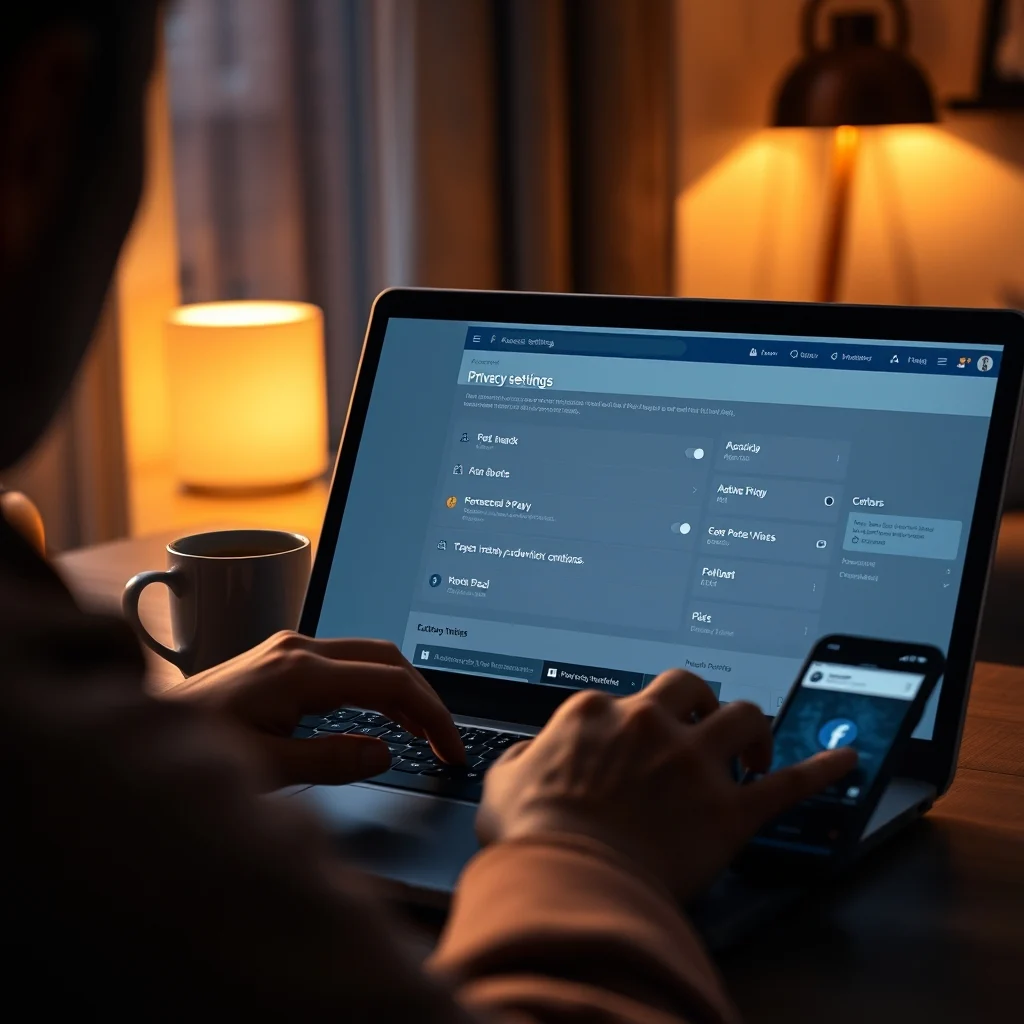

Facebook, now rebranded as Meta, remains one of the most widely used social media platforms globally, connecting billions of users. While many users are familiar with basic privacy settings like profile visibility and friend requests, hidden settings offer deeper control over data sharing, ad preferences, and account security. In 2026, Meta has introduced several new features designed to address growing concerns about digital privacy and security. This guide explores these lesser-known settings, explains how to access them, and provides actionable steps to safeguard your online presence.
Whether you are concerned about third-party data access, targeted advertising, or unauthorized account access, adjusting these hidden settings can significantly reduce risks. This article covers everything from limiting ad tracking to securing your account against identity theft and phishing attempts. By the end, you will have a comprehensive understanding of how to optimize your Facebook profile for maximum privacy and security in 2026.
🔍 Understanding Facebook’s Privacy Landscape in 2026
Facebook’s privacy policies and features have evolved considerably since its inception. In 2026, Meta has shifted its focus toward transparency and user control, responding to regulatory pressures and public demand for better data protection. The platform now provides granular tools to manage data sharing, ad preferences, and audience segmentation. Understanding these changes is crucial for users who want to take full control of their digital footprint.
In recent years, Meta has faced scrutiny over data leaks, unauthorized tracking, and the misuse of user information. To counter these issues, the company has introduced new privacy dashboards, enhanced encryption options, and stricter third-party access controls. These updates are designed to restore user trust and comply with global data protection regulations, such as the General Data Protection Regulation (GDPR) and the California Consumer Privacy Act (CCPA).
The following sections break down the most critical hidden settings and explain how to configure them for optimal privacy and security. Whether you are a casual user or a social media influencer, these adjustments will help you maintain control over your personal information.
📊 Key Privacy Features Introduced in 2026
- ✅ Advanced Off-Facebook Activity Tracking – View and disconnect data shared with third parties.
- 🎯 Custom Audience Controls – Define who can send you friend requests and messages.
- ⚠️ Stricter Ad Preference Management – Disable ad tracking from non-Facebook sources.
- ✅ Encrypted Backup for Photos and Videos – Secure your media with end-to-end encryption.
- 🎯 Two-Factor Authentication Enhancements – Use biometric verification for added security.
These features represent Meta’s commitment to improving user privacy. However, they are often buried within the platform’s settings, making them easy to overlook. This guide ensures you do not miss out on these critical tools.
🛠️ Navigating Facebook’s Hidden Settings Menu
The Facebook platform is designed with layers of menus, making it challenging to locate advanced privacy options. In 2026, Meta has streamlined some pathways but still maintains a complex structure. Knowing where to look is half the battle. Below, we break down the exact steps to access these settings on both desktop and mobile versions of Facebook.
📌 How to Access Hidden Settings on Desktop
On a desktop browser, follow these steps to reach the most critical privacy settings:
- Log in to your Facebook account and click the downward-facing arrow in the top-right corner of the screen.
- Select Settings & Privacy from the dropdown menu, then click Settings again.
- In the left-hand sidebar, you will see various categories such as Profile and Tagging, Blocking, and Ads.
- For advanced options, click Privacy in the left sidebar. This section controls who can see your posts, friend lists, and activity status.
- Scroll down to Your Activity and click Off-Facebook Activity. This is where you can disconnect data shared with third-party apps.
- Under Ads, click Ad Preferences to manage which advertisers can target you based on your online activity.
These steps provide access to some of the most powerful privacy tools Meta offers. However, additional settings are hidden deeper within the platform.
📌 How to Access Hidden Settings on Mobile
Mobile users often struggle to find advanced settings due to the app’s simplified interface. Follow these steps to access hidden options on the Facebook mobile app:
- Open the Facebook app and tap the three horizontal lines in the bottom-right corner (iOS) or top-right corner (Android).
- Scroll down and tap Settings & Privacy, then select Settings.
- In the Account Settings section, tap Privacy Settings.
- Here, you can adjust who sees your future posts, limit the audience for past posts, and review your profile visibility.
- To access Off-Facebook Activity, tap Ads, then scroll down to Ad Preferences and select Ad Settings.
- For additional security, tap Security and Login and enable Two-Factor Authentication.
Mobile users should also explore the Meta Quest settings if they use the platform’s VR services, as these have separate privacy controls.
🔐 Securing Your Account Against Unauthorized Access
Account security is a top priority in 2026, especially with the rise of SIM swapping, phishing scams, and credential stuffing attacks. Meta has introduced several new security features to combat these threats. Below, we explore the most effective ways to protect your account from unauthorized access.
🛡️ Enabling Two-Factor Authentication (2FA)
Two-Factor Authentication adds an extra layer of security by requiring a second form of verification when logging in. In 2026, Meta supports multiple 2FA methods, including SMS codes, authenticator apps, and biometric verification. Here is how to set it up:
- Go to Settings & Privacy > Settings > Security and Login.
- Under Two-Factor Authentication, click Edit.
- Choose your preferred method: Text Message (SMS), Authentication App (like Google Authenticator or Authy), or Security Key (for advanced users).
- Follow the on-screen instructions to complete the setup.
- Once enabled, you will receive a verification code whenever you log in from a new device.
For maximum security, consider using an authentication app instead of SMS, as it is less susceptible to SIM swapping attacks. Additionally, Meta now supports passkeys, a passwordless authentication method that uses biometric data or PINs for login.
🔒 Reviewing Active Sessions and Login Attempts
Meta allows users to monitor all active sessions and login attempts from their account. This feature is invaluable for detecting suspicious activity. To review your sessions:
- Go to Settings & Privacy > Settings > Security and Login.
- Under Where You’re Logged In, click See More.
- You will see a list of all devices and locations where your account is currently active.
- If you notice an unfamiliar device, click Log Out to terminate the session.
- For added security, enable Login Alerts, which notify you via email or push notification whenever someone attempts to log in.
Regularly reviewing active sessions ensures that no unauthorized user has accessed your account. This step is particularly important if you have ever used public computers or shared devices.
🛑 Setting Up Login Approvals for Trusted Devices
In 2026, Meta introduced Login Approvals, a feature that requires approval from a trusted device before allowing new logins. This adds an extra layer of security by ensuring only authorized users can access your account. To enable this feature:
- Go to Settings & Privacy > Settings > Security and Login.
- Under Setting Up Extra Security, click Use Two-Factor Authentication.
- Select Authentication App or Security Key as your preferred method.
- Once enabled, you will receive a push notification or code on your trusted device whenever you log in from a new location.
This feature is especially useful for users who frequently travel or use multiple devices. It prevents attackers from gaining access even if they obtain your password.
📢 Controlling What Others See: Advanced Audience Settings
Facebook’s core functionality revolves around sharing content with friends, family, and the public. However, not all users want their posts to be visible to everyone. In 2026, Meta has introduced more granular audience controls, allowing users to fine-tune who can see their content. Below, we explore how to adjust these settings for maximum privacy.
🎭 Customizing Your Default Audience for Posts
By default, Facebook sets your posts to Friends, but this can be changed to limit visibility further. To adjust your default audience:
- Go to Settings & Privacy > Settings > Privacy.
- Under Your Activity, click Who can see your future posts?.
- Select from the dropdown menu: Public, Friends, Friends except, Specific friends, or Only me.
- For added privacy, choose Friends except and select specific people to exclude.
This setting ensures that even if someone is your friend, they will not see your posts unless you explicitly allow it. This is particularly useful for users who want to share content with a select group of people.
🔍 Limiting Who Can Send You Friend Requests
Facebook allows users to control who can send them friend requests, reducing the risk of unwanted connections. To adjust this setting:
- Go to Settings & Privacy > Settings > Privacy.
- Under How People Find and Contact You, click Who can send you friend requests?.
- Choose between Everyone or Friends of Friends.
- For maximum privacy, select Friends of Friends, which limits requests to people connected to your existing friends.
This setting is particularly useful for users who want to avoid random friend requests from strangers or potential scammers.
🚫 Blocking and Restricting Unwanted Users
If someone is harassing you or violating your privacy, Facebook provides tools to block or restrict their access. To block a user:
- Go to the profile of the person you want to block.
- Click the three dots (…) next to their name.
- Select Block from the dropdown menu.
- Choose whether to block their messages, calls, and stories as well.
Alternatively, you can restrict a user, which allows them to see your public posts but prevents them from interacting with you. This is useful for acquaintances you do not want to unfriend entirely.
📊 Managing Your Ad Preferences to Reduce Tracking
Facebook’s advertising system is one of the most sophisticated in the world, using your personal data to serve targeted ads. In 2026, Meta has introduced stricter controls to limit ad tracking, but users must manually adjust these settings to benefit. Below, we explore how to manage your ad preferences and reduce the amount of data Facebook collects for advertising purposes.
🎯 Disabling Off-Facebook Activity Tracking
Off-Facebook Activity refers to data shared with Meta from third-party websites and apps. This data is used to personalize ads across Facebook and Instagram. To disable this tracking:
- Go to Settings & Privacy > Settings > Ads.
- Under Ad Preferences, click Ad Settings.
- Scroll down to Categories and select Off-Facebook Activity.
- Click Manage Off-Facebook Activity and review the list of third-party apps and websites sharing data with Meta.
- Click Disconnect next to each app or website to stop data sharing.
- For a complete disconnection, click Clear History to remove previously collected data.
Disabling off-Facebook activity tracking significantly reduces the amount of data Meta uses for ad targeting. However, this does not remove all ads, as Meta will still serve ads based on your general interests and demographics.
🔍 Adjusting Ad Topics and Interests
Facebook allows users to view and edit the topics and interests Meta has associated with their profile. These interests determine the types of ads you see. To adjust them:
- Go to Settings & Privacy > Settings > Ads.
- Under Ad Preferences, click Ad Topics.
- Review the list of topics and click Remove next to any that you no longer want associated with your profile.
- Under Ad Preferences, click Your Interests.
- Review the list of interests and click Remove next to any that are no longer relevant.
This setting is particularly useful for users who want to reduce exposure to sensitive topics or avoid ads based on outdated interests.
🚫 Opting Out of Data Broker Partnerships
In 2026, Meta has partnered with several data brokers to enhance ad targeting. These brokers collect information from public records, purchase histories, and online behavior. To opt out of data broker partnerships:
- Go to Settings & Privacy > Settings > Ads.
- Under Ad Preferences, click Data About Your Activity.
- Scroll down to Data Broker Partnerships and click Manage.
- Review the list of data brokers and toggle off the partnerships you want to disable.
Opting out of data broker partnerships reduces the amount of external data Meta uses for ad targeting. However, this may limit the relevance of the ads you see.
📁 Limiting Data Sharing with Third-Party Apps and Games
Many users enjoy Facebook-connected apps and games, but these often require access to your personal data. In 2026, Meta has introduced stricter controls for third-party apps, allowing users to limit data sharing without sacrificing functionality. Below, we explore how to manage these settings effectively.
🧩 Reviewing App Permissions
Facebook apps and games often request access to your profile information, friend lists, and even private messages. To review and adjust these permissions:
- Go to Settings & Privacy > Settings > Apps and Websites.
- Under Active, you will see a list of apps and games currently connected to your Facebook account.
- Click View and Edit next to an app to review its permissions.
- Toggle off any permissions you do not want to grant, such as access to your email or friend list.
- To remove an app entirely, click Remove.
This setting is crucial for users who want to minimize data exposure while still using Facebook-connected apps.
🔄 Refreshing App Permissions Regularly
Facebook apps and games often undergo updates that change their data access requirements. To ensure your data remains protected, review app permissions at least once every six months:
- Go to Settings & Privacy > Settings > Apps and Websites.
- Under Expired, review apps that no longer have access to your data.
- Under Removed, review apps you have previously disconnected.
- Click Check for Permissions to scan for any apps that may have regained access without your knowledge.
Regularly refreshing app permissions ensures that no app retains unnecessary access to your personal data.
🛑 Disabling Platform Apps Entirely
If you do not use Facebook-connected apps or games, you can disable the entire platform to prevent any data sharing:
- Go to Settings & Privacy > Settings > Apps and Websites.
- Under Platform, click Edit.
- Toggle off Enable Platform Apps to disable all third-party apps and games.
Disabling the platform entirely ensures that no app can access your Facebook data. However, this may limit your ability to use certain features, such as logging in with Facebook on other websites.
🔍 Reviewing and Deleting Your Facebook Data
Facebook collects vast amounts of data about your activity, including posts, messages, and interactions. In 2026, Meta has introduced tools to help users review and delete this data. Below, we explore how to access and manage your Facebook data for better privacy.
📂 Accessing Your Facebook Information
Meta provides a comprehensive tool called Your Information, which allows users to download and review their data. To access this tool:
- Go to Settings & Privacy > Settings > Your Information.
- Click Download Your Information to request a copy of your data.
- Select the categories of data you want to include, such as posts, messages, and photos.
- Choose the format (HTML or JSON) and the date range for the download.
- Click Create File and wait for Meta to prepare your data.
Once your data is ready, you can download it and review the information Meta has collected about you. This is particularly useful for users who want to identify and delete sensitive data.
🗑️ Deleting Old Posts and Messages
Facebook allows users to delete posts, messages, and other content from their timeline. To delete old posts:
- Go to your Facebook profile and navigate to the Posts section.
- Click the three dots (…) on the post you want to delete.
- Select Delete from the dropdown menu.
- Confirm the deletion by clicking Delete Post.
For bulk deletion of old posts, use the Activity Log:
- Go to Settings & Privacy > Settings > Your Information.
- Click Activity Log.
- Use the filters to narrow down the posts you want to delete.
- Click the three dots (…) on each post and select Delete.
Deleting old posts reduces the amount of personal data available on your profile and minimizes the risk of data exposure.
🔄 Archiving Instead of Deleting Posts
If you do not want to permanently delete a post but want to remove it from your timeline, consider archiving it instead:
- Go to your Facebook profile and navigate to the Posts section.
- Click the three dots (…) on the post you want to archive.
- Select Move to Archive from the dropdown menu.
Archived posts are hidden from your timeline but remain accessible in your Activity Log. This is useful for users who want to declutter their profile without losing important memories.
📈 Monitoring Facebook’s New Privacy Dashboard in 2026
In response to growing privacy concerns, Meta introduced a Privacy Dashboard in 2026. This centralized hub provides users with an overview of their privacy settings and alerts them to potential risks. Below, we explore the features of this dashboard and how to use it effectively.
🎯 Accessing the Privacy Dashboard
To access the Privacy Dashboard:
- Go to Settings & Privacy > Privacy Checkup.
- The dashboard will display a summary of your current privacy settings.
- Click Get Started to review and adjust each category.
The dashboard covers key areas such as Profile Visibility, Ad Preferences, and Data Sharing. Each section provides actionable recommendations to improve your privacy.
🔍 Reviewing Privacy Recommendations
The Privacy Dashboard offers personalized recommendations based on your activity. For example, it may suggest:
- ✅ Limiting the audience for old posts.
- 🎯 Reviewing app permissions.
- ⚠️ Enabling two-factor authentication.
- ✅ Disabling location history.
- 🎯 Adjusting ad preferences.
Following these recommendations can significantly enhance your privacy and security on Facebook.
🚨 Setting Up Privacy Alerts
Meta’s Privacy Dashboard allows users to set up alerts for suspicious activity. To configure these alerts:
- Go to Settings & Privacy > Privacy Checkup.
- Under Privacy Alerts, click Manage.
- Select the types of alerts you want to receive, such as Login Attempts or Data Sharing Changes.
- Choose whether to receive alerts via Email or Push Notification.
Privacy alerts ensure that you are immediately notified of any suspicious activity on your account.
🛡️ Protecting Your Facebook Account from Hackers and Scammers
Facebook accounts are frequent targets for hackers and scammers due to the vast amount of personal data they contain. In 2026, Meta has introduced several new security features to combat these threats. Below, we explore the most effective ways to protect your account from unauthorized access and fraud.
🔐 Using Security Keys for Login
Security keys are physical devices that provide an additional layer of authentication. They are less susceptible to phishing attacks compared to SMS or authenticator apps. To set up a security key:
- Go to Settings & Privacy > Settings > Security and Login.
- Under Two-Factor Authentication, click Edit.
- Select Security Key as your preferred method.
- Follow the on-screen instructions to pair your security key with your account.
Security keys are ideal for users who prioritize maximum security and want to avoid reliance on their mobile devices.
🛑 Recognizing and Avoiding Phishing Scams
Phishing scams are a common tactic used by hackers to trick users into revealing their login credentials. In 2026, Meta has introduced improved phishing detection tools, but users must remain vigilant. Here are some tips to avoid falling victim to phishing scams:
- ✅ Check the sender’s email address – Official Meta communications will always come from an @facebook.com or @meta.com domain.
- 🎯 Never click on suspicious links – Hover over links to verify their destination before clicking.
- ⚠️ Enable login alerts – Meta will notify you via email if someone attempts to log in to your account.
- ✅ Use two-factor authentication – This adds an extra layer of security even if your password is compromised.
- 🎯 Report suspicious messages – If you receive a phishing message, report it to Meta immediately.
By following these tips, you can reduce the risk of falling victim to phishing scams and keep your Facebook account secure.
🚨 Monitoring for Suspicious Activity
Meta provides tools to monitor your account for suspicious activity, such as unauthorized logins or changes to your profile. To review this activity:
- Go to Settings & Privacy > Settings > Security and Login.
- Under Where You’re Logged In, click See More.
- Review the list of active sessions and look for any unfamiliar devices or locations.
- If you notice suspicious activity, click Log Out to terminate the session.
- For added security, enable Login Alerts to receive notifications for all login attempts.
Regularly monitoring your account for suspicious activity ensures that you can respond quickly to any potential security breaches.
🆚 Comparing Facebook’s Privacy Settings in 2026 vs. Previous Years
Facebook’s privacy settings have evolved significantly over the years, with 2026 marking a major shift toward user control and transparency. Below, we compare the key differences between Facebook’s privacy settings in 2026 and previous years to highlight the improvements.
| Setting | 2026 | 2023 | Change |
|---|---|---|---|
| Off-Facebook Activity Tracking | Fully customizable with bulk disconnection options | Basic opt-out with limited visibility | ✅ Major improvement |
| Two-Factor Authentication | Supports security keys and passkeys | Limited to SMS and authenticator apps | ✅ Major improvement |
| Ad Preferences | Granular control over data broker partnerships | Limited to basic ad topic removal | ✅ Major improvement |
| App Permissions | Automatic refresh and bulk deletion options | Manual review required | ✅ Major improvement |
| Privacy Dashboard | Centralized hub with personalized recommendations | No centralized dashboard | ✅ Major improvement |
These changes reflect Meta’s commitment to improving user privacy and security. The introduction of the Privacy Dashboard, enhanced ad preference controls, and support for security keys are significant improvements over previous years. However, users must still manually adjust these settings to fully benefit from them.
🔍 Why These Changes Matter
The updates introduced in 2026 are not just cosmetic changes; they address real-world privacy concerns. For example:
- ✅ Off-Facebook Activity Tracking gives users control over data shared with third parties, reducing the risk of data breaches.
- 🎯 Security Keys provide a more secure alternative to SMS-based two-factor authentication, which is vulnerable to SIM swapping attacks.
- ⚠️ Granular Ad Preferences allow users to opt out of data broker partnerships, reducing targeted advertising.
- ✅ Privacy Dashboard simplifies the process of reviewing and adjusting settings, making it easier for users to maintain their privacy.
These improvements are particularly important for users who value their privacy and want to minimize their digital footprint. However, they also highlight the importance of staying informed about Facebook’s evolving privacy policies.
💡 Advanced Tips for Power Users
For users who want to take their privacy and security to the next level, Facebook offers several advanced features in 2026. Below, we explore some lesser-known tips and tricks to maximize your control over your Facebook account.
🎯 Using Facebook’s Privacy Shortcuts
Facebook provides quick access to privacy settings through the Privacy Shortcut menu. To access this menu:
- Click the downward-facing arrow in the top-right corner of the screen.
- Select Settings & Privacy > Privacy Shortcuts.
- You will see options to review your profile, manage ad preferences, and control who can send you friend requests.
This menu is ideal for users who want to quickly adjust their privacy settings without navigating through multiple pages.
🔒 Enabling Encrypted Backup for Photos and Videos
In 2026, Meta introduced end-to-end encryption for photo and video backups. This ensures that your media remains private even if Meta’s servers are compromised. To enable encrypted backups:
- Go to Settings & Privacy > Settings > Media and Contacts.
- Under Backup and Sync, enable Encrypted Backup.
- Set a backup password that only you know.
Encrypted backups are particularly useful for users who store sensitive photos or videos on Facebook.
🚀 Using Facebook’s API Access Controls
Advanced users can control how third-party apps access their Facebook data through the API Access Controls. To access this feature:
- Go to Settings & Privacy > Settings > Apps and Websites.
- Under API Access Controls, you can review and revoke permissions for apps that use Facebook’s API.
This feature is ideal for users who want to fine-tune data sharing with third-party developers.
❓ Frequently Asked Questions About Facebook Privacy in 2026
Below are some of the most commonly asked questions about Facebook privacy settings in 2026, along with detailed answers to help you navigate the platform’s complex features.
- How do I stop Facebook from tracking my activity outside the platform?
To stop Facebook from tracking your off-platform activity, go to Settings & Privacy > Settings > Ads. Under Ad Preferences, click Ad Settings and select Off-Facebook Activity. From here, you can disconnect data shared with third-party apps and websites.
- Can I completely disable Facebook’s ad targeting?
While you cannot completely disable ads on Facebook, you can significantly reduce ad targeting by adjusting your Ad Preferences. Go to Settings & Privacy > Settings > Ads and disable Data Broker Partnerships and Off-Facebook Activity.
- What should I do if I suspect my Facebook account has been hacked?
If you suspect your account has been hacked, immediately go to Settings & Privacy > Settings > Security and Login. Under Where You’re Logged In, check for suspicious activity and log out of unfamiliar devices. Enable Two-Factor Authentication if you haven’t already, and change your password.
- How can I limit who sees my old Facebook posts?
To limit the audience for old posts, go to your profile and navigate to the Posts section. Click the three dots (…) on a post and select Edit Audience. You can then change the audience to Only Me, Friends, or a custom list.
- Is it safe to use Facebook’s facial recognition feature?
Facebook’s facial recognition feature can be useful for tagging friends in photos, but it also raises privacy concerns. To disable facial recognition, go to Settings & Privacy > Settings > Face Recognition and select Do Not Allow.
- How do I secure my Facebook account from SIM swapping attacks?
To protect your account from SIM swapping attacks, enable Two-Factor Authentication using an authentication app or security key instead of SMS. This reduces the risk of attackers intercepting your verification codes.
- Can I delete all my Facebook data at once?
Facebook does not allow users to delete all their data at once. However, you can download your information and manually delete posts, messages, and photos. Go to Settings & Privacy > Settings > Your Information > Download Your Information to request a copy of your data.
- How do I stop Facebook from suggesting friends based on my email contacts?
To stop Facebook from suggesting friends based on your email contacts, go to Settings & Privacy > Settings > Privacy. Under How People Find and Contact You, click Who can look you up using your email address? and select No One.
- What is the Privacy Dashboard, and how do I use it?
The Privacy Dashboard is a centralized hub that provides an overview of your privacy settings. To access it, go to Settings & Privacy > Privacy Checkup and click Get Started. The dashboard will guide you through key privacy settings and offer personalized recommendations.
- Can I use Facebook without sharing my real name?
Facebook’s terms of service require users to provide their real names. However, you can use a nickname or maiden name as long as it is recognizable to your friends. To change your name, go to Settings & Privacy > Settings > Personal Information > Name.
🏁 Final Verdict: Is Facebook Safe in 2026?
Facebook in 2026 offers more privacy and security tools than ever before, but the platform’s complex settings and evolving policies can make it challenging to stay fully protected. While Meta has made significant improvements in transparency and user control, users must take an active role in managing their privacy. By following the steps outlined in this guide, you can reduce your digital footprint, limit data sharing, and secure your account against unauthorized access.
However, it is important to recognize that Facebook’s business model relies on data collection and targeted advertising. Even with the best privacy settings, some data sharing is inevitable. For users who prioritize privacy above all else, consider limiting your Facebook usage or exploring alternative platforms that prioritize user anonymity.
Ultimately, Facebook can be safe in 2026 if you take the time to understand and adjust its privacy settings. By staying informed about new features and regularly reviewing your account security, you can enjoy the platform’s benefits while minimizing risks to your personal data.
Take action today by following the steps in this guide. Your privacy and security are worth the effort.