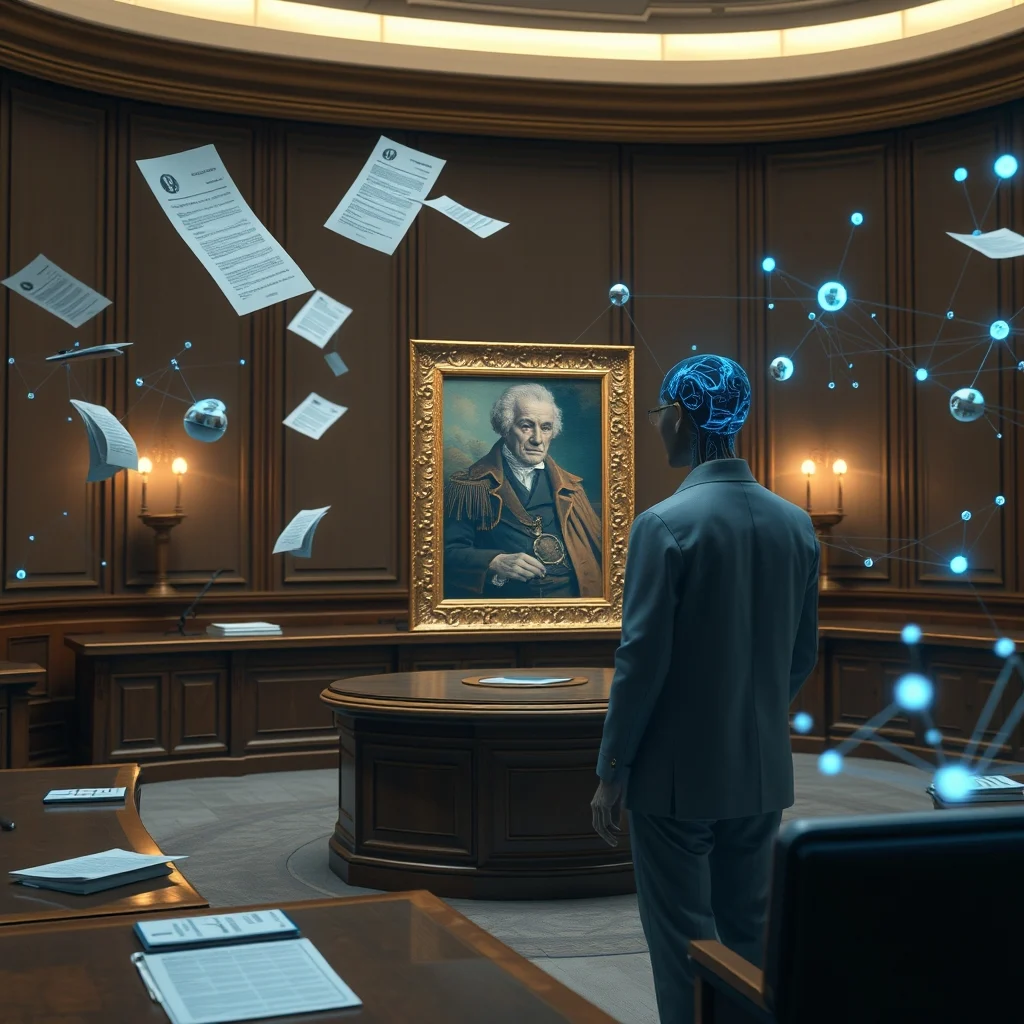

The rapid evolution of artificial intelligence has fundamentally altered the creative landscape, introducing a paradigm shift that challenges traditional concepts of authorship and ownership. As generative models become increasingly sophisticated, the art world faces unprecedented ethical dilemmas regarding copyright, intellectual property rights, and the economic displacement of human creators. This article explores the complex intersection of technology and law, analyzing how AI-generated art is reshaping the industry and what it means for the future of creativity.
Artificial intelligence is no longer a futuristic concept but a present-day reality that influences how images are created, distributed, and monetized. The core issue lies in the training data used by these models, which often consists of millions of copyrighted images scraped from the internet without the permission of the original artists. This has sparked a legal firestorm, with creators demanding recognition, compensation, and control over their work. Understanding the nuances of this situation is crucial for anyone involved in the digital economy.
🚀 Understanding the AI Art Revolution
The emergence of AI art tools has democratized image creation, allowing individuals without traditional artistic training to produce high-quality visuals. However, this accessibility comes with significant ethical baggage. The technology relies on machine learning algorithms that analyze vast datasets to predict and generate new content. While the output can be stunning, the process of generation raises questions about the provenance of the underlying data and the rights of the original creators whose work contributed to the model’s knowledge.
Companies and individuals are now navigating a regulatory gray area where existing copyright laws have not yet caught up with technological capabilities. The definition of “original work” is being tested in courts around the world, with rulings that will set precedents for the next decade of digital commerce. The stakes are high, involving billions of dollars in the creative industry and the livelihoods of millions of artists.
🎯 The Core Ethical and Legal Conflict
At the heart of the debate is the concept of transformative work. Proponents of AI argue that the models create something new and transformative, akin to human artists drawing inspiration from various sources. Critics, however, contend that scraping copyrighted images to train a model is a form of unauthorized reproduction and derivative work. This distinction is critical in determining whether the output belongs to the user, the AI developer, or if it infringes on the rights of the original dataset contributors.
Legal frameworks vary significantly by jurisdiction. In the United States, the Copyright Office has stated that works generated entirely by AI cannot be copyrighted because they lack human authorship. This means that while a human can copyright a prompt or a post-processed image, the core AI generation itself remains in the public domain. In the European Union, new regulations are being drafted to address transparency and labeling of AI-generated content, aiming to protect consumer rights and creator interests.
🛠️ How AI Art Generation Works Technically
Diffusion Models
To understand the legal implications, one must understand the technical mechanism. Most modern AI art tools use diffusion models, which start with random noise and gradually refine it into a coherent image based on a text prompt. This process requires immense computational power and vast amounts of data to learn the patterns and associations within the training set.
Neural Networks
The underlying architecture involves deep neural networks that process information in layers. Each layer learns to recognize increasingly complex features, from edges and shapes to textures and entire objects. The model essentially compresses the knowledge of the training data into mathematical weights, which are then used to reconstruct images during the generation phase.
- Core Definition: A machine learning algorithm that generates images from text descriptions.
- Primary Function: Transforming abstract prompts into visual representations.
- Target Users: Artists, marketers, game developers, and content creators.
- Technical Category: Generative AI and Deep Learning.
🚀 Market Dynamics and Platform Integration
The integration of AI into stock photography and digital asset platforms has accelerated the commercialization of generated art. Major platforms like Adobe Stock and Shutterstock have introduced policies to distinguish between human-created and AI-generated submissions. This distinction affects how content is tagged, searched, and licensed by buyers. As these platforms grow, they become gatekeepers that define the standards for the industry.
Adobe has implemented labeling systems to ensure transparency, requiring creators to disclose when they use Adobe Firefly or other generative tools. This helps maintain trust with buyers who may prefer human-created content for specific projects. Similarly, Shutterstock has established guidelines that prohibit the upload of AI content unless it meets specific safety and copyright criteria, aiming to protect the integrity of their marketplace.
📊 Comparative Analysis of Legal Frameworks
| Category | United States | European Union | Japan |
|---|---|---|---|
| Copyright Status | Human authorship required | Emerging transparency laws | Limited protection for AI |
| Data Training | Fair use debated | Opt-out mechanisms proposed | Allowed for research |
| Commercial Use | Public domain for pure AI | Subject to national law | Depends on license |
The table above highlights the fragmented nature of global copyright law regarding AI. In the United States, the requirement for human authorship creates a unique barrier to protecting pure AI work. The European Union is moving towards mandatory disclosure, which could influence global standards. Japan offers a more permissive environment for data mining, which attracts development but raises concerns among international creators. These differences create challenges for global platforms that must comply with multiple jurisdictions.
🆚 Human Artistry vs. Machine Generation
The distinction between human and machine creation is often blurred in practice. Many artists use AI as a tool within their workflow, combining manual editing with generative outputs. This hybrid approach allows for greater creative control and may offer a path to copyright protection if the human contribution is significant enough. The legal system is currently grappling with how to define the threshold of human involvement required to claim ownership.
Conversely, fully automated generation lacks the intent and personal expression that copyright law seeks to protect. This philosophical difference underpins much of the legal argumentation. Courts are beginning to recognize that while AI can mimic style, it cannot replicate the human experience and emotion that often drives art. This distinction is vital for preserving the economic value of human creativity.
📊 The Economic Impact Assessment
The economic implications of AI art are profound and multifaceted. On one hand, it reduces the cost and time required to produce visual assets, benefiting businesses with tight budgets. On the other hand, it threatens the income of professional illustrators, photographers, and graphic designers who rely on commissions and stock sales. The displacement of low-end creative work is already evident, with clients increasingly turning to AI for quick mockups and social media graphics.
However, high-end creative work remains resilient. Clients seeking unique branding often still prefer human artists who can provide a personalized narrative and emotional depth. The market is bifurcating, with AI dominating the commodity sector and human artists retaining value in the premium sector. This trend suggests a future where AI and human creativity coexist but serve different market segments.
- ✅ Cost Efficiency: AI reduces production time and expenses.
- 🎯 Market Expansion: New opportunities for prompt engineers and curators.
- ⚠️ Revenue Risk: Potential income loss for entry-level creatives.
💻 Legal and Compliance Requirements
Organizations deploying AI art tools must adhere to strict compliance standards to avoid litigation. This includes ensuring that the models used are trained on licensed data and that the output does not infringe on existing trademarks or copyrights. Companies should maintain audit trails of their AI workflows to demonstrate due diligence in case of legal challenges.
Compliance also extends to ethical considerations, such as avoiding the generation of deepfakes or harmful content. Policies are evolving rapidly, and businesses must stay informed about the latest regulations to protect their reputation and assets. Failure to comply can result in significant fines and loss of consumer trust.
🖥️ Minimum Compliance Standards
Every entity using AI art generation must establish a baseline of ethical behavior. This includes obtaining consent for data usage, respecting opt-out requests from creators, and clearly labeling AI content. These standards are becoming industry norms, enforced by both legal mandates and consumer expectations.
⚡ Recommended Specifications for Compliance
To ensure full compliance, organizations should invest in legal review processes before deploying AI tools. This involves consulting with intellectual property experts who understand the nuances of digital art law. Regular training for staff on ethical AI usage is also essential to prevent accidental violations.
🔍 Navigating Ownership Rights
Ownership of AI-generated art is one of the most contentious issues in the industry. If a user generates an image, do they own it? The answer depends on the platform’s terms of service and the applicable copyright law. Some platforms grant users full ownership, while others retain licensing rights for the model provider. Understanding these terms is crucial for commercial users.
For artists using AI, it is advisable to modify the generated output significantly to assert human authorship. This might involve digital painting, compositing, or extensive post-processing. Such modifications help establish a stronger claim to ownership and distinguish the final work from raw AI output.
🧩 Installation or Setup Method for Compliance
Setting up a compliant AI workflow involves configuring software settings to avoid data leaks. Users should disable features that share data with external servers unless necessary. Additionally, using locally hosted models can provide greater privacy and control over the data being processed.
🛡️ Common Errors and How to Fix Them
Many users inadvertently violate copyright by generating images that resemble existing characters or logos. To fix this, users should use generic prompts and avoid specific brand names. If a violation occurs, the content should be removed immediately, and a legal consultation sought.
📈 Market Adoption Rates and Trends
The adoption of AI art tools is growing exponentially, driven by advancements in model quality and accessibility. Surveys indicate that a significant percentage of creative professionals now incorporate AI into their daily workflows. This trend is expected to continue, with AI becoming a standard tool in design software suites.
Market analysis suggests that the value of the AI art sector will reach billions of dollars within the next few years. This growth is fueled by demand from advertising, gaming, and entertainment industries. However, the market is also facing resistance from artist unions and advocacy groups demanding fair treatment and compensation.
- 1) Average Rating: High satisfaction with quality, mixed on ethics.
- 2) Positive Feedback: Speed, cost savings, and ease of use.
- 3) Negative Feedback: Copyright concerns and job displacement.
- 4) Trend Analysis: Rapid integration into enterprise workflows.
🔐 Copyright Protection Mechanisms
Developers are implementing new mechanisms to protect the intellectual property of original creators. This includes watermarking training data and using content IDs to track unauthorized use of protected styles. These technologies aim to balance innovation with respect for existing rights.
🔒 Security Level Assessment
The current security level of AI models is moderate. While they are effective at preventing accidental leaks, they are not foolproof against reverse engineering. Users must remain vigilant about the data they input and the platforms they use.
🛑 Potential Risks
Key risks include data poisoning, where malicious inputs corrupt the model, and style theft, where the model mimics a specific artist too closely. Users should mitigate these risks by using trusted platforms and avoiding sharing sensitive data.
🆚 Leading Stock Platform Policies
Adobe Stock and Shutterstock have emerged as leaders in setting policy standards for AI content. Adobe focuses on transparency and user consent, ensuring that its models are trained on licensed data. Shutterstock emphasizes quality control and verification to prevent copyright infringement.
| Feature | Adobe Stock | Shutterstock |
|---|---|---|
| AI Labeling | Mandatory | Mandatory |
| Data Source | Licensed/Generated | Human/AI Hybrid |
| Legal Protection | High | High |
The comparison shows that both platforms prioritize compliance and transparency. This alignment helps build a stable ecosystem where creators and consumers can trust the content they interact with. As the industry matures, these policies are likely to become the baseline for all major platforms.
💡 Best Practices for Artists
Artists can adapt to the AI revolution by leveraging the technology to enhance their workflow without compromising their style. This involves using AI for brainstorming and concept generation while retaining manual control over the final execution. By doing so, artists can maintain their competitive edge and unique voice.
- ✅ Strategic Use: Use AI for initial drafts and backgrounds.
- 🎯 Skill Development: Focus on high-level editing and curation.
- ⚠️ Documentation: Keep records of your creative process.
📌 Advanced Tricks Few Know
Advanced users can train custom models on their own portfolios to create a unique style that reflects their personal brand. This ensures that the output is distinct and less likely to infringe on others. Additionally, using AI to generate variations allows for rapid iteration and testing of ideas.
🏁 Conclusion and Future Outlook
The ethical dilemmas of AI-generated art are complex and unresolved, but they are not insurmountable. As laws evolve and technology matures, a balance will be struck between innovation and protection. The future of art will likely involve a collaboration between human creativity and machine efficiency, creating new forms of expression that neither could achieve alone.
Stakeholders must engage in dialogue to shape policies that support both creators and innovators. By doing so, the industry can harness the power of AI while respecting the rights and dignity of human artists. The outcome of this evolution will define the creative landscape for generations to come.
❓ Frequently Asked Questions
- Can I copyright AI-generated art?
Generally, no, unless there is significant human modification involved. The US Copyright Office requires human authorship. - Is it legal to use AI for commercial projects?
It depends on the platform’s terms and copyright laws. Ensure you have the right to use the generated content. - How do Adobe Stock and Shutterstock handle AI?
Both require labeling and have specific policies to ensure compliance with copyright laws. - Does AI art infringe on original artists?
This is a legal debate. Some argue it is, others say it is transformative. Laws are still evolving. - Can I train an AI on my own art?
Yes, but you must have the rights to do so. It is a good way to monetize your own style. - What happens if AI art violates a trademark?
You could face legal action. Avoid generating content that uses protected logos or brand names. - Will AI replace human artists?
AI will likely replace low-end tasks, but human creativity remains valuable in high-end markets. - How do I protect my work from AI scraping?
Some tools allow you to opt-out of training data, but enforcement is difficult. - Is AI art considered a new medium?
Many consider it a tool within the existing medium of digital art rather than a completely new category. - What is the future of copyright for AI?
Laws are being updated to address AI, focusing on transparency and human input thresholds.