
Artificial Intelligence (AI) and robotics are no longer confined to the realms of science fiction. Today, they are disruptive forces reshaping industries, economies, and daily life. At the forefront of this revolution stands Tesla, a company widely recognized for its electric vehicles but increasingly celebrated for its bold strides in AI and robotics. Tesla’s AI and robotics division is not just about innovation; it is about redefining the boundaries of what machines can do. From self-driving cars to humanoid robots, Tesla is crafting a future where machines seamlessly integrate into human life, enhancing productivity, safety, and convenience.
This article delves into Tesla’s groundbreaking advancements in AI and robotics, exploring how its innovations are transforming industries such as manufacturing, logistics, and consumer technology. We will examine the technological underpinnings of Tesla’s systems, analyze their real-world applications, and assess their broader implications for society. Whether you’re a tech enthusiast, an industry professional, or simply curious about the future of automation, this comprehensive guide will provide you with a deep understanding of Tesla’s pivotal role in shaping the next era of human-machine collaboration.
🚀 The Rise of Tesla’s AI and Robotics Division
Tesla’s journey into AI and robotics began not as a deliberate pivot but as an organic evolution of its core mission: accelerating the world’s transition to sustainable energy. While Tesla’s electric vehicles (EVs) remain its most visible product, the company’s investments in AI and robotics reflect a strategic vision aimed at creating an ecosystem where machines and humans coexist harmoniously. The formation of Tesla’s AI and robotics division was catalyzed by the company’s ambition to develop Full Self-Driving (FSD) technology, a project that demanded advancements in machine learning, computer vision, and robotic control systems.
At the heart of Tesla’s AI division is its proprietary neural network, trained on vast datasets collected from millions of vehicles worldwide. This network powers not only FSD but also Tesla’s humanoid robot, Optimus, and its advanced manufacturing systems. By leveraging real-world data, Tesla’s AI models continuously improve, enabling machines to learn from experience—a feat that sets Tesla apart from competitors relying on simulated environments or limited datasets. This data-driven approach has positioned Tesla as a leader in AI, with applications extending far beyond automotive technology.
The significance of Tesla’s AI and robotics division cannot be overstated. In an era where automation is poised to replace up to 30% of human labor by 2030, according to McKinsey & Company, Tesla’s innovations offer a glimpse into a future where repetitive and hazardous tasks are handled by machines, freeing humans to focus on creativity and innovation. Moreover, Tesla’s advancements are not merely technological marvels; they are catalysts for economic growth, job creation, and environmental sustainability.
🔹 The Core Pillars of Tesla’s AI and Robotics Strategy
Tesla’s AI and robotics division operates on three foundational pillars: autonomy, adaptability, and scalability. These pillars guide the development of Tesla’s technologies, ensuring they are not only cutting-edge but also practical and deployable at scale.
Autonomy is the cornerstone of Tesla’s AI strategy. The company’s FSD technology, for instance, aims to achieve Level 5 autonomy, where vehicles can operate without any human intervention. This requires overcoming complex challenges such as real-time decision-making, object recognition, and navigating unpredictable environments. Tesla’s AI models are trained on diverse datasets, including footage from cameras mounted on its vehicles, enabling them to recognize pedestrians, traffic signs, and other vehicles with remarkable accuracy.
Adaptability is another critical aspect of Tesla’s approach. Unlike traditional robotics, which often rely on pre-programmed behaviors, Tesla’s systems are designed to learn and adapt. For example, the Optimus robot is equipped with AI that allows it to perform a variety of tasks, from folding laundry to assembling products, by observing and mimicking human actions. This adaptability is powered by Tesla’s neural networks, which can generalize knowledge across different domains, making Tesla’s robots versatile and future-proof.
Scalability ensures that Tesla’s technologies can be deployed globally, regardless of infrastructure or regulatory constraints. Tesla’s manufacturing processes, for instance, are highly automated, with robots working alongside humans to assemble vehicles with precision and efficiency. By automating repetitive tasks, Tesla has reduced production costs and improved quality, setting a new benchmark for the automotive industry. Similarly, Tesla’s FSD technology is designed to scale across different regions, with continuous updates and improvements ensuring compatibility with local traffic laws and road conditions.
📌 The Role of Data in Tesla’s AI Ecosystem
Data is the lifeblood of Tesla’s AI and robotics division. Every mile driven by a Tesla vehicle contributes to a vast, ever-growing dataset that fuels the company’s neural networks. This data-driven approach enables Tesla to refine its models continuously, improving their accuracy and reliability. For example, Tesla’s FSD system relies on a technique called transfer learning, where knowledge gained from one task (e.g., recognizing pedestrians) is applied to another (e.g., navigating intersections). This allows Tesla to achieve breakthroughs in AI performance while minimizing the need for extensive retraining.
Tesla’s data collection strategy is not limited to its vehicles. The company also gathers data from its manufacturing facilities, where sensors and cameras monitor every step of the production process. This data is used to optimize workflows, reduce waste, and enhance safety. In the realm of robotics, Tesla’s Optimus robot is trained using a combination of real-world data and simulations, enabling it to perform tasks with precision and adaptability.
However, Tesla’s reliance on data also raises important questions about privacy and security. While Tesla has implemented robust measures to protect user data, the sheer scale of its data collection efforts has sparked debates about ethical considerations. Tesla addresses these concerns by anonymizing data and ensuring compliance with global regulations, such as the General Data Protection Regulation (GDPR). Moreover, Tesla’s commitment to transparency is evident in its regular software updates, which include detailed release notes outlining the improvements made to its AI models.
🎯 Why Tesla’s AI and Robotics Division Stands Out
Tesla’s AI and robotics division is distinguished by several key factors that set it apart from competitors. First, Tesla’s vertical integration allows it to control every aspect of its AI stack, from hardware (e.g., AI chips like the Dojo supercomputer) to software (e.g., neural networks trained on real-world data). This integration ensures that Tesla’s systems are optimized for performance, energy efficiency, and scalability.
Second, Tesla’s real-world focus differentiates it from companies that rely solely on simulations or lab environments. By training its AI models on data collected from millions of vehicles, Tesla’s systems are exposed to the complexities of real-world driving, including unpredictable scenarios like sudden weather changes or erratic pedestrian behavior. This real-world training enables Tesla’s AI to perform reliably in diverse conditions.
Third, Tesla’s ecosystem approach ensures that its AI and robotics technologies are interconnected. For example, FSD technology not only powers autonomous vehicles but also serves as the foundation for Tesla’s humanoid robot, Optimus. This interconnectedness allows Tesla to leverage synergies across its products, accelerating innovation and reducing development costs.
Finally, Tesla’s commitment to sustainability is a driving force behind its AI and robotics initiatives. By automating tasks that are currently performed by humans, Tesla aims to reduce carbon emissions, improve resource efficiency, and create a more sustainable future. For instance, Tesla’s Gigafactories, which are highly automated, significantly reduce the energy and water consumption associated with traditional manufacturing processes.
🛠️ Inside Tesla’s AI: The Technology Behind the Magic
To understand Tesla’s AI and robotics division, it is essential to explore the technology that powers its innovations. Tesla’s AI stack is a complex, multi-layered system that combines hardware, software, and data science. At its core, Tesla’s AI relies on deep learning, a subset of machine learning that uses neural networks to model and solve complex problems. Tesla’s neural networks are trained on vast datasets, enabling them to recognize patterns, make decisions, and adapt to new situations.
One of the most critical components of Tesla’s AI is its computer vision system. Tesla’s vehicles are equipped with eight cameras that provide a 360-degree view of the surroundings. These cameras capture high-resolution images, which are processed by Tesla’s neural networks to identify objects such as vehicles, pedestrians, and traffic signs. Tesla’s computer vision system is designed to work in real-time, enabling vehicles to react instantly to changes in their environment.
Another key technology is Tesla’s autopilot system, which includes features like adaptive cruise control, lane-keeping assist, and traffic-aware cruise control. These features rely on a combination of sensors, including ultrasonic sensors, radar, and cameras, to monitor the vehicle’s surroundings and make autonomous decisions. Tesla’s autopilot system is continuously updated via over-the-air (OTA) software updates, ensuring that it improves over time.
In the realm of robotics, Tesla’s Optimus robot is a testament to the company’s prowess in AI. The robot is equipped with a neural network that enables it to perform tasks such as grasping objects, navigating environments, and interacting with humans. Tesla’s approach to robotics is unique in that it leverages the same AI models used in its vehicles, ensuring consistency and scalability across its product lineup.
📌 Tesla’s Neural Networks: The Brain Behind the Machines
Tesla’s neural networks are the cornerstone of its AI and robotics division. These networks are trained on vast datasets collected from Tesla’s fleet of vehicles, manufacturing facilities, and robotics labs. Tesla’s neural networks are designed to handle a wide range of tasks, from recognizing objects in real-time to making autonomous decisions in complex environments.
Tesla’s neural networks are built using a technique called convolutional neural networks (CNNs), which are particularly effective at processing visual data. CNNs enable Tesla’s systems to analyze images and videos with remarkable accuracy, making them ideal for applications like computer vision and autonomous driving. Tesla’s neural networks are also trained using reinforcement learning, a technique where models learn by interacting with their environment and receiving feedback based on their actions. This approach allows Tesla’s AI to improve continuously, adapting to new challenges and refining its decision-making processes.
To power these neural networks, Tesla has developed its own AI chips, including the Dojo supercomputer. Dojo is a custom-built system designed to handle the massive computational demands of training large-scale neural networks. By leveraging Dojo, Tesla can train its AI models faster and more efficiently than competitors relying on off-the-shelf hardware. This gives Tesla a significant advantage in terms of performance, scalability, and cost-effectiveness.
⚙️ How Tesla’s FSD Technology Works
Full Self-Driving (FSD) technology is one of Tesla’s most ambitious projects, aiming to achieve Level 5 autonomy where vehicles can operate without any human intervention. FSD relies on a combination of sensors, neural networks, and software to navigate complex environments. Here’s a breakdown of how it works:
- ✅ Sensors: Tesla vehicles are equipped with eight cameras that provide a 360-degree view of the surroundings. These cameras capture high-resolution images, which are processed by Tesla’s neural networks to identify objects such as vehicles, pedestrians, and traffic signs. In addition to cameras, Tesla vehicles use ultrasonic sensors and radar to detect obstacles and monitor the vehicle’s surroundings in real-time.
- 🎯 Neural Networks: Tesla’s neural networks process the data collected by the sensors to make decisions. These networks are trained on vast datasets, enabling them to recognize patterns, predict the behavior of other road users, and plan safe routes. Tesla’s neural networks are also designed to handle edge cases, such as sudden weather changes or erratic pedestrian behavior, ensuring that vehicles can react appropriately in unpredictable situations.
- ⚠️ Software: Tesla’s FSD software is continuously updated via over-the-air (OTA) updates, ensuring that it improves over time. These updates include new features, performance improvements, and bug fixes, allowing Tesla vehicles to adapt to changing road conditions and regulatory requirements. Tesla’s software is also designed to work seamlessly with its hardware, ensuring optimal performance and reliability.
Tesla’s FSD technology is not just about autonomous driving; it is about creating a safer, more efficient, and more sustainable transportation system. By reducing human error, which accounts for 94% of traffic accidents, according to the National Highway Traffic Safety Administration (NHTSA), Tesla’s FSD technology has the potential to save millions of lives and prevent countless injuries.
🚀 Tesla’s Robotics Revolution: Optimus and Beyond
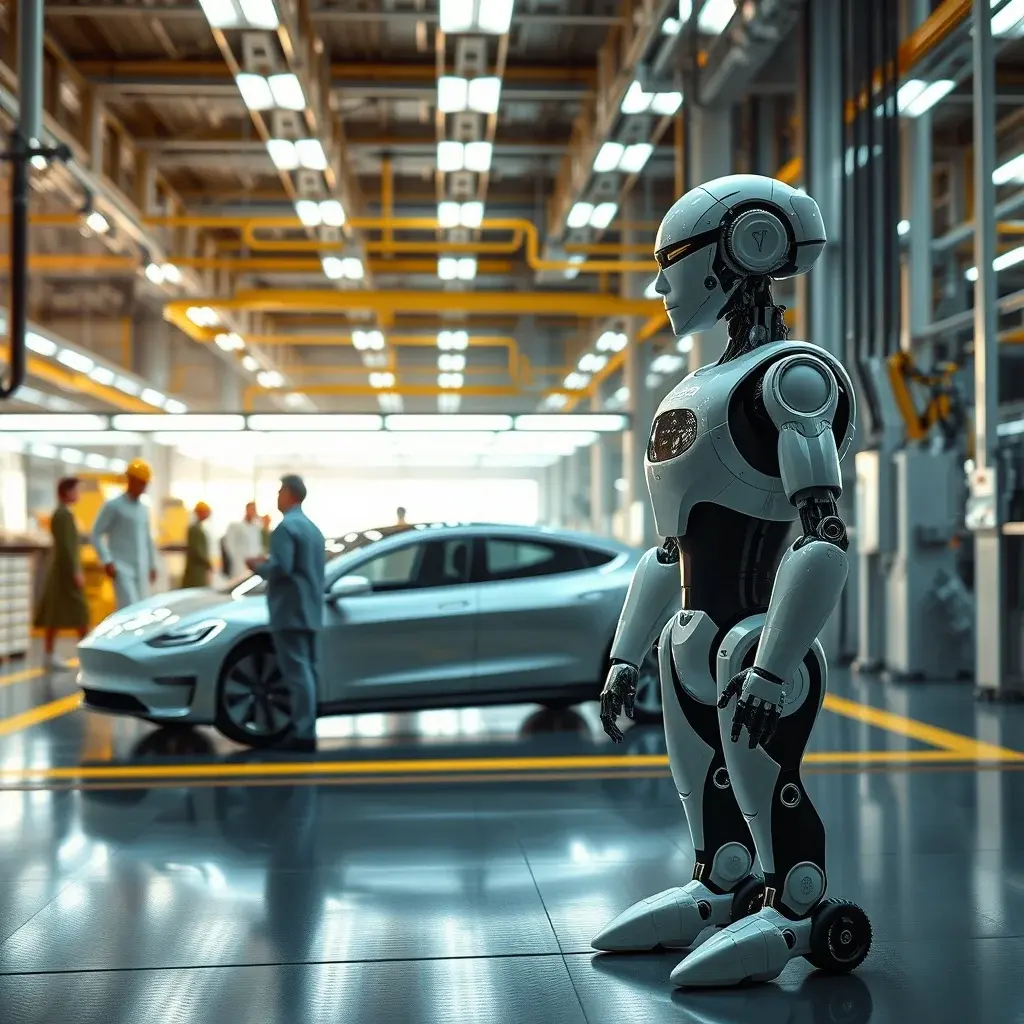
While Tesla’s FSD technology has captured the public’s imagination, the company’s advancements in robotics are equally groundbreaking. At the forefront of Tesla’s robotics division is the Optimus robot, a humanoid robot designed to perform a variety of tasks in manufacturing, logistics, and consumer environments. Optimus represents Tesla’s vision of a future where robots work alongside humans, enhancing productivity and safety.
Optimus is equipped with Tesla’s proprietary AI, which enables it to learn from human actions and adapt to new tasks. The robot is designed to be versatile, with the ability to perform tasks such as assembling products, sorting items, and even assisting in household chores. Tesla’s approach to robotics is unique in that it leverages the same AI models used in its vehicles, ensuring consistency and scalability across its product lineup.
Beyond Optimus, Tesla is working on other robotic systems, including automated guided vehicles (AGVs) for manufacturing and logistics. These systems are designed to streamline workflows, reduce labor costs, and improve safety by handling repetitive and hazardous tasks. For example, Tesla’s Gigafactories use AGVs to transport materials and components, reducing the need for human intervention and minimizing the risk of accidents.
📌 The Optimus Robot: A Deep Dive
The Optimus robot is Tesla’s answer to the long-standing challenge of creating a humanoid robot that can perform a wide range of tasks. Unlike traditional industrial robots, which are often limited to repetitive, pre-programmed actions, Optimus is designed to learn and adapt, making it a versatile tool for various applications.
Optimus’s design is a blend of simplicity and sophistication. The robot stands at approximately 5 feet 9 inches tall and weighs around 125 pounds, making it human-sized and capable of navigating environments designed for humans. Its body is constructed from lightweight materials, allowing it to move with agility and precision. Optimus is equipped with 28 degrees of freedom, enabling it to perform complex tasks such as grasping objects, walking on uneven surfaces, and even dancing.
The robot’s head houses a suite of sensors, including cameras and depth sensors, which provide a 3D view of its surroundings. This data is processed by Tesla’s neural networks, enabling Optimus to recognize objects, navigate obstacles, and interact with humans. Optimus’s hands are designed with tactile sensors, allowing it to sense pressure and adjust its grip accordingly. This makes the robot capable of handling delicate objects, such as glassware, without damaging them.
One of the most impressive features of Optimus is its ability to learn from human demonstrations. By observing human actions, Optimus can replicate tasks such as folding clothes, sorting items, or assembling products. This learning process is powered by Tesla’s neural networks, which are trained on vast datasets of human behavior. As Optimus gains more experience, it becomes increasingly proficient at performing tasks, making it a valuable asset in both industrial and consumer settings.
🎯 Applications of Optimus in Industry
Optimus is poised to revolutionize industries such as manufacturing, logistics, and healthcare by automating tasks that are currently performed by humans. In manufacturing, Optimus can assist in assembling products, quality control, and material handling. For example, in Tesla’s Gigafactories, Optimus could be deployed to perform tasks such as installing batteries, tightening bolts, or inspecting components for defects. By automating these tasks, Tesla can reduce labor costs, improve efficiency, and enhance safety by minimizing the risk of accidents.
In logistics, Optimus can streamline warehouse operations by sorting items, packing orders, and transporting goods. The robot’s ability to navigate complex environments and adapt to new tasks makes it ideal for handling the dynamic demands of modern supply chains. For example, Optimus could be used in e-commerce warehouses to pick and pack orders, reducing the need for manual labor and accelerating order fulfillment.
In healthcare, Optimus has the potential to assist in patient care, rehabilitation, and elderly support. The robot’s ability to interact with humans and perform delicate tasks makes it a valuable tool for healthcare professionals. For example, Optimus could be used to assist in physical therapy by guiding patients through exercises or to help elderly individuals with daily tasks such as cooking or cleaning. While these applications are still in the early stages, they highlight the transformative potential of Tesla’s robotics technology.
🛠️ Tesla’s Impact on Manufacturing: The Future of Smart Factories
Tesla’s advancements in AI and robotics are not limited to its products; they are also reshaping the company’s manufacturing processes. Tesla’s Gigafactories are among the most advanced and automated facilities in the world, showcasing how AI and robotics can revolutionize traditional manufacturing. By integrating robots, AI, and data analytics, Tesla has achieved unprecedented levels of efficiency, quality, and sustainability in its production processes.
One of the key innovations in Tesla’s manufacturing facilities is the use of autonomous guided vehicles (AGVs). These vehicles transport materials and components across the factory floor, reducing the need for manual labor and minimizing the risk of accidents. AGVs are equipped with sensors and AI, enabling them to navigate complex environments, avoid obstacles, and optimize routes. Tesla’s AGVs are also designed to work alongside humans, creating a collaborative environment where robots handle repetitive tasks while humans focus on complex or creative work.
Another critical component of Tesla’s smart factories is its use of predictive maintenance. By leveraging AI and data analytics, Tesla can monitor the health of its machinery in real-time, predicting when maintenance is required before a breakdown occurs. This proactive approach reduces downtime, extends the lifespan of equipment, and lowers maintenance costs. For example, Tesla’s Gigafactory in Berlin uses AI-powered sensors to monitor the condition of its machinery, ensuring that production lines run smoothly and efficiently.
Tesla’s commitment to sustainability is also evident in its manufacturing processes. The company’s Gigafactories are designed to minimize energy consumption and waste, with features such as solar panels, energy storage systems, and water recycling. By integrating renewable energy sources and sustainable materials, Tesla reduces its environmental footprint while maintaining high levels of productivity. For instance, Tesla’s Gigafactory in Texas is powered by 100% renewable energy, demonstrating the company’s dedication to a greener future.
📌 Case Study: Tesla’s Gigafactory in Berlin
Tesla’s Gigafactory in Berlin is a prime example of how AI and robotics can transform manufacturing. The facility, which opened in 2022, is one of the most advanced car manufacturing plants in the world, with a strong emphasis on automation and sustainability. The Gigafactory in Berlin is designed to produce up to 500,000 vehicles per year, with a focus on the Model Y and Model 3.
The factory’s production lines are highly automated, with robots performing tasks such as welding, painting, and assembly. These robots are equipped with Tesla’s proprietary AI, enabling them to adapt to new tasks and improve their performance over time. For example, Tesla’s welding robots use computer vision to ensure precise and consistent welds, reducing defects and improving the overall quality of the vehicles.
The Gigafactory in Berlin also incorporates Tesla’s FSD technology, with autonomous vehicles used to transport materials and components across the factory floor. These vehicles are equipped with sensors and AI, enabling them to navigate the facility’s complex environment and avoid obstacles. By automating material transport, Tesla reduces the need for manual labor and minimizes the risk of accidents, creating a safer and more efficient production environment.
In addition to its advanced manufacturing processes, the Gigafactory in Berlin is committed to sustainability. The facility is powered by 100% renewable energy, with solar panels and wind turbines providing electricity. Tesla also incorporates sustainable materials into its vehicles, such as recycled plastics and natural fibers, reducing the environmental impact of its products. The Gigafactory in Berlin exemplifies Tesla’s vision of a future where manufacturing is not only efficient and profitable but also sustainable and eco-friendly.
⚡ The Role of AI in Tesla’s Quality Control
Quality control is a critical aspect of Tesla’s manufacturing processes, ensuring that every vehicle meets the company’s high standards. Tesla leverages AI and robotics to monitor production lines in real-time, identifying defects and anomalies before they escalate. This proactive approach to quality control reduces waste, improves efficiency, and enhances customer satisfaction.
Tesla’s quality control systems use a combination of sensors, cameras, and AI to inspect vehicles at every stage of the production process. For example, Tesla’s Gigafactories use computer vision to detect imperfections in car bodies, such as scratches or dents. These systems can identify defects with remarkable accuracy, enabling Tesla to address issues immediately and prevent them from affecting the final product.
In addition to visual inspections, Tesla’s quality control systems use AI to analyze data from sensors embedded in vehicles. For instance, Tesla’s AI can detect anomalies in the performance of electric motors, batteries, or other critical components, enabling Tesla to address issues before they lead to failures. This data-driven approach to quality control ensures that Tesla’s vehicles are reliable, safe, and built to last.
Tesla’s commitment to quality control is also evident in its customer service. The company uses AI-powered chatbots to assist customers with inquiries and troubleshooting, providing quick and accurate responses. Tesla’s AI systems also analyze customer feedback to identify common issues and improve its products over time. By integrating AI into its quality control and customer service processes, Tesla ensures that its vehicles meet the highest standards of performance and reliability.
🚀 The Broader Impact of Tesla’s AI and Robotics Division
Tesla’s advancements in AI and robotics extend far beyond its own products and manufacturing processes. The company’s innovations are poised to have a profound impact on industries such as logistics, healthcare, and consumer technology, reshaping the way we live and work. By automating repetitive and hazardous tasks, Tesla’s AI and robotics technologies are creating new opportunities for economic growth, job creation, and environmental sustainability.
In logistics, Tesla’s AI-powered systems are streamlining supply chains, reducing costs, and improving efficiency. For example, Tesla’s autonomous vehicles can transport goods across warehouses or between facilities, reducing the need for manual labor and minimizing the risk of accidents. In healthcare, Tesla’s robotics technology is assisting in patient care, rehabilitation, and elderly support, enhancing the quality of life for millions of people. In consumer technology, Tesla’s AI and robotics innovations are enabling new products and services, from autonomous vehicles to humanoid robots, that are redefining the boundaries of what is possible.
The broader impact of Tesla’s AI and robotics division is not limited to specific industries; it is a testament to the transformative power of technology. By pushing the boundaries of what machines can do, Tesla is paving the way for a future where humans and machines collaborate seamlessly, creating a world that is more efficient, sustainable, and inclusive. However, this transformation also raises important questions about the ethical, social, and economic implications of automation. As Tesla’s technologies become more advanced and widespread, it is crucial to consider how they will shape society and ensure that the benefits of automation are shared equitably.
📌 The Economic Impact of Automation
Automation is one of the most significant economic trends of the 21st century, with the potential to reshape industries, create new jobs, and drive economic growth. According to a report by the McKinsey Global Institute, automation could add up to $13 trillion to the global economy by 2030, boosting productivity and GDP. Tesla’s AI and robotics technologies are at the forefront of this trend, enabling businesses to automate tasks that were previously performed by humans.
The economic impact of automation is already evident in industries such as manufacturing and logistics. For example, Tesla’s Gigafactories are highly automated, with robots performing tasks such as welding, painting, and assembly. This automation has reduced labor costs, improved efficiency, and enhanced quality, enabling Tesla to produce vehicles at scale while maintaining high standards. In logistics, Tesla’s autonomous vehicles are streamlining supply chains, reducing costs, and improving delivery times, creating new opportunities for businesses to optimize their operations.
However, the economic impact of automation is not limited to cost savings and efficiency gains. Automation also creates new jobs, particularly in areas such as AI development, robotics engineering, and data science. Tesla’s AI and robotics division, for instance, employs thousands of engineers, scientists, and technicians who are responsible for designing, building, and maintaining its technologies. These jobs not only provide employment opportunities but also drive innovation and economic growth.
At the same time, automation raises concerns about job displacement, particularly in industries where repetitive tasks are common. To address this challenge, Tesla is investing in reskilling and upskilling programs, helping workers transition into new roles in AI, robotics, and other high-demand fields. For example, Tesla’s Gigafactories in Nevada and Berlin offer training programs for employees, equipping them with the skills needed to work alongside robots and AI systems. These initiatives demonstrate Tesla’s commitment to ensuring that the benefits of automation are shared equitably across society.
🎯 The Social and Ethical Implications of AI and Robotics
While Tesla’s AI and robotics technologies offer tremendous benefits, they also raise important social and ethical questions. One of the most pressing concerns is the potential for job displacement, particularly in industries where automation replaces human labor. As Tesla’s robots and AI systems become more advanced, they may render certain jobs obsolete, creating economic and social challenges for affected workers. To mitigate these risks, Tesla is investing in education and training programs, helping workers adapt to the changing landscape of work.
Another ethical concern is the potential for bias in AI systems. Tesla’s neural networks are trained on vast datasets, which may inadvertently include biases that affect the performance of its AI models. For example, if Tesla’s FSD technology is primarily trained on data from urban environments, it may struggle to navigate rural roads where driving conditions are different. To address this challenge, Tesla is committed to diversifying its training datasets and incorporating feedback from diverse sources to ensure that its AI systems are fair and inclusive.
The use of AI and robotics also raises questions about privacy and security. Tesla’s vehicles, for instance, collect vast amounts of data from their surroundings, including images of pedestrians and other road users. While Tesla has implemented robust measures to protect user data, the sheer scale of its data collection efforts has sparked debates about privacy. Tesla addresses these concerns by anonymizing data and ensuring compliance with global regulations, such as the General Data Protection Regulation (GDPR). Moreover, Tesla’s commitment to transparency is evident in its regular software updates, which include detailed release notes outlining the improvements made to its AI models.
Finally, the deployment of AI and robotics raises questions about accountability. In the event of an accident involving an autonomous vehicle or a robot, who is responsible? Tesla’s FSD technology, for instance, operates on a complex decision-making process that involves multiple AI models. In the event of a failure, determining liability can be challenging. To address this issue, Tesla is working with regulators and industry partners to establish clear guidelines for accountability and liability in AI-driven systems.
🔍 Challenges and Limitations of Tesla’s AI and Robotics Division
Despite its groundbreaking advancements, Tesla’s AI and robotics division faces several challenges and limitations. These challenges range from technical hurdles to ethical dilemmas, highlighting the complexities of developing and deploying AI-driven technologies at scale. Understanding these challenges is crucial for assessing the feasibility and impact of Tesla’s innovations.
One of the most significant challenges facing Tesla’s AI and robotics division is the complexity of real-world environments. While Tesla’s AI models perform exceptionally well in controlled environments, such as test tracks or manufacturing facilities, they often struggle with the unpredictability of real-world scenarios. For example, Tesla’s FSD technology may encounter difficulties in navigating complex urban environments, where traffic patterns, pedestrian behavior, and road conditions vary widely. Similarly, Tesla’s Optimus robot may face challenges in performing tasks in unstructured environments, where objects and obstacles are not neatly arranged.
Another challenge is the scalability of Tesla’s AI and robotics technologies. While Tesla has achieved remarkable success in training its AI models on vast datasets, scaling these models to handle real-world applications remains a formidable task. For example, deploying Tesla’s FSD technology globally requires accounting for diverse road conditions, traffic laws, and regulatory frameworks. Similarly, scaling Tesla’s Optimus robot for widespread adoption in manufacturing or logistics requires addressing challenges such as cost, energy efficiency, and interoperability with existing systems.
The cost of developing and deploying AI and robotics technologies is another significant challenge. Tesla’s investments in AI and robotics are substantial, requiring significant resources in terms of research, development, and infrastructure. For example, Tesla’s Dojo supercomputer, which powers its AI models, cost hundreds of millions of dollars to develop. Similarly, the production of Tesla’s Optimus robot requires advanced manufacturing capabilities and specialized components, driving up costs. While Tesla’s innovations have the potential to generate substantial returns, the upfront investment is substantial, posing a barrier to entry for smaller companies or startups.
📌 Technical Limitations and Bottlenecks
Tesla’s AI and robotics division faces several technical limitations that hinder the performance and scalability of its technologies. One of the most significant bottlenecks is the computational power required to train and deploy AI models. Training large-scale neural networks, such as those used in Tesla’s FSD technology, demands massive computational resources, which are expensive and energy-intensive. While Tesla’s Dojo supercomputer is designed to address this challenge, it still requires significant infrastructure and maintenance, limiting its accessibility to smaller companies or research institutions.
Another technical limitation is the latency of AI decision-making. In real-time applications such as autonomous driving or robotics, decisions must be made instantaneously to ensure safety and efficiency. However, Tesla’s AI models, which rely on deep neural networks, can introduce latency due to the computational complexity of their decision-making processes. This latency can be particularly problematic in safety-critical applications, where split-second decisions are essential. To address this challenge, Tesla is investing in edge computing, which moves computation closer to the source of data, reducing latency and improving performance.
The interpretability of AI models is another technical challenge. Tesla’s neural networks are highly complex, making it difficult to understand how they arrive at their decisions. This lack of interpretability can be problematic in applications where transparency and accountability are critical, such as autonomous driving or medical diagnostics. To address this challenge, Tesla is exploring techniques such as explainable AI (XAI), which aims to make AI models more transparent and understandable. By improving the interpretability of its AI systems, Tesla can enhance trust and reliability in its technologies.
⚠️ Ethical and Regulatory Concerns
Beyond technical challenges, Tesla’s AI and robotics division faces ethical and regulatory concerns that could impact its growth and adoption. One of the most pressing ethical concerns is the potential for AI to reinforce biases. Tesla’s AI models are trained on vast datasets, which may inadvertently include biases that affect their performance. For example, if Tesla’s FSD technology is primarily trained on data from urban environments, it may struggle to navigate rural roads where driving conditions are different. To address this challenge, Tesla is committed to diversifying its training datasets and incorporating feedback from diverse sources to ensure that its AI systems are fair and inclusive.
Another ethical concern is the impact of automation on employment. As Tesla’s robots and AI systems become more advanced, they may replace certain jobs, creating economic and social challenges for affected workers. To mitigate these risks, Tesla is investing in reskilling and upskilling programs, helping workers transition into new roles in AI, robotics, and other high-demand fields. For example, Tesla’s Gigafactories in Nevada and Berlin offer training programs for employees, equipping them with the skills needed to work alongside robots and AI systems.
The regulatory landscape for AI and robotics is another significant challenge. Governments around the world are grappling with how to regulate AI-driven technologies, balancing innovation with safety and accountability. For example, Tesla’s FSD technology operates in a legal gray area in many jurisdictions, where the regulatory framework for autonomous vehicles is still evolving. Similarly, the deployment of Tesla’s Optimus robot in manufacturing or logistics may require compliance with industry-specific regulations, such as safety standards for industrial robots. To address these challenges, Tesla is working with regulators and industry partners to establish clear guidelines for the safe and responsible deployment of its technologies.
💻 What’s Next for Tesla’s AI and Robotics Division?
Tesla’s AI and robotics division is on a trajectory of rapid growth and innovation, with several exciting developments on the horizon. These advancements promise to further solidify Tesla’s position as a leader in AI and robotics, while also addressing some of the challenges and limitations currently facing the industry. From improved AI models to new robotic systems, Tesla’s future innovations are set to redefine the boundaries of what machines can do.
The next frontier for Tesla’s AI and robotics division is the expansion of its FSD technology. Tesla’s goal is to achieve Level 5 autonomy, where vehicles can operate without any human intervention in any environment. To achieve this, Tesla is investing in improving the robustness of its AI models, enhancing their ability to handle edge cases and unpredictable scenarios. For example, Tesla is working on improving its computer vision systems to better recognize objects in low-light conditions or adverse weather. Additionally, Tesla is exploring the use of quantum computing to accelerate the training of its neural networks, enabling faster and more efficient model development.
Another key area of focus is the scaling of Tesla’s robotics technologies. While Tesla’s Optimus robot has demonstrated impressive capabilities in controlled environments, scaling it for widespread adoption in manufacturing, logistics, and consumer applications remains a challenge. To address this, Tesla is working on improving the cost-effectiveness, energy efficiency, and versatility of its robotic systems. For example, Tesla is exploring the use of lightweight materials and modular designs to reduce the cost and complexity of its robots. Additionally, Tesla is investing in the development of collaborative robots (cobots), which can work alongside humans without requiring extensive safety measures.
The integration of AI and robotics with other emerging technologies is another exciting area of development. For example, Tesla is exploring the use of AI to enhance the capabilities of its humanoid robots, enabling them to perform more complex tasks such as cooking, cleaning, or even providing companionship. Tesla is also investigating the potential of augmented reality (AR) and virtual reality (VR) to improve the training and operation of its robots. By leveraging these technologies, Tesla can create more intuitive and user-friendly interfaces for its robotic systems, making them accessible to a broader audience.
📌 The Role of AI in Tesla’s Energy Division
While Tesla is best known for its electric vehicles and robotics, the company’s AI and robotics division is also making strides in its energy division. Tesla’s energy products, such as the Powerwall, Powerpack, and Megapack, are designed to store and manage energy from renewable sources such as solar and wind. AI plays a critical role in optimizing the performance of these systems, ensuring that energy is stored and distributed efficiently.
For example, Tesla’s AI models analyze weather data, energy demand, and grid conditions to predict when renewable energy sources will produce the most energy. This enables Tesla to optimize the charging and discharging of its energy storage systems, maximizing their efficiency and reducing waste. Additionally, Tesla’s AI systems monitor the health of its energy products in real-time, predicting when maintenance is required and preventing failures before they occur. By integrating AI into its energy division, Tesla is creating a smarter, more resilient grid that can better accommodate the intermittent nature of renewable energy sources.
🎯 The Future of Autonomous Vehicles
The future of autonomous vehicles is one of the most exciting and transformative trends in the automotive industry. Tesla’s FSD technology is at the forefront of this trend, with the potential to revolutionize transportation by making it safer, more efficient, and more sustainable. However, achieving full autonomy remains a complex and challenging goal, requiring advancements in AI, robotics, and infrastructure.
In the coming years, Tesla is likely to focus on improving the robustness of its FSD technology, enabling it to handle a wider range of driving scenarios. This includes enhancing the system’s ability to navigate urban environments, interact with pedestrians, and respond to unexpected events. Additionally, Tesla is working on improving the scalability of its FSD technology, ensuring that it can be deployed globally across different regulatory frameworks and road conditions.
Another key area of development is the integration of FSD technology with other emerging trends, such as vehicle-to-everything (V2X) communication. V2X enables vehicles to communicate with each other, traffic lights, and road infrastructure, creating a connected ecosystem that enhances safety and efficiency. By leveraging V2X technology, Tesla’s FSD system can make more informed decisions, reducing the risk of accidents and improving traffic flow. Tesla is also exploring the use of blockchain technology to enhance the security and transparency of its autonomous vehicle ecosystem, ensuring that data is shared and verified securely.
⚡ The Impact of Tesla’s AI on Society
Tesla’s AI and robotics technologies are not just transforming industries; they are also reshaping society. By automating tasks that were previously performed by humans, Tesla’s innovations are creating new opportunities for economic growth, job creation, and environmental sustainability. However, they also raise important questions about the future of work, the role of humans in an AI-driven world, and the ethical implications of automation.
One of the most significant impacts of Tesla’s AI is the creation of new jobs. While automation may replace certain jobs, it also creates new opportunities in fields such as AI development, robotics engineering, and data science. Tesla’s AI and robotics division, for instance, employs thousands of engineers, scientists, and technicians who are responsible for designing, building, and maintaining its technologies. These jobs not only provide employment opportunities but also drive innovation and economic growth. Additionally, Tesla’s focus on sustainability and renewable energy is creating jobs in industries such as solar power, energy storage, and electric vehicle manufacturing.
Another impact of Tesla’s AI is the enhancement of human capabilities. By automating repetitive and hazardous tasks, Tesla’s robots and AI systems free humans to focus on creative and strategic work. For example, Tesla’s Optimus robot can handle dangerous tasks in manufacturing or logistics, reducing the risk of accidents and injuries. Similarly, Tesla’s FSD technology can reduce the stress and fatigue associated with long drives, making transportation safer and more enjoyable. By augmenting human capabilities, Tesla’s AI and robotics technologies are creating a future where humans and machines collaborate seamlessly.
The environmental impact of Tesla’s AI is another area of significance. By promoting the adoption of electric vehicles and renewable energy, Tesla’s innovations are reducing carbon emissions and mitigating the effects of climate change. For example, Tesla’s Gigafactories are powered by 100% renewable energy, reducing the company’s environmental footprint. Additionally, Tesla’s AI systems optimize the charging and discharging of its energy storage products, ensuring that renewable energy sources are used efficiently. By integrating AI into its sustainability initiatives, Tesla is creating a more sustainable future for generations to come.
🔚 Final Verdict: Tesla’s AI and Robotics Division – A Game Changer for the Future
Tesla’s AI and robotics division stands as a testament to the power of innovation and the transformative potential of technology. From its groundbreaking Full Self-Driving technology to its versatile humanoid robot, Optimus, Tesla is redefining the boundaries of what machines can do. By leveraging AI, robotics, and data science, Tesla is creating a future where humans and machines collaborate seamlessly, enhancing productivity, safety, and sustainability.
However, Tesla’s journey is not without its challenges. Technical limitations, ethical concerns, and regulatory hurdles pose significant obstacles to the widespread adoption of its technologies. Yet, Tesla’s commitment to addressing these challenges head-on, combined with its relentless pursuit of innovation, positions the company as a leader in the AI and robotics revolution. As Tesla continues to push the boundaries of what is possible, its impact on industries, economies, and societies will only grow stronger.
For businesses, Tesla’s AI and robotics technologies offer a glimpse into the future of automation, with the potential to streamline operations, reduce costs, and enhance competitiveness. For consumers, Tesla’s innovations promise a world of safer, more efficient, and more sustainable transportation. And for society as a whole, Tesla’s advancements are a reminder of the transformative power of technology to shape a better future.
In conclusion, Tesla’s AI and robotics division is not just a technological marvel; it is a catalyst for change. By pushing the boundaries of AI, robotics, and automation, Tesla is paving the way for a future where humans and machines coexist harmoniously, creating a world that is more efficient, sustainable, and inclusive. As we stand on the cusp of this new era, Tesla’s innovations serve as a beacon of hope, inspiring us to reimagine what is possible and strive for a future where technology works for the betterment of all.
❓ Frequently Asked Questions
-
What is Tesla’s Full Self-Driving (FSD) technology, and how does it work?
Tesla’s Full Self-Driving (FSD) technology is an advanced driver-assistance system designed to achieve Level 5 autonomy, where vehicles can operate without human intervention. FSD relies on a combination of sensors (cameras, radar, ultrasonic sensors), neural networks, and software to navigate complex environments. The system processes real-time data to identify objects, predict behaviors, and plan safe routes. FSD is continuously updated via over-the-air (OTA) software updates, ensuring that it improves over time.
-
What is the Optimus robot, and what tasks can it perform?
The Optimus robot is a humanoid robot developed by Tesla, designed to perform a variety of tasks in manufacturing, logistics, and consumer environments. Equipped with Tesla’s proprietary AI, Optimus can learn from human actions, adapt to new tasks, and interact with its surroundings. The robot is capable of performing tasks such as assembling products, sorting items, handling delicate objects, and even assisting in household chores. Its versatility makes it a valuable asset in industries ranging from manufacturing to healthcare.
-
How does Tesla’s AI improve over time?
Tesla’s AI improves over time through a process called continuous learning, where its neural networks are trained on vast datasets collected from real-world scenarios. Tesla’s vehicles, manufacturing facilities, and robotics labs provide a constant stream of data, which is used to refine and enhance Tesla’s AI models. Additionally, Tesla incorporates reinforcement learning, where AI systems learn by interacting with their environment and receiving feedback based on their actions. This approach enables Tesla’s AI to adapt to new challenges and refine its decision-making processes.
-
What are the main challenges facing Tesla’s AI and robotics division?
Tesla’s AI and robotics division faces several challenges, including the complexity of real-world environments, scalability of its technologies, and the high cost of development and deployment. Technical limitations such as computational power, latency in AI decision-making, and the interpretability of AI models also pose significant hurdles. Additionally, ethical concerns such as job displacement, bias in AI systems, and regulatory compliance require careful consideration and proactive solutions.
-
How is Tesla addressing the ethical implications of AI and robotics?
Tesla is committed to addressing the ethical implications of its AI and robotics technologies through several initiatives. The company is investing in reskilling and upskilling programs to help workers transition into new roles in AI, robotics, and other high-demand fields. Tesla is also working to diversify its training datasets and incorporate feedback from diverse sources to ensure that its AI systems are fair and inclusive. Additionally, Tesla collaborates with regulators and industry partners to establish clear guidelines for the safe and responsible deployment of its technologies.
-
What industries will be most impacted by Tesla’s AI and robotics innovations?
Tesla’s AI and robotics innovations will have a profound impact on several industries, including manufacturing, logistics, healthcare, and consumer technology. In manufacturing, Tesla’s automated systems will streamline production lines, reduce costs, and improve quality. In logistics, Tesla’s autonomous vehicles and robots will optimize supply chains and enhance efficiency. In healthcare, Tesla’s robotics technology will assist in patient care, rehabilitation, and elderly support. In consumer technology, Tesla’s advancements will enable new products and services that redefine the boundaries of what is possible.
-
How does Tesla’s AI contribute to sustainability?
Tesla’s AI contributes to sustainability by optimizing the performance of its electric vehicles, energy storage systems, and manufacturing processes. For example, Tesla’s AI models analyze weather data, energy demand, and grid conditions to predict when renewable energy sources will produce the most energy, enabling Tesla to store and distribute energy efficiently. Additionally, Tesla’s Gigafactories are powered by 100% renewable energy, reducing the company’s environmental footprint. By integrating AI into its sustainability initiatives, Tesla is creating a more sustainable future for generations to come.
-
What is Tesla’s Dojo supercomputer, and how does it power its AI models?
Tesla’s Dojo supercomputer is a custom-built system designed to handle the massive computational demands of training large-scale neural networks. Dojo leverages Tesla’s proprietary hardware and software to accelerate the training process, enabling Tesla to develop more advanced and efficient AI models. Dojo’s architecture is optimized for parallel processing, allowing it to handle the vast datasets required for training Tesla’s neural networks. By leveraging Dojo, Tesla can train its AI models faster and more efficiently than competitors relying on off-the-shelf hardware.
-
How will Tesla’s AI and robotics technologies shape the future of work?
Tesla’s AI and robotics technologies will shape the future of work by automating repetitive and hazardous tasks, freeing humans to focus on creative and strategic work. While automation may replace certain jobs, it will also create new opportunities in fields such as AI development, robotics engineering, and data science. Tesla is investing in reskilling and upskilling programs to help workers transition into these new roles, ensuring that the benefits of automation are shared equitably across society. By augmenting human capabilities, Tesla’s innovations are creating a future where humans and machines collaborate seamlessly.
-
What are the potential risks of Tesla’s AI and robotics technologies?
The potential risks of Tesla’s AI and robotics technologies include job displacement, bias in AI systems, privacy concerns, and regulatory challenges. Automation may replace certain jobs, creating economic and social challenges for affected workers. AI systems may inadvertently include biases that affect their performance, leading to unfair or discriminatory outcomes. Additionally, the collection and use of vast amounts of data raise concerns about privacy and security. To mitigate these risks, Tesla is committed to addressing these challenges proactively through education, diversity in training datasets, and collaboration with regulators.
| Aspect | Tesla’s AI and Robotics | Competitors |
|---|---|---|
| Data Collection | Leverages real-world data from millions of vehicles and devices, enabling continuous learning and improvement. | Often relies on simulated environments or limited datasets, limiting the adaptability of AI models. |
| Hardware Integration | Vertical integration with proprietary AI chips (e.g., Dojo supercomputer) and sensors for optimized performance. | Relies on third-party hardware, which may limit performance and scalability. |
| Real-World Applications | Focuses on practical, deployable solutions such as FSD, Optimus, and automated manufacturing. | Often prioritizes theoretical advancements or niche applications with limited real-world impact. |
| Sustainability | Integrates AI and robotics with renewable energy and sustainable manufacturing processes. | Limited focus on sustainability, with more emphasis on traditional industrial approaches. |
| Cost Efficiency | Long-term cost savings through automation, reduced labor costs, and improved efficiency. | Higher upfront costs due to reliance on third-party solutions and less optimized processes. |
Tesla’s AI and robotics division stands out from its competitors due to its real-world focus, vertical integration, and commitment to sustainability. By leveraging vast datasets, proprietary hardware, and practical applications, Tesla is able to develop AI and robotics technologies that are not only advanced but also scalable and sustainable. This positions Tesla as a leader in the AI and robotics revolution, with the potential to transform industries and shape the future of automation.