
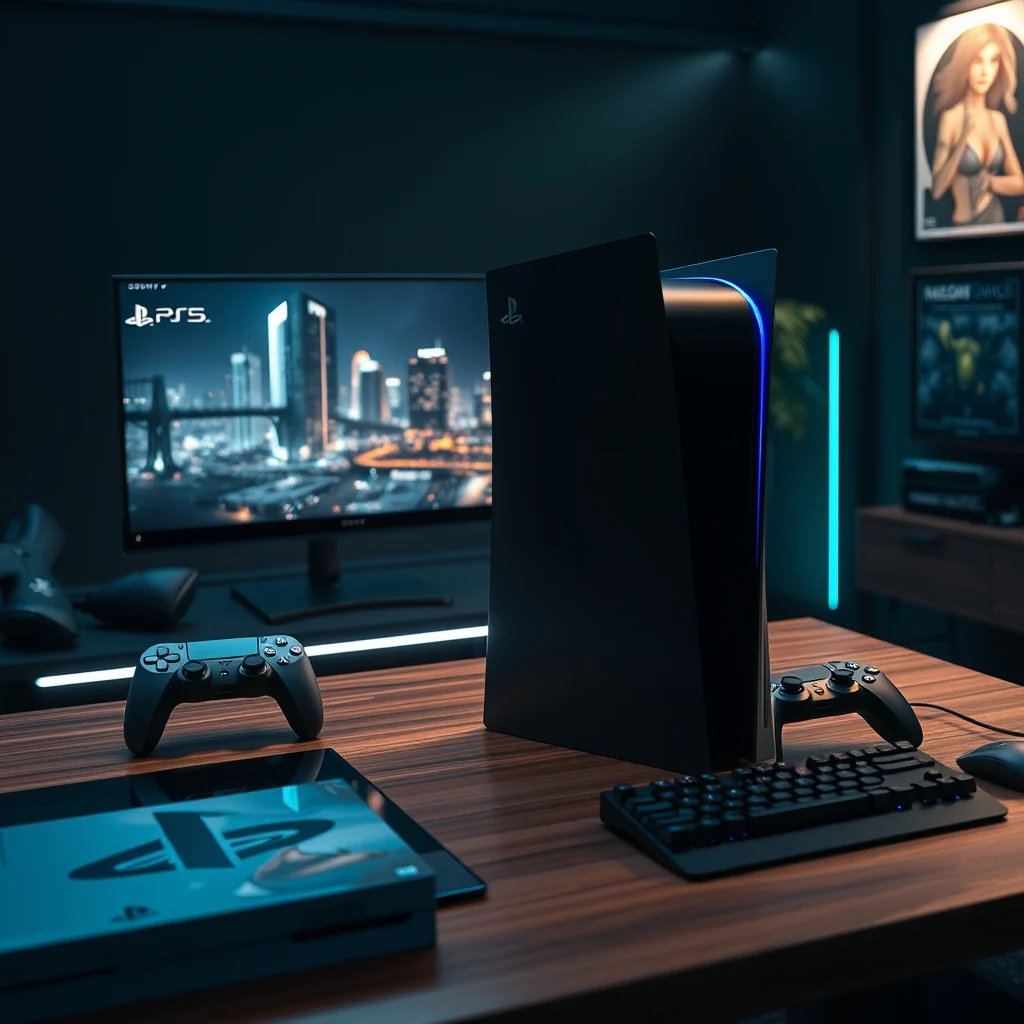

Sony’s next-generation console, the PlayStation 5 Pro, has become one of the most anticipated releases in the gaming industry, sparking intense speculation about its hardware capabilities, release timeline, and market impact. While Sony has remained tight-lipped about official details, leaks, insider reports, and industry analysts have pieced together a compelling picture of what the PS5 Pro might offer. This article dives deep into the rumors surrounding the console’s specs, explores its potential release window, and analyzes how these upgrades could reshape the gaming hardware market, game development, and Sony’s competition with rivals like Microsoft and Nintendo.
📰 What We Know So Far About the PlayStation 5 Pro
The PlayStation 5 Pro is expected to be a mid-generation refresh of Sony’s current flagship console, the PlayStation 5, which launched in November 2020. Mid-generation upgrades are not uncommon in the gaming industry, as they allow manufacturers to capitalize on technological advancements without waiting for a full console cycle. For instance, Microsoft followed a similar strategy with the Xbox Series X and later introduced the Xbox Series X Enhanced models. Sony appears to be adopting a comparable approach, aiming to extend the lifespan of the PS5 ecosystem while offering enhanced performance for gamers and developers.
The most compelling rumors about the PS5 Pro revolve around its GPU and CPU upgrades. Insiders suggest that the console could feature a custom AMD RDNA 3 GPU, which would represent a significant leap from the RDNA 2 architecture found in the original PS5. The RDNA 3 architecture is known for its improved ray tracing capabilities, higher clock speeds, and better power efficiency, all of which could translate into smoother frame rates, higher resolutions, and more immersive visuals in supported games.
Another area of speculation is the console’s SSD storage. The original PS5 already boasts one of the fastest SSDs in gaming, but the PS5 Pro is rumored to feature an even faster storage solution. This could reduce load times significantly, making open-world games feel even more seamless and responsive. Additionally, there are whispers about an increased RAM capacity, possibly upgrading from 16GB GDDR6 to 24GB or more, which would benefit game developers working on highly detailed environments and complex AI systems.
🔍 The Role of Ray Tracing and FSR in the PS5 Pro
Ray tracing has been a game-changer in modern gaming, allowing for more realistic lighting, shadows, and reflections. The PS5 currently supports ray tracing, but the PS5 Pro is rumored to take this further with hardware-accelerated ray tracing on a larger scale. This could enable developers to implement more dynamic lighting effects, such as real-time global illumination, which would make game worlds feel more alive and immersive.
Another rumored feature is the inclusion of AMD’s FidelityFX Super Resolution (FSR) 3, which could allow the PS5 Pro to render games at a lower resolution while upscaling them to near-native quality. This technology could help bridge the gap between performance and visual fidelity, especially in demanding titles. FSR 3 also introduces frame generation, which could significantly boost frame rates in supported games, offering a smoother gaming experience without requiring top-tier hardware.
🚀 Expected Hardware Specifications of the PS5 Pro
The hardware specifications of the PS5 Pro remain largely speculative, but several key upgrades have been consistently mentioned across credible sources. Below is a breakdown of the most plausible hardware enhancements based on current rumors and industry trends.
- ✅ Custom AMD Zen 4 CPU with higher clock speeds (potentially 3.5GHz or above)
- ✅ RDNA 3 GPU with 30-50% more compute units than the original PS5
- ✅ 24GB GDDR6 RAM (up from 16GB in the original PS5)
- ✅ 2TB NVMe SSD with faster read/write speeds (potentially 2x faster than the original PS5)
- ✅ Ray tracing hardware acceleration for more realistic lighting and reflections
- ✅ FSR 3 support for improved upscaling and frame generation
- ✅ Improved cooling system with a larger heatsink and more efficient thermal management
- ✅ Backward compatibility with PS5 and PS4 games
| Component | PlayStation 5 (Original) | Rumored PlayStation 5 Pro | Performance Impact |
|---|---|---|---|
| CPU | Custom AMD Zen 2 (3.5GHz) | Custom AMD Zen 4 (up to 3.8GHz) | Faster processing speeds, improved multitasking |
| GPU | Custom AMD RDNA 2 (10.28 TFLOPS) | Custom AMD RDNA 3 (15-20 TFLOPS) | Better ray tracing, higher resolutions, smoother frame rates |
| RAM | 16GB GDDR6 | 24GB GDDR6 | More memory for larger game worlds and complex AI |
| Storage | 825GB NVMe SSD | 2TB NVMe SSD (faster speeds) | Faster load times, smoother open-world transitions |
| Ray Tracing | Software-based | Hardware-accelerated | More realistic lighting and reflections |
| Cooling | Standard heatsink | Larger heatsink, improved thermal management | Better sustained performance, less thermal throttling |
The table above highlights the most significant upgrades expected in the PS5 Pro. These changes are not just incremental; they represent a substantial leap in hardware capabilities that could redefine what gamers expect from a mid-generation console refresh. The upgrade to a Zen 4 CPU and RDNA 3 GPU suggests that Sony is aiming to future-proof the console, ensuring it remains competitive against newer hardware from Microsoft and PC gaming for years to come.
🔧 Why These Upgrades Matter for Game Development
The hardware upgrades in the PS5 Pro are not just about raw performance; they have the potential to revolutionize game development. Developers often face constraints when creating games for consoles, balancing visual fidelity with performance. The PS5 Pro’s upgraded hardware could allow developers to push boundaries in several key areas:
- More Detailed Environments: With 24GB of RAM and a faster GPU, developers could create larger, more intricate game worlds with higher polygon counts and more detailed textures.
- Advanced AI Systems: The increased CPU and RAM capacity could enable more sophisticated NPC behaviors, dynamic weather systems, and realistic physics simulations.
- Better Ray Tracing: Hardware-accelerated ray tracing could allow for real-time global illumination, dynamic shadows, and lifelike reflections, making game worlds feel more immersive.
- Smoother Frame Rates: FSR 3’s frame generation capabilities could help developers achieve higher frame rates without sacrificing visual quality, reducing screen tearing and stuttering.
- Faster Asset Streaming: The upgraded SSD could significantly reduce load times, allowing developers to create seamless open-world experiences with fewer loading screens.
These improvements could lead to games that are not only more visually stunning but also more responsive and immersive. Developers may be able to experiment with new gameplay mechanics and storytelling techniques that were previously impossible on the PS5.
🎮 How the PS5 Pro Could Enhance User Experience
For gamers, the PS5 Pro promises a more immersive and enjoyable experience. The upgrades to the GPU, CPU, and SSD could translate into tangible benefits that enhance gameplay in several ways:
- ✅ Higher Resolutions and Frame Rates: The PS5 Pro could support 4K gaming at 120Hz in supported titles, offering smoother visuals and reduced input lag.
- ✅ Better Ray Tracing: Game worlds could look more realistic with improved lighting, shadows, and reflections, making environments feel alive.
- ✅ Faster Load Times: The upgraded SSD could reduce load times by up to 50%, making open-world games feel more seamless and responsive.
- ✅ Improved Cooling and Quieter Operation: A more efficient cooling system could reduce noise levels and prevent thermal throttling, ensuring consistent performance even during extended gaming sessions.
- ✅ Backward Compatibility: The PS5 Pro is expected to maintain backward compatibility with PS5 and PS4 games, ensuring that gamers can still play their existing libraries without issues.
Another potential benefit is the introduction of new accessories and peripherals tailored for the PS5 Pro. Sony could release updated versions of the DualSense controller with improved haptic feedback and adaptive triggers, or introduce new accessories like a PSVR 2 Pro headset with higher resolution and improved tracking.
⚡ The Impact of the PS5 Pro on Sony’s Competition
The gaming hardware market is highly competitive, with Sony facing stiff competition from Microsoft’s Xbox Series X|S and Nintendo’s hybrid-focused consoles. The PS5 Pro’s rumored upgrades could have significant implications for this competition, potentially shifting the balance in several areas:
- Against Microsoft’s Xbox Series X: The Xbox Series X already boasts impressive hardware, with a more powerful GPU than the PS5. However, the PS5 Pro could close this gap with its RDNA 3 GPU and hardware-accelerated ray tracing, potentially offering better visual fidelity in supported titles. Additionally, the PS5 Pro’s faster SSD and larger RAM capacity could give it an edge in open-world games and asset streaming.
- Against Nintendo’s Switch: While Nintendo’s Switch is a hybrid console, the PS5 Pro could offer a more powerful alternative for players who want a true next-gen experience. The PS5 Pro’s superior hardware could attract gamers who are looking for high-end visuals and performance, potentially drawing them away from Nintendo’s ecosystem.
- Against PC Gaming: The PS5 Pro could appeal to gamers who want the convenience of a console but with PC-level performance. The inclusion of FSR 3 and hardware-accelerated ray tracing could make the PS5 Pro a compelling alternative to high-end gaming PCs, especially for those who prefer the simplicity of a console.
Sony’s ability to match or surpass the hardware capabilities of its competitors could be a key factor in its long-term success. If the PS5 Pro delivers on its rumored specs, it could solidify Sony’s position as a leader in the gaming hardware market, attracting more developers to its platform and driving sales of both the console and its exclusive titles.
🔄 Comparing the PS5 Pro to the Original PS5 and Xbox Series X
To better understand the potential impact of the PS5 Pro, it’s helpful to compare its rumored specs to the original PS5 and Microsoft’s Xbox Series X. Below is a detailed comparison to highlight the key differences and similarities:
| Specification | PlayStation 5 (Original) | Xbox Series X | Rumored PlayStation 5 Pro |
|---|---|---|---|
| CPU | Custom AMD Zen 2 (3.5GHz) | Custom AMD Zen 2 (3.8GHz) | Custom AMD Zen 4 (up to 3.8GHz) |
| GPU | Custom AMD RDNA 2 (10.28 TFLOPS) | Custom AMD RDNA 2 (12 TFLOPS) | Custom AMD RDNA 3 (15-20 TFLOPS) |
| RAM | 16GB GDDR6 | 16GB GDDR6 | 24GB GDDR6 |
| Storage | 825GB NVMe SSD | 1TB NVMe SSD | 2TB NVMe SSD (faster speeds) |
| Ray Tracing | Software-based | Hardware-accelerated | Hardware-accelerated |
| FSR Support | FSR 2 | FSR 2 | FSR 3 |
| Cooling | Standard heatsink | Liquid metal cooling | Larger heatsink, improved thermal management |
| Backward Compatibility | PS4 games | Xbox One, Xbox Series X|S | PS4, PS5 games |
The table above reveals several key insights. First, the PS5 Pro’s Zen 4 CPU and RDNA 3 GPU represent a significant upgrade over the original PS5, bringing it closer to the Xbox Series X in terms of raw performance. The inclusion of 24GB RAM and a 2TB SSD also sets the PS5 Pro apart, offering more memory and storage than both the original PS5 and Xbox Series X.
One area where the PS5 Pro could surpass the Xbox Series X is in ray tracing performance. While both consoles support hardware-accelerated ray tracing, the PS5 Pro’s RDNA 3 GPU could offer better efficiency and visual quality, especially in dynamic lighting scenarios. Additionally, the PS5 Pro’s larger RAM capacity could provide a significant advantage for developers working on highly detailed open-world games.
📈 Real-World Performance Expectations
While the rumored specs of the PS5 Pro are impressive, the real-world performance will ultimately depend on how developers optimize their games for the new hardware. Here’s what gamers can expect based on current trends and industry standards:
- 4K Gaming: The PS5 Pro could support 4K gaming at 60Hz or even 120Hz in supported titles, offering a significant improvement over the original PS5’s 4K/30-60Hz capabilities.
- Ray Tracing Performance: Games with heavy ray tracing workloads could see improved frame rates and visual quality, thanks to the PS5 Pro’s hardware-accelerated ray tracing.
- Load Times: The upgraded SSD could reduce load times by up to 50%, making open-world games feel more responsive and seamless.
- Frame Generation: FSR 3’s frame generation could help boost frame rates in demanding titles, offering a smoother gaming experience without requiring top-tier hardware.
- Backward Compatibility: The PS5 Pro is expected to maintain full backward compatibility with PS5 and PS4 games, ensuring that gamers can still enjoy their existing libraries.
It’s important to note that not all games will fully utilize the PS5 Pro’s hardware. Some titles may receive minor graphical upgrades, while others could see significant performance improvements. Developers will need to optimize their games for the new hardware, which could take time. However, the potential for enhanced visuals and smoother gameplay makes the PS5 Pro an exciting proposition for gamers.
📅 The Expected Release Window for the PS5 Pro
The release window for the PlayStation 5 Pro remains one of the biggest mysteries surrounding the console. While Sony has not officially announced a launch date, industry analysts and insiders have provided some educated guesses based on historical release patterns and market trends. Here’s a breakdown of the most plausible scenarios:
- Late 2025: Some analysts speculate that the PS5 Pro could launch in late 2025, approximately 5 years after the original PS5’s release. This timeline would align with Sony’s strategy of refreshing its console mid-generation, similar to how Microsoft introduced the Xbox Series X Enhanced models.
- Early 2026: Another possibility is an early 2026 release, potentially coinciding with major gaming events like CES or the Game Developers Conference (GDC). This timing would allow Sony to maximize exposure and generate buzz before the holiday gaming season.
- Holiday 2026: The most likely scenario is a holiday 2026 release, aligning with Sony’s traditional launch windows for new hardware. This timing would give the company ample opportunity to build hype and ensure strong sales figures before the end of the year.
Another factor to consider is the supply chain and production challenges that have affected the gaming industry in recent years. The global semiconductor shortage and logistical disruptions could impact Sony’s ability to produce and distribute the PS5 Pro in large quantities. However, given Sony’s experience in managing supply chain issues, it’s likely that the company will have contingency plans in place to ensure a smooth launch.
🎯 What Sony’s Strategy Might Look Like
Sony’s decision to release a mid-generation refresh like the PS5 Pro suggests a strategic move to extend the lifespan of its console ecosystem while offering gamers a compelling reason to upgrade. Here’s how Sony’s strategy might play out:
- Extending the PS5 Lifecycle: The original PS5 is expected to remain on the market for several more years, but the PS5 Pro could serve as a bridge between the current generation and the next. This approach allows Sony to capitalize on the existing PS5 user base while gradually transitioning players to the new hardware.
- Attracting More Developers: The PS5 Pro’s upgraded hardware could attract more developers to the PlayStation ecosystem, particularly those working on visually demanding titles. This could lead to an influx of exclusive games that showcase the console’s capabilities.
- Competing with PC Gaming: The PS5 Pro could appeal to gamers who want the convenience of a console but with PC-level performance. By offering hardware-accelerated ray tracing and FSR 3, Sony could position the PS5 Pro as a viable alternative to high-end gaming PCs.
- Strengthening the PSVR 2 Ecosystem: The PS5 Pro could also drive adoption of Sony’s VR headset, the PSVR 2. With more powerful hardware, the PSVR 2 could deliver higher resolution visuals and improved performance, making it a more attractive option for gamers and developers alike.
Sony’s strategy appears to be focused on maintaining its dominance in the gaming hardware market while preparing for the next console generation. The PS5 Pro could play a crucial role in this plan, ensuring that Sony remains competitive against Microsoft and Nintendo.
🔍 Potential Challenges and Risks for the PS5 Pro
While the PS5 Pro’s rumored specs are impressive, there are several challenges and risks that Sony may face in bringing the console to market. These factors could impact its success and adoption among gamers.
- Price: Mid-generation refreshes often come with a premium price tag. If the PS5 Pro is priced significantly higher than the original PS5, some gamers may opt to wait for the next full console generation rather than upgrade. Sony will need to strike a balance between offering compelling upgrades and maintaining affordability.
- Supply Chain Issues: The global semiconductor shortage and supply chain disruptions could impact Sony’s ability to produce the PS5 Pro in large quantities. This could lead to stock shortages and inflated prices, similar to what was seen with the original PS5 launch.
- Developer Adoption: Not all game developers may optimize their titles for the PS5 Pro’s hardware, especially smaller studios. This could limit the console’s appeal, as some games may not see significant improvements in visuals or performance.
- Market Competition: Sony will face stiff competition from Microsoft’s Xbox Series X|S and Nintendo’s Switch. If Microsoft or Nintendo release their own mid-generation refreshes, the PS5 Pro could struggle to stand out in a crowded market.
- Consumer Demand: Some gamers may be hesitant to upgrade, especially if they’re satisfied with the original PS5. Sony will need to provide compelling reasons for players to invest in the PS5 Pro, such as exclusive games, improved performance, and future-proofing.
Addressing these challenges will be crucial for Sony’s success with the PS5 Pro. The company will need to ensure a smooth launch, maintain strong supply chains, and work closely with developers to maximize the console’s potential.
⚠️ Security and Privacy Concerns
As with any new gaming console, the PS5 Pro could raise questions about security and privacy. Sony will need to ensure that the console’s hardware and software are secure against potential threats, such as hacking, data breaches, and malware. Here are some potential risks and how Sony might address them:
- Online Security: The PS5 Pro will likely include online features like multiplayer gaming, digital downloads, and cloud saves. Sony will need to invest in robust security measures to protect users’ data and prevent unauthorized access.
- Hardware Exploits: Mid-generation refreshes can sometimes be vulnerable to hardware exploits, such as modding or jailbreaking. Sony will need to patch any potential vulnerabilities quickly to prevent piracy and unauthorized modifications.
- Data Privacy: The PS5 Pro could collect user data for personalized recommendations, performance tracking, and advertising. Sony will need to be transparent about its data collection practices and give users control over their privacy settings.
Sony has a strong track record in security and privacy, but the PS5 Pro’s upgraded hardware could introduce new challenges. The company will need to stay vigilant and proactive in addressing these issues to maintain user trust.
🆚 The Best Alternatives to the PS5 Pro
While the PS5 Pro promises impressive upgrades, it may not be the right choice for every gamer. Here are some alternatives to consider, depending on your budget, gaming preferences, and needs:
| Console | Key Features | Price Range | Best For |
|---|---|---|---|
| PlayStation 5 (Original) | RDNA 2 GPU, 16GB RAM, 825GB SSD | $499 – $549 | Budget-conscious gamers, exclusives |
| Xbox Series X | RDNA 2 GPU, 12 TFLOPS, 1TB SSD | $499 – $599 | Game Pass users, cross-platform play |
| Xbox Series S | RDNA 2 GPU, 4 TFLOPS, 512GB SSD | $299 – $349 | Casual gamers, budget-friendly |
| Nintendo Switch OLED | Hybrid design, OLED screen, 6.5-inch display | $349 – $399 | Portable gaming, family-friendly titles |
| Gaming PC (Mid-Range) | Customizable hardware, ray tracing, mod support | $1,000 – $2,000 | Enthusiasts, VR gaming, modding |
The table above highlights some of the best alternatives to the PS5 Pro, depending on your gaming needs. If you’re primarily interested in exclusive PlayStation titles, the original PS5 may be sufficient. However, if you’re looking for better performance and ray tracing, the PS5 Pro could be worth the upgrade. For those interested in Game Pass and cross-platform play, the Xbox Series X is a strong contender. Meanwhile, the Nintendo Switch OLED offers a unique hybrid experience for portable gaming.
Gaming PCs provide the most flexibility, but they come with a higher price tag and require more maintenance. Ultimately, the best alternative depends on your budget, gaming preferences, and priorities.
💡 Tips for Maximizing Your Gaming Experience with the PS5 Pro
If you decide to upgrade to the PS5 Pro, there are several tips and tricks you can use to get the most out of your new console. These recommendations will help you optimize performance, enhance visuals, and extend the lifespan of your hardware.
🎯 Best Settings for Maximum Performance
- Enable FSR 3: If the PS5 Pro supports FSR 3, enable it in supported games to boost frame rates and reduce input lag.
- Use Performance Mode: If a game offers both Performance Mode and Quality Mode, choose Performance Mode for smoother frame rates at the cost of slightly reduced visuals.
- Enable Ray Tracing: If your game supports ray tracing, enable it for more realistic lighting and reflections. However, be aware that ray tracing can impact performance.
- Optimize SSD Storage: Use the PS5 Pro’s SSD efficiently by regularly deleting unused games and apps. Consider using an external SSD for additional storage if needed.
- Enable HDR: If your TV supports HDR, enable it in the console settings to enjoy more vibrant colors and improved contrast in supported games.
🔧 Advanced Tricks Few Know
- Rebuild Database: If your PS5 Pro is running slowly, try rebuilding the database in Safe Mode. This process reorganizes data on the SSD for better performance.
- Enable 120Hz Mode: If your TV supports 120Hz, enable it in the console settings to take full advantage of the PS5 Pro’s higher frame rates in supported games.
- Use Game Boost: Enable the Game Boost feature in the console settings to prioritize game performance over background tasks.
- Install Games on SSD: Always install games on the internal SSD for the best loading times. Avoid using the Blu-ray drive for installation if possible.
- Enable VRR: If your TV supports Variable Refresh Rate (VRR), enable it in the console settings to reduce screen tearing and improve visual stability.
These tips will help you get the most out of your PS5 Pro, ensuring a smooth and immersive gaming experience. By optimizing your settings and maintaining your hardware, you can extend the lifespan of your console and enjoy its capabilities for years to come.
🏁 Final Verdict: Is the PS5 Pro Worth the Upgrade?
The PlayStation 5 Pro represents a significant leap forward in gaming hardware, offering upgrades that could redefine the mid-generation console refresh. With a more powerful GPU, faster SSD, hardware-accelerated ray tracing, and FSR 3 support, the PS5 Pro has the potential to deliver a next-gen experience without requiring a full console replacement. However, whether it’s worth the upgrade depends on your gaming preferences, budget, and expectations.
For hardcore gamers and enthusiasts, the PS5 Pro could be a compelling choice, especially if you’re looking for better visuals, smoother frame rates, and improved ray tracing performance. The upgraded hardware could also attract developers who want to push the boundaries of what’s possible in gaming.
For casual gamers or those who are satisfied with the original PS5, the upgrade may not be as compelling. The price of the PS5 Pro could be a significant factor, and if the upgrades don’t translate into noticeable improvements in your favorite games, it may not be worth the investment.
Ultimately, the PS5 Pro’s success will depend on how well it performs in real-world scenarios and whether it delivers on Sony’s promises. If the console lives up to the rumors, it could solidify Sony’s position as a leader in the gaming hardware market and set a new standard for mid-generation refreshes. However, if the upgrades fall short or the price is too high, gamers may opt to wait for the next full console generation.
As with any major purchase, it’s essential to weigh the pros and cons carefully. Consider your gaming habits, budget, and long-term goals before deciding whether the PS5 Pro is the right choice for you. If you do decide to upgrade, the PS5 Pro could offer an unparalleled gaming experience that pushes the boundaries of what’s possible in console gaming.
Regardless of your decision, one thing is clear: the PlayStation 5 Pro has the potential to shape the future of gaming hardware, and its impact will be felt across the industry for years to come.
❓ Frequently Asked Questions About the PlayStation 5 Pro
- When is the PlayStation 5 Pro expected to release?
The most likely release window for the PS5 Pro is late 2025 or early 2026, with a holiday 2026 launch being the most plausible scenario. Sony has not officially announced a release date, but industry analysts and insiders suggest that the console could arrive within this timeframe.
- How much will the PlayStation 5 Pro cost?
The price of the PS5 Pro remains one of the biggest unknowns. Mid-generation refreshes typically come with a premium price tag, so it’s reasonable to expect the console to cost between $599 and $799. However, Sony has not confirmed any pricing details, so this is purely speculative.
- Will the PS5 Pro support backward compatibility with PS4 and PS5 games?
Yes, the PS5 Pro is expected to maintain full backward compatibility with PS4 and PS5 games. This means you’ll be able to play your existing library of games without any issues, though some titles may receive graphical upgrades to take advantage of the PS5 Pro’s hardware.
- What are the biggest upgrades in the PS5 Pro compared to the original PS5?
The PS5 Pro is rumored to feature several significant upgrades, including a custom AMD Zen 4 CPU, RDNA 3 GPU, 24GB RAM, 2TB SSD, and hardware-accelerated ray tracing. These upgrades could result in better visuals, smoother frame rates, and faster load times.
- Will the PS5 Pro support 8K gaming?
While the PS5 Pro is rumored to support 8K upscaling, native 8K gaming is unlikely due to the hardware limitations. The console will likely focus on 4K gaming with higher frame rates and improved visuals rather than pushing for native 8K resolution.
- How will the PS5 Pro compare to the Xbox Series X?
The PS5 Pro is expected to close the gap with the Xbox Series X in terms of raw performance. The RDNA 3 GPU and hardware-accelerated ray tracing could give the PS5 Pro an edge in visual quality, while the Xbox Series X may still lead in terms of raw GPU power. The competition between the two consoles will ultimately depend on how developers optimize their games for each platform.
- Will the PS5 Pro have exclusive games?
Yes, Sony will likely release exclusive games that take advantage of the PS5 Pro’s hardware. These titles could showcase the console’s capabilities, such as improved ray tracing, higher resolutions, and smoother frame rates. However, Sony has not confirmed any exclusives, so details remain speculative.
- Can I upgrade my original PS5 to the PS5 Pro?
No, the PS5 Pro will not be a drop-in replacement for the original PS5. It will be a separate console, and you’ll need to purchase it separately. Sony may offer trade-in programs or discounts for existing PS5 owners, but no official details have been announced.
- Will the PS5 Pro support PSVR 2?
Yes, the PS5 Pro is expected to be fully compatible with the PSVR 2 headset. The upgraded hardware could enhance the VR experience, offering higher resolution visuals, improved performance, and more immersive gameplay.
- Is the PS5 Pro worth the upgrade for casual gamers?
For casual gamers who are satisfied with the original PS5, the upgrade may not be worth it. The PS5 Pro’s improvements will be most noticeable in visually demanding and performance-intensive games. If you primarily play casual or indie titles, the original PS5 may still meet your needs.