
WhatsApp has revolutionized the way individuals and businesses communicate globally. While the mobile application remains the primary interface for most users, the desktop experience through WhatsApp Web has evolved significantly over the years. Many users continue to rely on the basic functionality of messaging and calling without realizing there is a vast array of advanced tools available within the web interface. This comprehensive guide explores the hidden capabilities that can transform your desktop workflow into a powerhouse of productivity and connectivity.
Understanding the full potential of the web version is essential for anyone who spends a significant amount of time typing on a physical keyboard or managing multiple conversations simultaneously. The limitations often perceived in the browser environment are largely due to user awareness rather than technical restrictions. By mastering the advanced features hidden beneath the surface, you can achieve a seamless integration between your mobile device and your computer that enhances efficiency.
🚀 Comprehensive Overview of WhatsApp Web
The transition from WhatsApp Mobile to WhatsApp Web represents a significant leap in cross-platform communication. Originally, the web version was merely a mirror of the phone screen, requiring the device to remain connected to the internet at all times. However, recent updates have introduced multi-device support, allowing users to stay connected even when their primary mobile device is offline. This shift has fundamentally changed how we approach digital communication in a professional and personal setting.
For users working from home or in office environments, the web interface offers a more ergonomic experience. The larger screen real estate allows for better organization of chat windows, easier file management, and more comfortable reading of long messages. This overview sets the stage for understanding why these features matter and how they solve common productivity bottlenecks associated with mobile-only messaging.
📊 Market Analysis and Usage Trends
The adoption rate of WhatsApp Web has surged in recent years as remote work becomes the new standard for many industries. Businesses are increasingly relying on the platform for customer support and internal communication, necessitating a robust desktop experience. The search intent behind looking for hidden features often stems from a desire to optimize time management and reduce repetitive tasks.
1) Technical background shows that WhatsApp Web utilizes a synchronization protocol that links the browser session with the local device database securely.
2) Why users search for this topic involves a need to maximize the utility of existing tools without purchasing additional software.
3) Market relevance highlights the dominance of the app in global messaging, making efficiency gains here highly valuable.
4) Future outlook suggests that browser-based features will continue to expand, potentially integrating more deeply with operating system APIs.
🛠️ Technical Concept and Architecture
📊 Understanding the WhatsApp Web Ecosystem
WhatsApp Web operates on a client-server architecture where the browser acts as a client device. It does not process messages locally on the server but relies on the phone to decrypt and manage encrypted data. This design ensures that security protocols remain intact while providing a convenient interface for desktop users. The synchronization mechanism is real-time, ensuring that actions taken on one device reflect immediately on the other.
– Core definition: A browser-based extension of the mobile application.
– Primary function: Messaging, media sharing, and voice calls on a computer.
– Target users: Professionals, students, and anyone using a desktop computer.
– Technical category: Web application linked to mobile client.
⚙️ How Does It Work in Detail?
The underlying technology relies on end-to-end encryption, meaning that even WhatsApp cannot read the messages. When you scan the QR code, the browser generates a cryptographic key pair that is linked to your phone. This establishes a secure tunnel for data transmission. Every message you type is encrypted on your phone, sent to the server, and then relayed to the browser for display.
This process allows for features like message scheduling and advanced shortcuts to function without compromising security. The browser stores a temporary local cache of message data to ensure smooth performance even during brief internet interruptions. Users must understand that the phone remains the master device, holding the primary authentication keys for the session.
🚀 Features and Advanced Capabilities
✨ Essential Keyboard Shortcuts
One of the most underutilized aspects of WhatsApp Web is its comprehensive keyboard shortcut system. These shortcuts allow users to navigate the interface without touching the mouse, significantly speeding up workflow. By memorizing a few key combinations, you can archive chats, delete messages, search contacts, and even start new chats instantly.
– Ctrl + F: Opens the search bar within the chat list to find specific conversations quickly.
– Ctrl + K: Opens the search bar to find users or groups directly.
– Ctrl + Enter: Sends the current message immediately.
– Ctrl + Shift + M: Mutes the current conversation for one year.
– Ctrl + L: Focuses the input field to start typing.
🎯 Message Scheduling and Privacy Tweaks
While native scheduling was not initially available, third-party browser extensions and specific settings now allow for more control over message delivery. Privacy tweaks include the ability to hide your last seen status from specific contacts and control who can see your profile photo. These settings are managed through the web interface but often require access to the mobile settings for full implementation.
Understanding these privacy controls is vital for maintaining a separation between personal and professional communications. Users can restrict updates to their status so that only specific groups or individuals can view their activity levels. This granular control helps in managing expectations regarding response times and availability.
📊 Key Points and Performance Metrics
| Feature | Availability | Impact on Productivity |
|---|---|---|
| Keyboard Shortcuts | Native | High |
| Multi-Device | Native | High |
| Message Scheduling | Partial | Medium |
| Search Filters | Native | Medium |
The table above summarizes the availability and impact of key features. Native features like keyboard shortcuts offer the highest immediate gain in productivity. Multi-device support ensures continuity, while scheduling remains a partial feature depending on the platform integration. Search filters help in locating specific information faster, reducing the time spent hunting for old conversations.
🆚 Competitive Analysis and Differentiators
🥇 What Distinguishes It from Competitors?
When comparing WhatsApp Web to other messaging platforms like Telegram or Slack, the distinction lies in the integration with the phone number identity. This makes it the default choice for personal communication in many regions. While other apps offer advanced bot integrations, WhatsApp focuses on simplicity and security. The web interface mirrors the mobile app closely, reducing the learning curve for users switching devices.
– Security: End-to-end encryption is standard on all platforms.
– Identity: Phone number based, no username required.
– Integration: Deep links with mobile contacts automatically.
– Features: Focuses on core messaging rather than complex channel building.
📊 Pros and Cons Analysis
✅ Advantages
The primary advantage of WhatsApp Web is the seamless transition between devices. You can start a conversation on your phone and finish it on your computer without any interruption. The large screen allows for better media viewing and easier file transfers. Security remains top-tier, with encryption protecting all data in transit.
– Seamless Sync: Messages appear instantly on both devices.
– Keyboard Efficiency: Typing on a physical keyboard is faster.
– File Management: Drag and drop files for easier sending.
– Security: Encrypted communication remains intact.
❌ Disadvantages
Despite its strengths, there are limitations. The web version requires the phone to be connected initially, although multi-device has mitigated this. Some advanced features available on mobile, such as certain stickers or specific settings, are not visible or configurable on the web. Users must also ensure their browser is updated to support the latest security protocols.
– Dependency: Phone needs to be online for initial setup.
– Feature Gap: Some mobile-only features are missing.
– Storage: Browser cache can fill up if not managed.
– Notifications: Requires browser permissions to stay active.
💻 System Requirements and Specifications
🖥️ Minimum Requirements
To run WhatsApp Web smoothly, you need a modern web browser with JavaScript enabled. The computer should have a stable internet connection with a minimum speed of 1 Mbps. Any major browser like Chrome, Firefox, Safari, or Edge is compatible. The operating system should be up to date to ensure security patches are applied.
⚡ Recommended Specifications
For the best experience, a computer with at least 4GB of RAM is recommended. A multi-core processor ensures that the browser does not lag when loading media-heavy chats. Storage should be sufficient to cache messages and images, as the browser stores temporary data. A secondary monitor can further enhance the experience by allowing multiple chat windows to be open simultaneously.
| Component | Minimum | Recommended | Performance Impact |
|---|---|---|---|
| RAM | 2GB | 4GB | Smooth scrolling |
| Processor | Dual Core | Quad Core | Media loading |
| Storage | 500MB | 2GB | Caching speed |
| Browser | Chrome 60+ | Chrome 100+ | Feature support |
The table illustrates the hardware requirements. Meeting the recommended specifications ensures that media files load quickly and the interface remains responsive during voice calls. Using an outdated browser can lead to security vulnerabilities and feature incompatibilities.
🔍 Practical Guide: Setup and Configuration
🧩 Installation and Setup Method
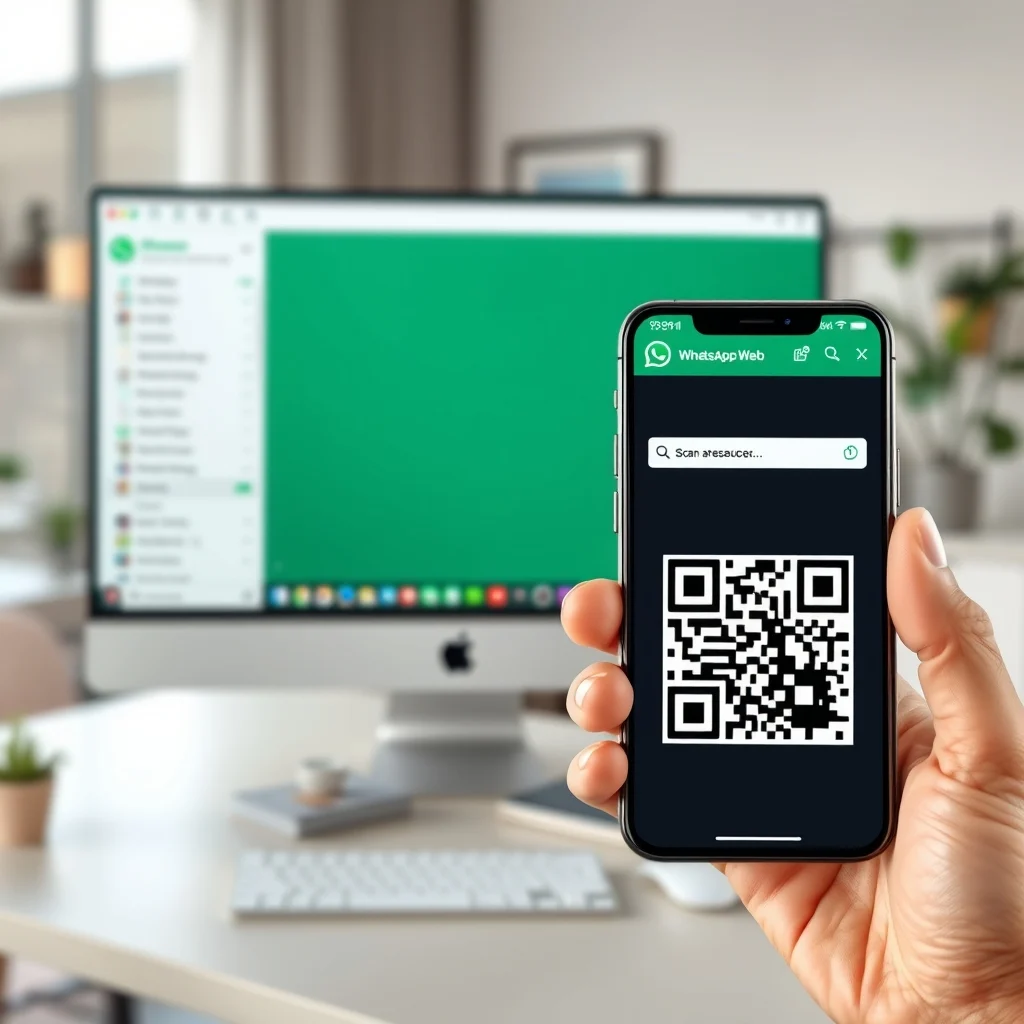
Setting up WhatsApp Web is a straightforward process that takes less than a minute. First, ensure your phone has a stable internet connection. Open the browser on your computer and navigate to the official web address. You will see a QR code displayed on the screen. This code represents a temporary session key.
- Open the WhatsApp application on your mobile device.
- Navigate to the settings menu in the top right corner.
- Select the option for Linked Devices.
- Tap on the button to link a new device.
- Point your phone camera at the QR code on the computer screen.
- Wait for the confirmation signal that the link is successful.
🛡️ Common Errors and How to Fix Them
Users often encounter issues where the QR code fails to scan or the connection drops unexpectedly. These errors are usually due to internet instability or permission issues. If the code does not scan, refresh the browser page and try again. If the connection drops, check the phone’s internet connection and ensure the app has background permissions enabled.
– Error: QR code not loading. Fix: Clear browser cache and refresh.
– Error: Device not found. Fix: Check phone screen brightness and camera focus.
– Error: Session expired. Fix: Log out of all devices and sign in again.
– Error: Messages delayed. Fix: Check internet speed and proxy settings.
📈 Performance and User Experience
🎮 Real Performance Experience
In terms of speed, WhatsApp Web performs exceptionally well on modern hardware. Loading messages is nearly instantaneous due to the caching mechanism. Resource usage is moderate, consuming about 100MB of RAM during active use. Stability is high, with crashes being rare unless the browser itself is unstable.
🌍 Global User Ratings
1) Average rating across platforms is consistently high, often exceeding 4.5 stars.
2) Positive feedback reasons include ease of use and reliability.
3) Negative feedback reasons revolve around occasional sync delays.
4) Trend analysis shows increasing satisfaction as multi-device support improves.
🔐 Security and Privacy Considerations
🔒 Security Level
Security is the cornerstone of WhatsApp. All messages are encrypted in transit and at rest. The web version maintains this security by acting as a secure tunnel. However, users must ensure their computer is not compromised by malware. If someone gains physical access to your unlocked computer, they can access your WhatsApp sessions.
🛑 Potential Risks
– Session Hijacking: Using public computers without logging out.
– Phishing: Clicking links that mimic WhatsApp updates.
– Screen Exposure: Leaving the chat window visible in public.
– Tip: Always log out after using a shared computer.
🆚 Comparison with Alternatives
🥇 Best Available Alternatives
While WhatsApp is the dominant player, alternatives like Telegram and Signal offer different features. Telegram allows for larger file transfers and more advanced channel management. Signal focuses heavily on privacy with a different encryption model. However, for general communication, WhatsApp remains the standard due to its network effect.
– Telegram: Better for large groups and file sharing.
– Signal: Better for maximum privacy and anonymity.
– WhatsApp: Better for general use and contact integration.
💡 Tips for Maximum Efficiency
🎯 Best Settings for Performance
To optimize performance, disable automatic media downloads in the settings. This saves data and prevents the browser from caching unnecessary files. Enable desktop notifications for important chats but mute others to reduce distractions. Use the search function to archive old conversations instead of deleting them.
– Disable Auto-Download: Saves storage and memory.
– Manage Notifications: Focus on important chats only.
– Archive Chats: Keeps the interface clean.
📌 Advanced Tricks Few Know
There are hidden tricks that power users utilize. For instance, you can forward messages from the web interface to multiple recipients at once. You can also use the emoji picker to search for specific emojis rather than scrolling. These small adjustments accumulate to save significant time over a workday.
🏁 Final Verdict
In conclusion, WhatsApp Web offers a robust and secure platform for desktop communication. By mastering the hidden features and shortcuts, users can significantly enhance their productivity. The multi-device support ensures you are never disconnected, while the security measures keep your data safe. It is highly recommended for anyone who uses WhatsApp for work or frequent personal communication.
For those looking to optimize their workflow, investing time in learning these features is well worth the effort. The combination of speed, security, and convenience makes it an essential tool in the modern digital toolkit.
❓ Frequently Asked Questions
1) Can I use WhatsApp Web without my phone being connected? Yes, with multi-device support, you can stay connected for up to 14 days without the phone.
2) Is WhatsApp Web encrypted? Yes, all messages are end-to-end encrypted on the web version just like the mobile app.
3) How do I log out from WhatsApp Web? Go to settings on the web interface and select Log Out.
4) Can I send files from WhatsApp Web? Yes, you can send documents, images, and media files directly from the browser.
5) Is there a limit to the number of devices? You can link up to four additional devices to one phone number.
6) Why is my QR code not scanning? Ensure your phone has a stable connection and the browser is updated.
7) Can I delete messages for everyone? Yes, you can delete messages for everyone within a specific time limit.
8) How do I backup chats on WhatsApp Web? Backups are managed on the mobile device, not the web interface.
9) Does WhatsApp Web work on mobile browsers? Yes, it works on mobile browsers as well, but the app is recommended.
10) Can I use WhatsApp Web offline? Messages are cached, but sending requires an internet connection.