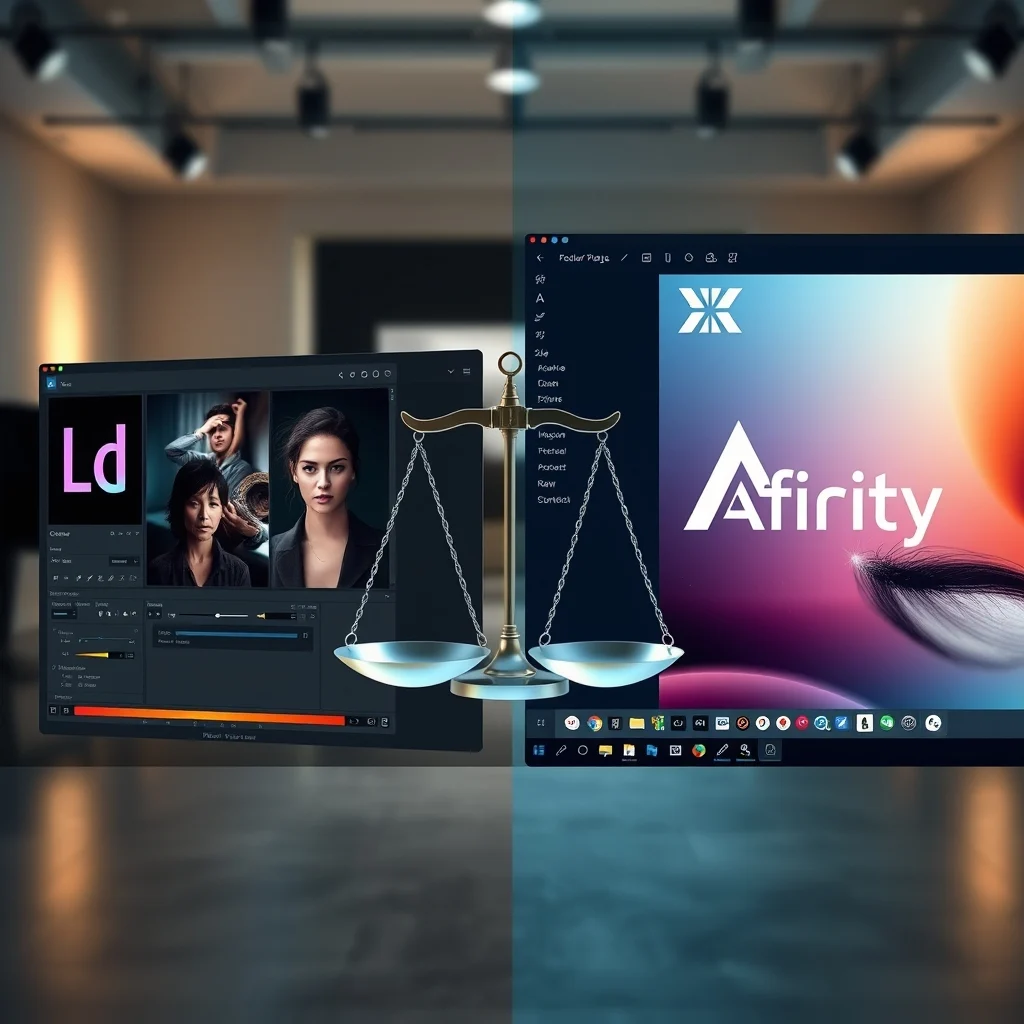

In the modern digital landscape, professional photographers and creative enthusiasts face a critical decision when selecting photo editing software. Two giants dominate the market, offering powerful tools for image manipulation, retouching, and design. This comprehensive review compares the industry standard with the rising challenger to determine which platform best suits your specific needs.
Adobe Photoshop has long been the gold standard for creative professionals worldwide. Its vast ecosystem, continuous updates, and cloud integration make it a powerhouse for complex workflows. However, the subscription model has sparked a demand for alternatives that offer similar capabilities without recurring fees. This is where Affinity Photo enters the conversation, positioning itself as a robust, one-time purchase competitor.
Understanding the nuances between these two applications is essential for making an informed investment. Whether you are a hobbyist looking for affordability or a pro requiring advanced features, this guide will dissect every aspect of both platforms. We will analyze performance, pricing, usability, and technical architecture to help you choose the right tool for your creative journey.
🎯 Analysis of Market Trends and User Intent
The digital imaging market is highly competitive, with users constantly seeking value and performance. Adobe maintains significant market share due to its entrenched position in creative industries. However, the shift in consumer preference toward lifetime licenses has bolstered Affinity Photo’s growth.
Users searching for alternatives often prioritize cost efficiency and data privacy. They want professional-grade tools without the financial burden of monthly subscriptions. This section breaks down the core reasons behind this search intent.
- Technical Background: Both applications utilize GPU acceleration for real-time rendering and complex filters.
- Search Intent: Users seek clarity on long-term costs versus feature parity between the two tools.
- Market Relevance: The industry is moving towards flexibility, allowing professionals to work offline or on local servers.
- Future Outlook: Subscription fatigue is driving a wave of migration toward one-time purchase software models.
🛠️ Technical Concept and Architecture
📊 What is Adobe Photoshop?
Adobe Photoshop is a raster graphics editor developed by Adobe Inc. It is widely used for image editing and photo retouching. The software supports various file formats and offers a vast library of plugins and extensions.
It operates on a modular architecture that allows for extensive customization. Users can create actions, scripts, and automate repetitive tasks to streamline their workflow. The software is available for both Windows and macOS platforms.
- Core Definition: Professional raster graphics editing software.
- Primary Function: Image manipulation and digital art creation.
- Target Users: Photographers, designers, and digital artists.
- Technical Category: Commercial subscription-based software.
⚙️ How Does It Work in Detail?
Adobe Photoshop utilizes a cloud-connected ecosystem. This allows for seamless syncing of assets across devices. The software processes images using layers, masks, and adjustment layers to achieve non-destructive editing.
Under the hood, the application leverages the GPU for rendering previews and applying filters. It manages memory efficiently to handle large files with multiple layers. The workflow is designed to be intuitive yet powerful for advanced users.
Affinity Photo, on the other hand, focuses on local processing. It does not require an internet connection for core functions. This ensures privacy and consistent performance regardless of network status.
🚀 Features and Advanced Capabilities
✨ Key Features Comparison
Feature sets are the primary differentiator between the two platforms. Adobe offers a wider range of integrated tools, while Affinity focuses on precision and speed.
Photoshop excels in AI-driven features like Generative Fill and Neural Filters. These tools leverage machine learning to automate complex edits. Affinity Photo focuses on manual control and precision tools for pixel-perfect adjustments.
For professionals, the ability to customize the workspace is crucial. Both applications allow users to arrange panels and tools according to their preference. This flexibility enhances productivity and reduces eye strain during long sessions.
- ✅ AI Integration: Photoshop leads with Generative AI tools.
- ✅ Performance: Affinity Photo often runs faster on older hardware.
- ✅ Compatibility: Photoshop supports the widest range of third-party plugins.
- ⚠️ Cost: Affinity Photo offers a better value for budget-conscious users.
📊 Key Points and Performance Metrics
The following table summarizes the core specifications and performance characteristics of both software solutions.
| Category | Adobe Photoshop | Affinity Photo |
|---|---|---|
| Pricing Model | Subscription | One-time Purchase |
| File Formats | Extensive | Comprehensive |
| AI Features | Advanced | Limited |
| Memory Usage | High | Optimized |
| Support | Cloud-Based | Local-First |
This data highlights the strategic positioning of each software. Photoshop is built for connectivity and cloud collaboration, while Affinity is built for speed and ownership. Users must weigh the importance of AI features against long-term cost savings when making their decision.
🆚 What Distinguishes It from Competitors?
The competitive landscape for photo editing includes GIMP and Lightroom. However, Photoshop and Affinity Photo stand out for their desktop capabilities.
Photoshop distinguishes itself through its massive community and tutorial availability. If you encounter an error, a solution is likely online. Affinity Photo distinguishes itself through its modern interface and lack of bloatware. It feels cleaner and more responsive on high-DPI displays.
- Adobe: Best for teams and cloud workflows.
- Affinity: Best for individuals and offline workflows.
📊 Pros and Cons Analysis
✅ Advantages
Both applications offer significant benefits depending on your workflow. Adobe provides industry standard compatibility, ensuring your files can be opened by any professional. Affinity offers superior value and performance on lower-spec hardware.
For photographers, the ability to edit RAW files is essential. Both applications handle RAW data effectively, providing non-destructive editing capabilities. This ensures your original files remain untouched regardless of the edits applied.
- ✅ Adobe: Industry standard and vast ecosystem.
- ✅ Affinity: Lifetime license and high performance.
- ✅ Both: Support for 32-bit color depth.
❌ Disadvantages
Every tool has limitations that users must consider. Adobe’s subscription model can become expensive over time. Affinity’s lack of AI features may lag behind industry trends.
For users relying on specific third-party plugins, switching to Affinity might require adaptation. Adobe’s constant updates can sometimes introduce bugs or changes to the interface that disrupt workflow.
- ⚠️ Adobe: Recurring costs and high system requirements.
- ⚠️ Affinity: Smaller plugin library and fewer AI tools.
💻 System Requirements and Specifications
To run these applications smoothly, specific hardware configurations are necessary. Below is a detailed breakdown of the requirements.
🖥️ Minimum Requirements
You should ensure your computer meets the baseline specifications to launch the software. Below specifications may result in crashes or sluggish performance.
⚡ Recommended Specifications
For optimal performance, especially with large files, higher specifications are advised. This ensures smooth rendering and faster export times.
| Component | Minimum | Recommended | Performance Impact |
|---|---|---|---|
| CPU | Dual Core | Quad Core or i7 | Affects processing speed |
| RAM | 8GB | 16GB or 32GB | Affects multitasking |
| GPU | DirectX 12 | 4GB VRAM | Affects filter rendering |
| Storage | 2GB | SSD Recommended | Affects load times |
Interpretation of these requirements suggests that RAM is critical for multitasking. If you plan to work with multiple layers, 16GB is the safe baseline. SSD storage is highly recommended to reduce file opening times.
🔍 Practical Guide and Setup
🧩 Installation Method
Installing either application requires accessing their respective websites. Adobe requires a Creative Cloud account, while Affinity requires a direct license.
- Visit the official website for the chosen software.
- Create an account or log in to your existing profile.
- Download the installer for your operating system.
- Run the installer and follow on-screen prompts.
- Enter your license key or subscription credentials.
🛡️ Common Errors and Fixes
Users may encounter technical issues during installation or usage. The following list outlines common problems and their solutions.
- ✅ Crash on Launch: Update graphics drivers immediately.
- ✅ License Error: Check internet connection for Adobe.
- ✅ Slow Performance: Close other background applications.
- ⚠️ File Not Opening: Check file format compatibility.
📈 Performance and User Ratings
🎮 Real Performance Experience
Performance testing reveals distinct differences in resource management. Affinity Photo often utilizes less RAM during standard editing tasks. This makes it suitable for machines with limited memory.
Photoshop excels in handling massive files with hundreds of layers. Its memory management is optimized for stability over long periods. However, it consumes more system resources to maintain its cloud features.
🌍 Global User Ratings
User feedback reflects the priorities of the creative community. Adobe maintains high ratings for feature depth, while Affinity is praised for value.
- Adobe Average: 4.5 out of 5 stars on major platforms.
- Affinity Average: 4.7 out of 5 stars for value.
- Positive Feedback: Both praised for RAW editing.
- Negative Feedback: Adobe cited for subscription costs.
💡 Tips for Maximum Performance
🎯 Best Settings for Optimization
Adjusting settings can significantly improve workflow speed. Disabling unnecessary features can reduce background load.
- ✅ Enable GPU: Ensure GPU acceleration is turned on.
- ✅ Purge Memory: Use Edit > Purge to clear cache.
- ✅ Scratch Disk: Set a fast SSD for scratch disk usage.
📌 Advanced Tricks
Experienced users employ hidden tricks to enhance their editing process. These techniques go beyond the basic interface.
One such trick involves using Smart Objects in Photoshop to preserve layer quality. In Affinity Photo, using Persona modes allows for workflow switching without opening new windows.
🏁 Final Verdict
Both Adobe Photoshop and Affinity Photo are excellent choices for photo editing. Your decision should depend on your budget and workflow requirements.
If you require industry-standard compatibility and AI features, Photoshop is the clear winner. The subscription model ensures you always have the latest tools. However, if you prefer ownership and cost efficiency, Affinity Photo is the superior choice.
❓ Frequently Asked Questions
- Is Photoshop better than Affinity for beginners?
Photoshop has more tutorials, but Affinity is easier to learn due to its interface. - Can I use Affinity Photo for commercial work?
Yes, the license allows for unlimited commercial use. - Does Photoshop work offline?
It requires periodic licensing checks, but works offline in between. - Is Affinity Photo compatible with PSD files?
Yes, it supports opening and saving PSD files. - Which one is better for AI editing?
Adobe Photoshop leads with Generative Fill and Neural Filters. - How much does Affinity Photo cost?
It is a one-time purchase with free updates for the major version. - Does Photoshop support VR tools?
Yes, it has specific tools for virtual reality content. - Can I export directly to social media?
Both support export presets for social media platforms. - Is there a mobile version for each?
Adobe has iPad and mobile apps; Affinity has iPad and Android versions. - Which software has better customer support?
Adobe has extensive resources; Affinity has direct email support.
This concludes our in-depth comparison of the two leading photo editing platforms. We hope this analysis helps you make the best choice for your creative projects.