
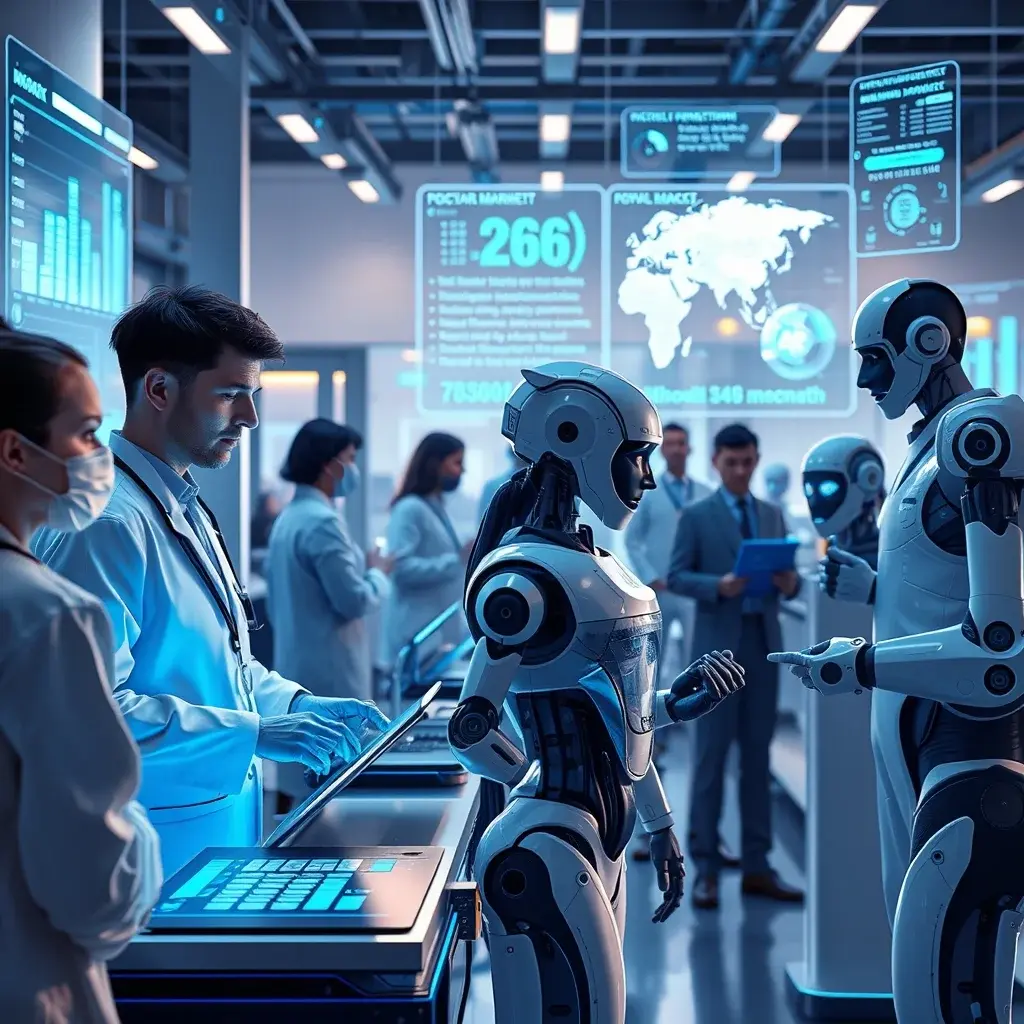

The global workforce is undergoing a seismic shift, driven by the relentless advancement of artificial intelligence (AI) and automation technologies. In 2026, these innovations are no longer confined to the realm of science fiction; they are actively reshaping job markets across industries, redefining roles, and creating unprecedented challenges and opportunities. The question isn’t whether AI and automation will impact employment but how profoundly they will transform it.
The World Economic Forum’s Future of Jobs Report 2025 predicts that by 2026, nearly a quarter of all jobs will either be created or significantly altered by AI and automation. This transformation is not just about replacing human labor with machines; it’s about reimagining the nature of work itself. From manufacturing floors to hospital wards, from customer service desks to corporate boardrooms, AI is becoming an integral part of the workflow, augmenting human capabilities while simultaneously rendering certain tasks obsolete.
However, this shift is not without its complexities. Industries that were once the backbone of economies are now grappling with the dual pressures of efficiency and job displacement. Governments, businesses, and educational institutions are being forced to rethink their strategies to prepare the workforce for a future where adaptability and continuous learning are not just desirable traits but absolute necessities. In this article, we will delve into the transformative impact of AI and automation on global job markets, focusing on key sectors like manufacturing, healthcare, and customer service. We will explore the rise of new job roles, the decline of traditional positions, and the critical role of governments in retraining workers. Additionally, we will examine case studies from countries like Finland and Singapore, which are pioneering innovative approaches to workforce transition.
📰 The AI and Automation Revolution: A Paradigm Shift in Employment
The integration of AI and automation into the workplace is not a distant future scenario; it is an ongoing reality. According to McKinsey & Company, by 2026, AI could automate up to 50% of current work activities, with repetitive, rule-based tasks being the most susceptible to automation. This doesn’t necessarily mean that half of all jobs will disappear, but it does imply a fundamental reconfiguration of how work is performed.
The technology behind AI and automation is evolving at a breakneck pace. Machine learning algorithms, natural language processing, and robotic process automation (RPA) are no longer experimental tools but mainstream technologies adopted by businesses of all sizes. These advancements are enabling machines to perform tasks that were once thought to require human intelligence, such as diagnosing medical conditions, managing supply chains, and even composing creative content. The result is a workplace where humans and machines collaborate, each leveraging their unique strengths.
Yet, this collaboration is not without its tensions. The fear of job displacement looms large over many industries. A study by the International Labour Organization (ILO) found that while automation may eliminate some jobs, it also creates new ones, particularly in areas that require emotional intelligence, creativity, and complex problem-solving. The challenge lies in ensuring that the workforce is equipped to transition into these new roles.
📊 The Current State of AI and Automation in the Workplace
To fully grasp the impact of AI and automation on job markets, it’s essential to examine the technologies driving this change. Three primary forms of automation are reshaping industries:
- ✅ Robotic Process Automation (RPA): This involves using software robots to automate repetitive, rule-based tasks such as data entry, invoice processing, and customer support. RPA is particularly prevalent in sectors like finance, accounting, and customer service, where it is streamlining operations and reducing human error.
- ✅ Artificial Intelligence (AI): AI encompasses a broad range of technologies, including machine learning, natural language processing, and computer vision. These technologies enable machines to perform tasks that require human-like intelligence, such as analyzing medical images, driving vehicles, and even writing news articles.
- ✅ Autonomous Systems: This category includes self-driving vehicles, drones, and robotic arms that operate independently in environments like warehouses, factories, and even surgical theaters. Autonomous systems are particularly transformative in manufacturing and logistics, where they are enhancing efficiency and precision.
The adoption of these technologies is accelerating across industries. According to a report by PwC, the global AI market is projected to reach $15.7 trillion by 2030, with significant contributions from sectors like healthcare, finance, and retail. This growth is not just a testament to the capabilities of AI but also to its potential to revolutionize the way businesses operate.
🔍 Why AI and Automation Are Driving This Transformation
Several factors are converging to accelerate the adoption of AI and automation in the workplace:
- Cost Efficiency: Automating repetitive tasks reduces labor costs and minimizes errors, leading to significant cost savings for businesses. For example, RPA can handle tasks like payroll processing in a fraction of the time it takes a human, with greater accuracy.
- Scalability: Unlike human workers, AI systems can operate 24/7 without fatigue, making them ideal for tasks that require consistency and high volume. This scalability is particularly valuable in industries like manufacturing and customer service.
- Data-Driven Decision Making: AI excels at analyzing vast amounts of data to identify patterns and insights that humans might overlook. This capability is transforming industries like finance and healthcare, where data-driven decisions are critical.
- Labor Shortages: Many industries, particularly in developed economies, are facing labor shortages due to aging populations and declining birth rates. Automation offers a solution by filling gaps in the workforce, especially in roles that are physically demanding or require specialized skills.
These factors are not just theoretical; they are already being felt across industries. In manufacturing, for instance, robots are increasingly being used to perform tasks like welding, assembly, and quality control, reducing the need for human labor in hazardous environments. In healthcare, AI-powered diagnostic tools are assisting doctors in identifying diseases like cancer at earlier stages, improving patient outcomes. Meanwhile, in customer service, chatbots and virtual assistants are handling routine inquiries, freeing up human agents to focus on more complex issues.
🔧 How AI and Automation Are Reshaping Key Industries
The impact of AI and automation varies significantly across industries. Some sectors are embracing these technologies to enhance productivity and innovation, while others are struggling to adapt. Below, we examine the transformative effects of AI and automation in three critical industries: manufacturing, healthcare, and customer service.
🏭 Manufacturing: The Rise of the Smart Factory
Manufacturing has long been at the forefront of automation, and AI is taking this transformation to new heights. The concept of the smart factory, where machines communicate with each other and make decisions in real-time, is becoming a reality. This shift is driven by technologies like the Internet of Things (IoT), AI-driven predictive maintenance, and collaborative robots (cobots) that work alongside humans.
One of the most significant impacts of AI in manufacturing is its ability to enhance operational efficiency. For example, AI-powered systems can analyze production data to identify inefficiencies, predict equipment failures, and optimize supply chain logistics. This not only reduces downtime but also minimizes waste, leading to cost savings and improved sustainability.
However, the rise of AI in manufacturing is also raising concerns about job displacement. A report by the McKinsey Global Institute estimates that up to 30% of tasks in the manufacturing sector could be automated by 2030. While this doesn’t necessarily mean that a third of manufacturing jobs will disappear, it does imply a significant reconfiguration of roles. Jobs that involve repetitive, manual tasks are most at risk, while those requiring problem-solving, creativity, and technical skills are likely to grow.
🏥 Healthcare: AI as a Diagnostic and Administrative Partner
Healthcare is another industry where AI is making a profound impact. From diagnosing diseases to managing patient records, AI is transforming how healthcare professionals deliver care. One of the most promising applications of AI in healthcare is in diagnostics. Machine learning algorithms can analyze medical images, such as X-rays and MRIs, to detect abnormalities with a high degree of accuracy. This not only accelerates the diagnostic process but also reduces the risk of human error.
AI is also being used to streamline administrative tasks, such as scheduling appointments, processing insurance claims, and managing patient records. These tasks, while essential, are time-consuming and prone to errors when handled manually. By automating these processes, healthcare providers can free up time for patient care and improve operational efficiency.
However, the integration of AI in healthcare is not without its challenges. One of the most significant concerns is the potential for bias in AI algorithms. If the data used to train these algorithms is not representative of diverse populations, the results may be skewed, leading to inaccurate diagnoses or treatment recommendations. Additionally, there are ethical considerations surrounding the use of AI in healthcare, such as the responsibility for decisions made by AI systems and the need for transparency in how these systems arrive at their conclusions.
The COVID-19 pandemic has further accelerated the adoption of AI in healthcare. Telemedicine platforms, AI-powered contact tracing, and predictive analytics for disease spread have become critical tools in managing public health crises. As we look ahead to 2026, AI is poised to play an even greater role in healthcare, from personalized medicine to robotic surgery.
📞 Customer Service: The Chatbot Revolution
Customer service is an industry that has been significantly disrupted by AI and automation. The rise of chatbots, virtual assistants, and AI-powered customer service platforms has transformed how businesses interact with their customers. These technologies are capable of handling routine inquiries, processing orders, and even resolving complaints, often with greater speed and consistency than human agents.
One of the most significant advantages of AI in customer service is its ability to provide 24/7 support. Unlike human agents, who require breaks and have limited working hours, AI-powered systems can handle customer inquiries around the clock. This not only improves customer satisfaction but also reduces the workload for human agents, allowing them to focus on more complex or sensitive issues.
However, the shift toward AI-driven customer service is not without its drawbacks. Many customers still prefer human interaction, particularly for complex or emotionally charged issues. Additionally, there are concerns about the quality of AI-generated responses, which can sometimes lack the nuance and empathy that human agents provide.
To address these challenges, many companies are adopting a hybrid approach, where AI handles routine inquiries while human agents step in for more complex or sensitive issues. This approach not only improves efficiency but also ensures that customers receive the level of service they expect.
🌱 The Rise of New Job Roles: Opportunities in the AI-Driven Economy
While AI and automation are displacing some jobs, they are also creating new ones. The World Economic Forum’s Future of Jobs Report 2025 estimates that by 2026, AI and automation will create 97 million new jobs globally. These roles span a wide range of industries and skill levels, from data scientists and AI engineers to AI ethicists and digital transformation specialists. The key to capitalizing on these opportunities lies in understanding the skills that are in demand and how to acquire them.
💼 Emerging Job Roles in the AI Era
The rise of AI and automation is giving birth to entirely new professions, many of which didn’t exist a decade ago. Below are some of the most in-demand roles in the AI-driven economy:
- AI and Machine Learning Specialists: These professionals design, develop, and implement AI algorithms and models. They are responsible for training machine learning models, optimizing their performance, and deploying them in real-world applications. The demand for AI specialists is skyrocketing, with the World Economic Forum projecting a 40% increase in demand for these roles by 2026.
- Data Scientists: Data scientists analyze large datasets to extract insights and inform decision-making. They use statistical techniques, machine learning, and data visualization tools to uncover patterns and trends. The ability to work with data is becoming a critical skill across industries, from healthcare to finance.
- AI Trainers and Ethicists: As AI systems become more prevalent, there is a growing need for professionals who can train these systems and ensure they operate ethically. AI trainers are responsible for labeling data, fine-tuning algorithms, and monitoring AI performance, while AI ethicists focus on addressing issues like bias, fairness, and transparency in AI systems.
- Robotics Engineers: Robotics engineers design, build, and maintain robotic systems, including collaborative robots (cobots) that work alongside humans. These professionals play a critical role in industries like manufacturing, logistics, and healthcare, where automation is rapidly expanding.
- Cybersecurity Specialists for AI Systems: With the increasing reliance on AI, cybersecurity has become a critical concern. Cybersecurity specialists focused on AI systems are responsible for protecting sensitive data, ensuring the integrity of AI models, and mitigating risks like adversarial attacks.
These roles are not just limited to tech companies; they are increasingly in demand across industries like healthcare, finance, retail, and manufacturing. The ability to work with AI and data is becoming a prerequisite for success in the modern workforce.
🎯 Skills That Will Define the Future Workforce
The job market of 2026 will demand a unique blend of technical and soft skills. While AI and automation are automating many routine tasks, they are also creating demand for skills that are uniquely human, such as creativity, emotional intelligence, and critical thinking. Below are some of the most valuable skills for the future workforce:
- Technical Skills:
- ✅ Programming and Scripting: Proficiency in languages like Python, Java, and R is essential for roles in AI, data science, and software development.
- ✅ Data Analysis and Visualization: The ability to analyze and interpret data is critical for roles in business intelligence, finance, and healthcare.
- ✅ AI and Machine Learning: Understanding the principles of AI and machine learning is increasingly important for roles in tech, finance, and healthcare.
- ✅ Cloud Computing: Cloud platforms like AWS, Azure, and Google Cloud are becoming integral to modern IT infrastructure, making cloud computing skills highly valuable.
- Soft Skills:
- ✅ Critical Thinking and Problem-Solving: The ability to analyze complex situations and develop innovative solutions is crucial in an AI-driven workplace.
- ✅ Emotional Intelligence: Skills like empathy, active listening, and conflict resolution are essential for roles that require human interaction, such as customer service and healthcare.
- ✅ Adaptability and Continuous Learning: The pace of technological change means that workers must be able to adapt quickly and continuously update their skills.
- ✅ Collaboration and Teamwork: As AI systems become more integrated into workflows, the ability to work effectively in teams is increasingly important.
⚠️ The Decline of Traditional Jobs: What’s at Risk?
While AI and automation are creating new job opportunities, they are also rendering many traditional roles obsolete. The jobs most at risk are those that involve repetitive, rule-based tasks that can be easily automated. Below are some of the sectors and roles that are most vulnerable to displacement:
🏭 Manufacturing and Assembly Line Jobs
Manufacturing has long been a labor-intensive industry, but automation is rapidly changing that. Jobs involving tasks like assembly line work, welding, and quality control are increasingly being performed by robots and AI-powered systems. According to a report by the Brookings Institution, up to 80% of tasks in manufacturing could be automated by 2030. This doesn’t necessarily mean that manufacturing jobs will disappear entirely, but it does imply a significant reduction in the number of roles that require manual labor.
For example, Tesla’s Gigafactory in Texas employs thousands of robots to perform tasks like welding, painting, and assembly. While these robots require human oversight, they significantly reduce the need for human labor in repetitive tasks. The result is a factory that operates with greater efficiency and precision but employs fewer workers.
📊 Data Entry and Administrative Roles
Data entry and administrative roles are prime candidates for automation. Tasks like entering data into spreadsheets, processing invoices, and managing schedules can be easily automated using RPA tools. According to a study by McKinsey, up to 50% of administrative tasks could be automated in the coming years. This shift is already being felt in industries like finance, accounting, and customer service, where automation is streamlining back-office operations.
For example, companies like UiPath and Automation Anywhere offer RPA solutions that can automate tasks like data entry, report generation, and even customer support. These tools not only reduce labor costs but also minimize errors, leading to improved accuracy and efficiency.
🏥 Routine Healthcare Tasks
While AI is enhancing healthcare in many ways, it is also automating certain routine tasks that were once performed by humans. For example, AI-powered systems can analyze medical images, schedule appointments, and even assist in surgical procedures. While these technologies are improving patient outcomes and reducing costs, they are also reducing the demand for certain healthcare roles, such as radiologists and administrative staff.
For instance, IBM Watson Health uses AI to analyze medical records and assist doctors in diagnosing diseases. While Watson doesn’t replace doctors, it significantly reduces the time and effort required for tasks like analyzing patient histories and identifying potential risks. The result is a healthcare system that operates more efficiently but employs fewer professionals in certain roles.
🌍 Government Initiatives: Retraining Workers for the AI Era
The rapid pace of technological change has placed governments under immense pressure to ensure their citizens are prepared for the jobs of the future. Retraining and upskilling workers is no longer optional; it’s a necessity. Countries around the world are implementing initiatives to help workers transition into new roles, from providing free online courses to offering financial incentives for reskilling. Below, we examine some of the most innovative approaches being taken by governments to prepare their workforce for the AI-driven economy.
🇫🇮 Finland’s Radical Approach to Lifelong Learning
Finland is widely regarded as a leader in digital education and workforce retraining. In 2019, the Finnish government launched the Finnish Basic Income Experiment, which provided unemployed citizens with a monthly income to support their transition into new careers. The experiment was part of a broader initiative to encourage lifelong learning and adaptability.
Building on this success, Finland has since launched the Digital Skills Finland program, which offers free online courses in AI, data science, and digital literacy. The program aims to equip citizens with the skills needed to thrive in the digital economy. Additionally, Finland’s government has partnered with universities and private companies to create micro-credentials and certifications that validate the skills acquired through these courses.
One of the most innovative aspects of Finland’s approach is its focus on individual learning plans. These plans are tailored to each citizen’s career goals and skill gaps, providing a personalized roadmap for lifelong learning. The government also offers financial incentives for workers who participate in retraining programs, making it easier for them to transition into new roles.
🇸🇬 Singapore’s SkillsFuture Initiative
Singapore has taken a proactive approach to workforce retraining through its SkillsFuture initiative. Launched in 2015, SkillsFuture provides citizens with subsidies for skills training, career guidance, and financial support for mid-career switches. The initiative is designed to help workers adapt to the changing job market and seize new opportunities in emerging industries.
One of the standout features of SkillsFuture is its focus on industry partnerships. The Singapore government collaborates with companies like Google, Microsoft, and IBM to offer training programs that align with the skills demanded by the labor market. For example, Singapore’s SkillsFuture Digital Workplace program provides workers with hands-on experience in digital tools and technologies, preparing them for roles in the tech-driven economy.
The initiative also includes a Career Support Programme, which offers financial incentives to employers who hire and train workers in mid-career transitions. This not only helps workers transition into new roles but also encourages businesses to invest in reskilling their workforce.
🇺🇸 The United States: A Patchwork of State-Level Initiatives
In the United States, workforce retraining is largely managed at the state level, resulting in a patchwork of initiatives that vary widely in scope and effectiveness. The federal government has taken some steps to address the issue, such as the Workforce Innovation and Opportunity Act (WIOA), which provides funding for job training programs. However, critics argue that these efforts are not sufficient to meet the scale of the challenge posed by AI and automation.
Some states, like California and Massachusetts, have taken more aggressive approaches to retraining. For example, California’s High Road Training Partnerships program partners with labor unions and employers to design training programs that align with industry needs. Meanwhile, Massachusetts has launched the MassHire initiative, which provides career counseling, job placement services, and training subsidies to workers in high-demand industries.
Despite these efforts, the United States faces significant challenges in scaling up workforce retraining. Political polarization, budget constraints, and the decentralized nature of the education system have made it difficult to implement cohesive national strategies. However, the urgency of the issue is pushing states to experiment with innovative solutions, such as income-sharing agreements for education and employer-led training consortia.
📈 Case Studies: How Countries Are Adapting to the AI Revolution
While governments are developing policies to address the challenges of AI and automation, some countries are leading the way with innovative approaches that combine public and private sector collaboration. Below, we examine two case studies: Finland’s lifelong learning model and Singapore’s SkillsFuture initiative. These examples offer valuable insights into how countries can prepare their workforce for the AI-driven economy.
🇫🇮 Finland: A Nation of Lifelong Learners
Finland’s approach to workforce retraining is built on the principle of lifelong learning. The country recognizes that the rapid pace of technological change means that workers must continuously update their skills to remain relevant. This philosophy is reflected in Finland’s education system, which emphasizes adaptability, critical thinking, and digital literacy.
One of the key components of Finland’s strategy is its Finnish Education Evaluation Centre, which monitors the labor market and identifies skill gaps. Based on this data, the government partners with educational institutions and private companies to develop training programs that address these gaps. For example, Finland’s AI Accelerator program offers intensive courses in AI and machine learning, targeting both students and professionals seeking to upskill.
Finland’s commitment to lifelong learning is also evident in its approach to higher education. Universities in Finland offer flexible, modular programs that allow students to earn micro-credentials and certifications without committing to full-degree programs. This makes it easier for workers to acquire new skills while balancing work and family responsibilities.
The results of Finland’s approach speak for themselves. According to the OECD’s Programme for International Student Assessment (PISA), Finland consistently ranks among the top countries in education quality and digital literacy. Additionally, the country’s unemployment rate has remained relatively stable despite the challenges posed by AI and automation, thanks in part to its robust retraining initiatives.
🇸🇬 Singapore: Bridging the Skills Gap with Industry Partnerships
Singapore’s SkillsFuture initiative is a testament to the power of collaboration between the public and private sectors. The program is designed to help workers adapt to the changing job market by providing them with the skills needed to thrive in emerging industries. One of the standout features of SkillsFuture is its focus on industry partnerships, which ensure that training programs align with the needs of employers.
For example, Singapore’s SkillsFuture for Digital Workplace program partners with companies like Google and Microsoft to offer training in digital tools and technologies. These programs are designed to be hands-on and practical, giving workers the skills they need to succeed in roles like data analysis, cybersecurity, and software development.
The initiative also includes a Career Support Programme, which provides financial incentives to employers who hire and train workers in mid-career transitions. This not only helps workers transition into new roles but also encourages businesses to invest in reskilling their workforce. For example, companies like DBS Bank and Grab have partnered with SkillsFuture to offer training programs in digital banking and ride-hailing technology, respectively.
The results of Singapore’s approach are equally impressive. The country’s unemployment rate has remained low, and its workforce is increasingly equipped with the skills needed to thrive in the digital economy. Additionally, Singapore has seen a surge in entrepreneurship, with many workers using their newfound skills to launch their own businesses.
🔄 The Role of Education: Preparing the Next Generation for an AI-Driven World
While workforce retraining is critical for mid-career professionals, preparing the next generation for an AI-driven world is equally important. Educational institutions at all levels must adapt their curricula to equip students with the skills they need to succeed in the modern workforce. This involves not just teaching technical skills but also fostering creativity, critical thinking, and adaptability. Below, we explore how educational institutions are evolving to meet the demands of the AI era.
🎓 Rethinking Curricula: From STEM to STEAM
Traditional education systems have long emphasized STEM (Science, Technology, Engineering, and Mathematics) subjects. While these fields remain critical, the AI era demands a more holistic approach. The STEAM model—adding Arts to STEM—recognizes the importance of creativity and design thinking in solving complex problems. This shift is already underway in many educational institutions, which are incorporating subjects like design thinking, ethics, and digital storytelling into their curricula.
For example, Finland’s education system has long emphasized creativity and critical thinking. Finnish schools encourage students to explore their interests and develop their problem-solving skills rather than relying on rote memorization. This approach aligns well with the demands of the AI-driven economy, where adaptability and innovation are key.
Similarly, countries like Estonia and South Korea are integrating AI and coding into their national curricula at an early age. In Estonia, for instance, computer science is a mandatory subject from primary school onwards. Meanwhile, South Korea has launched initiatives like the AI Education Platform, which provides students with hands-on experience in AI technologies.
💻 Coding and Computational Thinking: The New Literacy
Coding and computational thinking are becoming as essential as reading and writing. As AI and automation become more pervasive, the ability to understand and manipulate code will be a critical skill for workers across industries. Educational institutions are responding by introducing coding into their curricula at all levels, from elementary schools to universities.
For example, the Hour of Code initiative, launched by Code.org, has introduced millions of students worldwide to the basics of coding. Similarly, platforms like Scratch and Codecademy offer interactive, gamified learning experiences that make coding accessible and engaging for students of all ages.
At the university level, institutions like MIT and Stanford are offering interdisciplinary programs that combine AI, data science, and ethics. These programs are designed to equip students with the skills they need to develop AI systems responsibly and ethically. Additionally, universities are partnering with industry leaders to offer internships and co-op programs that provide students with real-world experience in AI and automation.
🌐 Online Learning: Democratizing Education
The rise of online learning platforms has democratized education, making it accessible to people around the world. Platforms like Coursera, edX, and Udacity offer courses in AI, machine learning, and data science, often in partnership with top universities and companies. These platforms provide flexible, affordable alternatives to traditional education, allowing students to learn at their own pace and on their own schedule.
For example, Coursera’s AI for Everyone course, taught by Andrew Ng, is designed for non-technical professionals who want to understand the basics of AI. Similarly, edX’s MicroMasters in AI program, offered in partnership with Columbia University, provides students with a comprehensive understanding of AI technologies and their applications.
The impact of online learning is particularly significant in developing countries, where access to traditional education is limited. Platforms like Khan Academy and edX offer free courses in subjects like math, science, and computer science, helping to bridge the digital divide. Additionally, initiatives like the Global Skills Partnership aim to connect learners in developing countries with training programs that align with global labor market demands.
🛠️ Practical Guide: How to Future-Proof Your Career in the Age of AI
The rapid pace of technological change means that workers must take an active role in future-proofing their careers. Whether you’re a recent graduate or a seasoned professional, adapting to the AI-driven economy requires a strategic approach. Below, we outline a step-by-step guide to help you navigate this transformation and position yourself for success in 2026 and beyond.
🧩 Step 1: Assess Your Current Skills and Identify Gaps
The first step in future-proofing your career is to assess your current skills and identify areas where you may need to upskill. Start by evaluating the technical and soft skills that are in demand in your industry. For example, if you work in manufacturing, you might need to learn how to operate and maintain AI-driven machinery. If you’re in healthcare, you might need to develop skills in data analysis or AI-assisted diagnostics.
Once you’ve identified your skill gaps, prioritize them based on your career goals and the demands of the job market. For instance, if you’re aiming for a leadership role in your industry, you might focus on developing skills like strategic thinking, project management, and emotional intelligence. On the other hand, if you’re interested in transitioning into a technical role, you might prioritize learning programming languages like Python or R.
🎯 Step 2: Invest in Continuous Learning
Continuous learning is the cornerstone of future-proofing your career. The skills that are in demand today may not be relevant tomorrow, so it’s essential to stay updated with the latest trends and technologies. Below are some strategies for investing in continuous learning:
- Online Courses and Certifications: Platforms like Coursera, edX, Udacity, and LinkedIn Learning offer a wide range of courses in AI, data science, digital marketing, and other in-demand fields. These courses are often self-paced, making it easy to fit learning into your schedule.
- Bootcamps: Coding bootcamps like General Assembly, Flatiron School, and Springboard offer intensive, hands-on training in skills like software development, data science, and cybersecurity. These programs are designed to quickly equip students with the skills they need to transition into new careers.
- Workshops and Webinars: Many industry associations and professional organizations offer workshops and webinars on topics like AI, automation, and digital transformation. These events provide an opportunity to learn from experts and network with peers.
- Mentorship and Coaching: Seeking out a mentor or coach can provide valuable guidance as you navigate your career transition. Mentors can offer insights into industry trends, share their own experiences, and help you develop a personalized learning plan.
🔧 Step 3: Build a Strong Professional Network
A strong professional network can open doors to new opportunities, provide support during career transitions, and keep you updated with industry trends. Below are some strategies for building and leveraging your network:
- Join Industry Associations: Industry associations like the Association for Computing Machinery (ACM) and the Institute of Electrical and Electronics Engineers (IEEE) offer networking opportunities, conferences, and access to industry publications.
- Attend Conferences and Meetups: Conferences like CES, Web Summit, and Collision bring together industry leaders, innovators, and professionals from around the world. Attending these events can help you stay updated with the latest trends and connect with potential mentors or employers.
- Engage on LinkedIn: LinkedIn is a powerful platform for professional networking. Participate in industry groups, share insights, and connect with professionals in your field. Engaging with thought leaders and sharing your own content can help you establish yourself as an expert in your niche.
- Seek Out Mentors: Mentors can provide valuable guidance and support as you navigate your career transition. Look for professionals who have successfully transitioned into roles you’re interested in and ask for their advice.
📌 Step 4: Gain Practical Experience
While theoretical knowledge is essential, practical experience is what makes you stand out to employers. Below are some strategies for gaining hands-on experience in your desired field:
- Freelancing: Platforms like Upwork, Fiverr, and Toptal offer opportunities to work on real-world projects in fields like web development, graphic design, and digital marketing. Freelancing not only provides experience but also helps you build a portfolio of work.
- Volunteering: Volunteering for nonprofits or community organizations can provide valuable experience in areas like project management, data analysis, and marketing. These opportunities also allow you to give back to your community while building your skills.
- Internships: Internships offer a structured way to gain experience in a specific industry or role. Many companies now offer remote internships, making it easier to gain experience without relocating.
- Personal Projects: Developing your own projects, such as a personal website, a mobile app, or a data analysis tool, can demonstrate your skills to potential employers. These projects also provide an opportunity to experiment with new technologies and methodologies.
🚀 Step 5: Stay Adaptable and Embrace Change
The most important skill for thriving in the AI-driven economy is adaptability. The ability to pivot quickly, learn new skills, and embrace change will set you apart from your peers. Below are some strategies for staying adaptable:
- Develop a Growth Mindset: A growth mindset, as defined by psychologist Carol Dweck, is the belief that your abilities can be developed through dedication and hard work. Embracing a growth mindset means viewing challenges as opportunities to learn and grow rather than as obstacles.
- Stay Curious: Curiosity is the driving force behind innovation and adaptability. Make a habit of exploring new technologies, reading industry publications, and engaging with thought leaders in your field.
- Be Open to Feedback: Feedback is a valuable tool for growth. Seek out feedback from mentors, peers, and employers, and use it to improve your skills and performance.
- Experiment with New Roles: If you’re unsure about your career path, consider experimenting with different roles through freelancing, volunteering, or short-term contracts. This can help you identify your strengths and interests.
❓ Frequently Asked Questions
1. What is the impact of AI and automation on global job markets?
The impact of AI and automation on global job markets is profound and multifaceted. While these technologies are automating repetitive and rule-based tasks, they are also creating new job opportunities, particularly in fields like AI development, data science, and cybersecurity. According to the World Economic Forum, AI and automation are expected to create 97 million new jobs globally by 2026, offsetting many of the jobs that are being displaced. However, the transition is not without its challenges, as workers must adapt to new roles that require different skill sets.
2. Which industries are most affected by AI and automation?
Industries most affected by AI and automation include manufacturing, healthcare, customer service, finance, and retail. In manufacturing, robots and AI-powered systems are replacing manual labor in assembly lines and quality control. In healthcare, AI is automating tasks like diagnostics and administrative work. Customer service is being transformed by chatbots and virtual assistants, while finance and retail are seeing automation in areas like fraud detection, inventory management, and personalized marketing.
3. How can workers prepare for job transitions caused by AI and automation?
Workers can prepare for job transitions by investing in continuous learning, building a strong professional network, gaining practical experience, and developing adaptability. Online courses, certifications, and bootcamps can help workers acquire new skills, while mentorship and networking can open doors to new opportunities. Additionally, gaining hands-on experience through freelancing, volunteering, or personal projects can make workers more competitive in the job market.
4. What role do governments play in retraining workers for the AI era?
Governments play a critical role in retraining workers by implementing initiatives like Finland’s lifelong learning programs and Singapore’s SkillsFuture initiative. These programs provide financial incentives, training subsidies, and industry partnerships to help workers transition into new roles. Governments also invest in education and vocational training to ensure that the next generation is equipped with the skills needed for an AI-driven economy.
5. What are the most in-demand skills for the future workforce?
The most in-demand skills for the future workforce include technical skills like programming, data analysis, AI and machine learning, and cloud computing. Soft skills like critical thinking, emotional intelligence, adaptability, and collaboration are also increasingly valuable. Additionally, skills in cybersecurity, digital marketing, and user experience design are in high demand as businesses digitize their operations.
6. How are educational institutions adapting to the demands of the AI-driven economy?
Educational institutions are adapting by incorporating STEAM (Science, Technology, Engineering, Arts, and Mathematics) into their curricula, teaching coding and computational thinking from an early age, and offering online learning programs. Universities are also partnering with industry leaders to provide interdisciplinary programs that combine AI, data science, and ethics. Additionally, institutions are focusing on lifelong learning and micro-credentials to help students and professionals continuously update their skills.
7. What are some examples of successful government initiatives for workforce retraining?
Finland’s lifelong learning model and Singapore’s SkillsFuture initiative are two examples of successful government-led workforce retraining programs. Finland’s approach focuses on individual learning plans, free online courses, and financial incentives for upskilling. Singapore’s SkillsFuture initiative emphasizes industry partnerships, hands-on training programs, and financial support for mid-career switches. Both programs have demonstrated measurable success in reducing unemployment and equipping workers with the skills needed for the AI-driven economy.
8. How can businesses support their employees in adapting to AI and automation?
Businesses can support their employees by offering upskilling programs, providing access to online courses and certifications, and encouraging a culture of continuous learning. Companies can also partner with educational institutions to design training programs that align with industry needs. Additionally, businesses can foster adaptability by promoting internal mobility, allowing employees to explore new roles and responsibilities within the organization.
9. What are the ethical considerations surrounding AI and automation in the workplace?
The ethical considerations surrounding AI and automation include issues like bias in AI algorithms, job displacement, and the responsible use of AI-powered decision-making. For example, AI systems trained on biased data may produce discriminatory outcomes, which can have serious consequences in fields like hiring, lending, and law enforcement. Additionally, the displacement of workers due to automation raises questions about social responsibility and the need for policies that support affected individuals.
10. What does the future of work look like in 2026 and beyond?
The future of work in 2026 and beyond will be characterized by a hybrid model where humans and AI collaborate to drive innovation and productivity. Jobs will increasingly require a blend of technical and soft skills, with an emphasis on adaptability and continuous learning. Automation will eliminate many routine tasks, but it will also create new opportunities in fields like AI development, data science, and cybersecurity. Governments, businesses, and educational institutions must work together to ensure that workers are equipped to thrive in this evolving landscape.