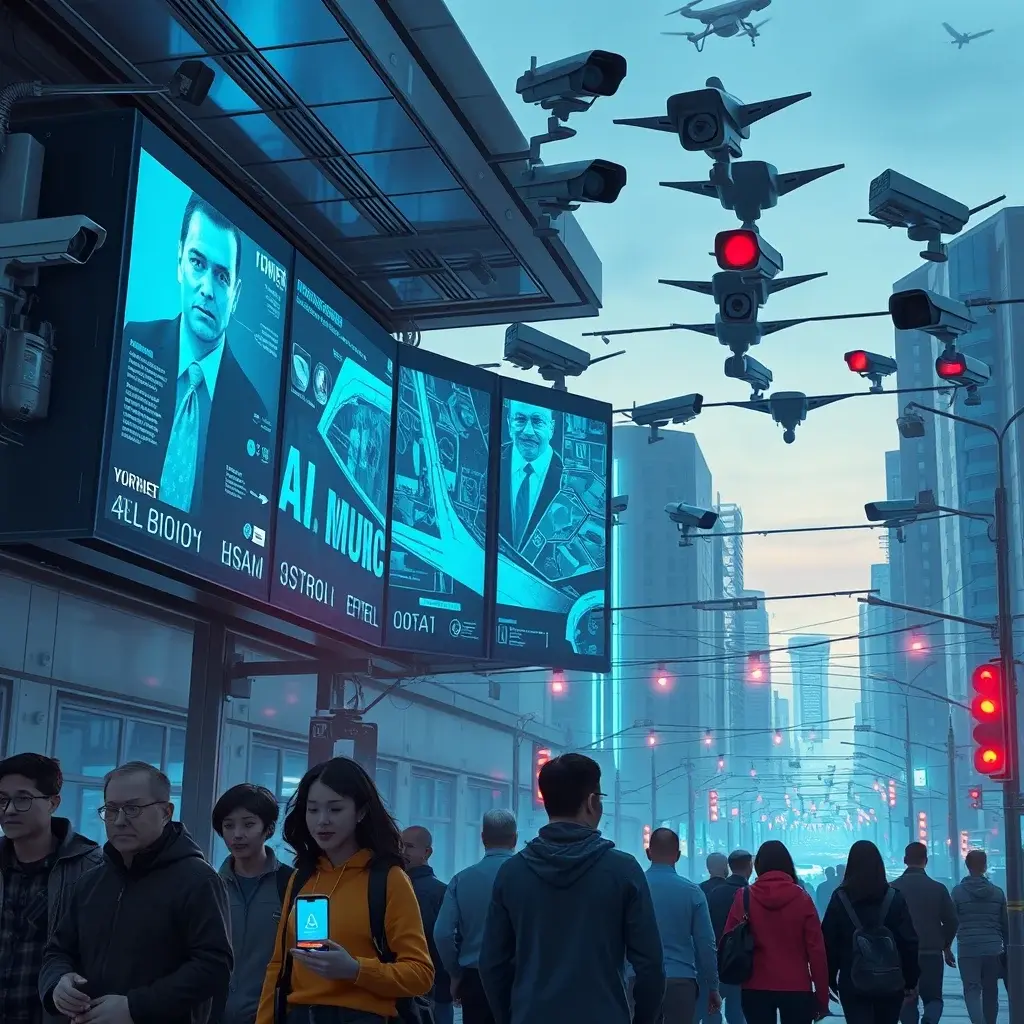

The rapid integration of artificial intelligence into urban surveillance systems has sparked intense debates worldwide. As cities evolve into smart ecosystems, the deployment of AI-driven tools like facial recognition, predictive policing, and real-time monitoring has become a double-edged sword. These technologies promise enhanced security and operational efficiency, but they also raise profound ethical questions about individual privacy, civil liberties, and the potential for misuse. This article delves into the multifaceted landscape of AI in surveillance, examining its applications, the ethical dilemmas it creates, and the regulatory frameworks attempting to govern its use. Through case studies from major global cities and a critical analysis of emerging alternatives, we aim to provide a comprehensive understanding of how societies can navigate this complex terrain while preserving the delicate balance between security and fundamental rights.
📰 The Rise of AI Surveillance in Urban Spaces
AI-powered surveillance has moved far beyond traditional closed-circuit television (CCTV) systems. Today, cities deploy sophisticated networks that analyze vast amounts of data in real time, using machine learning algorithms to identify patterns, predict behaviors, and automate decision-making. The primary drivers behind this shift include the rise of smart city initiatives, the proliferation of connected devices, and the increasing demand for public safety. According to a 2023 report by the International Data Corporation, global spending on smart city technologies is projected to reach $203 billion by 2026, with surveillance and security accounting for a significant portion of this investment.
At the heart of this transformation are three core technologies: facial recognition, predictive policing, and smart city platforms. Facial recognition, in particular, has seen widespread adoption in urban centers for tasks ranging from unlocking smartphones to identifying suspects in public spaces. Cities like London and New York have integrated these systems into their policing strategies, while Shanghai has implemented them for public safety and social credit scoring. However, the effectiveness of these systems is often overshadowed by concerns over accuracy, bias, and the erosion of anonymity in public spaces.
📊 The Role of Facial Recognition in Modern Surveillance
Facial recognition technology relies on deep learning models trained on millions of images to match faces against databases. In urban environments, these systems are deployed in high-traffic areas such as airports, train stations, and shopping malls. The technology has been credited with assisting law enforcement in solving crimes, such as the 2018 London terror attack where facial recognition helped identify suspects. However, its use has also led to high-profile controversies, including false arrests and privacy violations. In 2020, a Black man in Detroit was wrongfully arrested due to a facial recognition misidentification, sparking outrage and calls for stricter regulations.
The ethical implications of facial recognition extend beyond individual cases. Critics argue that the technology enables mass surveillance, transforming public spaces into environments where citizens are constantly monitored without explicit consent. This raises questions about the balance between security and the right to privacy, particularly in democratic societies where individual freedoms are paramount. The European Union’s General Data Protection Regulation (GDPR) and the U.S. state-level bans in places like San Francisco and Portland reflect growing regulatory efforts to curb the unchecked use of facial recognition.
🔮 Predictive Policing: The AI that Anticipates Crime
Predictive policing is another AI-driven surveillance application that uses historical crime data, machine learning, and statistical models to forecast where and when crimes are likely to occur. Departments in cities like Chicago and Los Angeles have adopted these systems to allocate resources more efficiently. Proponents argue that predictive policing reduces crime rates by allowing police to intervene before incidents occur. However, the approach has faced criticism for reinforcing biases present in historical crime data, leading to disproportionate policing in marginalized communities.
A study by the RAND Corporation found that predictive policing algorithms often mirror the biases of the data they are trained on. For example, if a neighborhood has a history of high policing rates due to discriminatory practices, the algorithm may predict higher crime rates in that area, perpetuating a cycle of over-policing. This phenomenon, known as