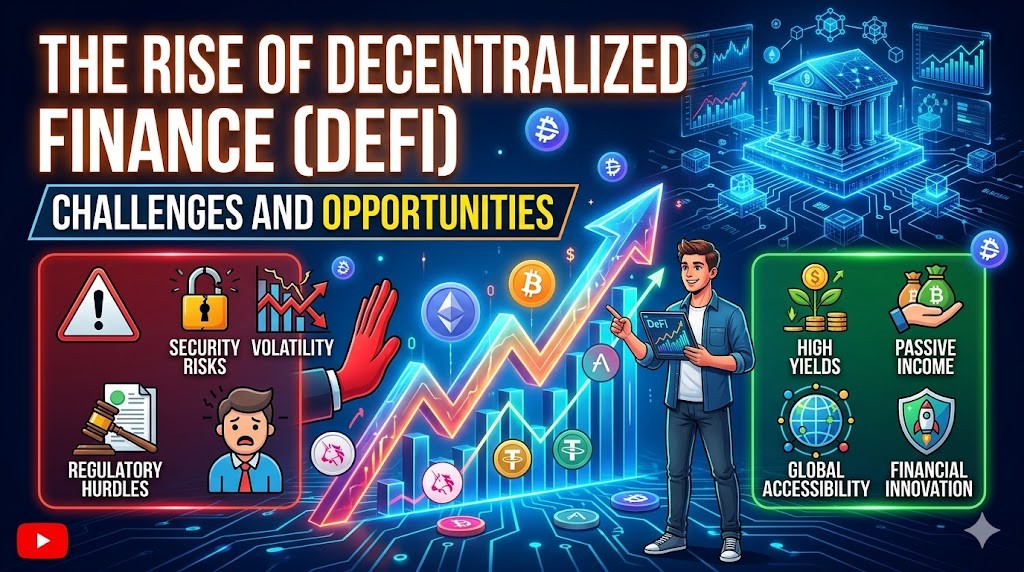

Decentralized Finance, commonly known as DeFi, represents one of the most significant shifts in the global financial landscape since the inception of the internet itself. This emerging ecosystem utilizes blockchain technology to recreate and enhance traditional financial instruments without the need for central intermediaries such as banks or brokerages. The rise of this technology has been meteoric, capturing the attention of investors, developers, and regulators worldwide. As we navigate the complexities of the modern digital economy, understanding the nuances of DeFi is no longer optional but essential for anyone interested in the future of finance.
Traditional financial systems have long been characterized by centralized control, which often leads to inefficiencies, high fees, and limited accessibility for individuals in developing regions. DeFi aims to solve these problems by introducing transparency, programmability, and autonomy into financial transactions. By leveraging smart contracts, which are self-executing agreements with the terms directly written into code, DeFi platforms can automate processes that previously required human intervention. This automation reduces costs and minimizes the risk of human error, creating a more robust and efficient financial infrastructure.
The significance of DeFi lies in its potential to democratize access to financial services. In a world where billions of people remain unbanked, DeFi offers a pathway to participation without the bureaucratic hurdles typically associated with opening a bank account. Users can lend, borrow, trade, and earn interest directly from their digital wallets, provided they have an internet connection. This inclusivity is a driving force behind the adoption of DeFi protocols, as it aligns with the foundational ethos of cryptocurrency to empower individuals globally.
However, the path forward is not without obstacles. The rapid growth of the sector has brought forth significant challenges, including security vulnerabilities, regulatory uncertainty, and market volatility. As we explore the opportunities within this space, it is crucial to understand the risks and the mechanisms that underpin these platforms. This comprehensive analysis will delve into the technical architecture of DeFi, examine its current market position, and provide a roadmap for navigating the opportunities and challenges that define this revolutionary sector.
🎯 Market Analysis and Strategic Importance
The global financial market is undergoing a transformation driven by the integration of blockchain technology. DeFi is at the forefront of this shift, offering a decentralized alternative to the centralized banking system. The strategic importance of this technology cannot be overstated, as it challenges the monopoly held by traditional financial institutions over capital allocation and asset management. By removing intermediaries, DeFi reduces friction and allows for peer-to-peer transactions that are faster and often cheaper than their traditional counterparts.
1) Technical Background: The underlying technology relies on public blockchains, primarily Ethereum, where smart contracts execute financial logic automatically. This eliminates the need for trust in a third party and replaces it with trust in code which is audited and transparent.
2) User Search Intent: Users are increasingly searching for ways to maximize yield on their assets while maintaining control over their private keys. They seek alternatives to low-interest savings accounts and high commission fees charged by traditional brokers.
3) Market Relevance: The total value locked in DeFi protocols has reached unprecedented levels, signaling a massive migration of capital toward decentralized networks. This trend indicates a growing confidence in the technology despite the inherent risks.
4) Future Outlook: As institutional adoption increases, DeFi is expected to integrate more seamlessly with traditional finance, potentially leading to hybrid models that combine the efficiency of blockchain with the stability of regulated banking.
🛠️ Understanding the Technical Architecture
To truly grasp the potential and pitfalls of Decentralized Finance, one must understand the technology that powers it. At its core, DeFi is built on blockchain networks, with Ethereum being the dominant platform due to its robust smart contract capabilities. These networks function as a decentralized ledger where every transaction is recorded and verified by multiple nodes rather than a single central authority. This distributed nature ensures that the data remains immutable and resistant to censorship.
Smart contracts are the building blocks of DeFi applications. They are programs stored on the blockchain that automatically execute when predefined conditions are met. For example, in a decentralized lending protocol, a smart contract might automatically release a loan to a borrower once they have deposited sufficient collateral. This process happens without human intervention, ensuring speed and accuracy while eliminating the risk of fraud or manipulation by intermediaries.
- ✅ Core Definition: A system of financial applications built on public blockchains.
- 🎯 Primary Function: To facilitate lending, borrowing, trading, and earning interest without intermediaries.
- ⚠️ Target Users: Crypto enthusiasts, investors, and unbanked populations seeking financial autonomy.
- 🔧 Technical Category: Fintech, Blockchain, Web3 Infrastructure.
⚙️ Operational Mechanics and Protocols
The operational mechanics of DeFi rely heavily on liquidity pools and automated market makers. In traditional finance, an exchange matches a buyer with a seller. In DeFi, liquidity pools allow users to trade directly against a pool of funds provided by other users. This mechanism ensures that markets remain liquid even during times of low trading volume. Automated Market Makers use mathematical formulas to determine asset prices based on the ratio of tokens in the pool, ensuring that trades can occur instantly at any time.
Practical examples of this include decentralized exchanges where users swap tokens based on real-time market data. The price is not set by an order book but by the ratio of assets in the liquidity pool. If a user wants to buy a token, they add their funds to the pool and remove the target token, adjusting the price slightly with every transaction. This system creates a self-regulating market that is efficient and transparent.
🚀 Key Features and Advanced Capabilities
The ecosystem of DeFi is rich with features designed to enhance financial utility and user experience. These capabilities distinguish the technology from traditional finance and offer unique value propositions to users. Understanding these features is essential for anyone looking to engage with the platform effectively.
✨ Core Functionalities
Yield Farming is one of the most popular features in the DeFi space. It allows users to earn rewards by providing liquidity to a protocol. Users lock their assets in a smart contract and receive tokens in return, which they can then stake to earn additional interest. This creates a compounding effect that can significantly increase returns compared to traditional savings accounts.
Flash Loans represent another advanced capability unique to DeFi. These are loans that must be borrowed and repaid within a single transaction block. If the loan is not repaid, the entire transaction is reverted as if it never happened. This feature allows traders to execute arbitrage strategies without needing upfront capital, leveraging the speed and automation of blockchain technology.
- ✅ Yield Farming: Earn passive income by staking liquidity.
- 🎯 Flash Loans: Borrow large sums without collateral for arbitrage.
- ⚠️ Liquidation: Risk of losing collateral if value drops below a threshold.
- 🔧 Governance: Users vote on protocol changes using tokens.
📊 Key Performance Metrics and Comparison
Understanding the performance of DeFi requires analyzing key metrics that reflect the health and activity of the ecosystem. The table below summarizes the critical performance indicators used to evaluate different protocols and the overall market status.
| Category | DeFi Average | Traditional Banking | Notes |
|---|---|---|---|
| Transaction Speed | 1 to 5 Seconds | 1 to 3 Days | DeFi is near instant settlement. |
| Operational Cost | Variable (Gas Fees) | Fixed Fees | DeFi fees fluctuate with network load. |
| Accessibility | Global | Regional | DeFi requires only internet access. |
| Transparency | 100% On Chain | Limited | All transactions are public on blockchain. |
The data presented in the table highlights the operational advantages of DeFi. While transaction costs can be higher during peak network congestion, the speed and transparency often outweigh the fees. Traditional banking systems, while stable, are often slower and less transparent regarding fund movement. The ability to access global markets without borders is a defining characteristic of the decentralized finance sector.
🆚 Competitive Landscape and Market Positioning
When evaluating DeFi, it is important to understand how it compares to other financial tools and platforms. The market is crowded with various protocols, each offering unique features and value propositions. Distinguishing between these options is crucial for making informed investment decisions.
DeFi stands out from traditional finance due to its open-source nature. Unlike proprietary banking software, DeFi protocols are often open for anyone to audit and build upon. This fosters innovation and allows for rapid improvements. However, this openness also means that security audits are critical, as vulnerabilities can be exploited by malicious actors. The competitive edge of DeFi lies in its permissionless nature, allowing anyone to participate without approval.
- 1) DeFi vs CeFi: CeFi requires KYC and holds user funds, while DeFi is non-custodial and permissionless.
- 2) DeFi vs Stocks: DeFi offers 24/7 trading and programmability, whereas stocks are limited to market hours.
- 3) DeFi vs Cash: DeFi allows for programmable money, while cash is static.
📊 Advantages and Disadvantages Analysis
Every financial system comes with its own set of pros and cons. DeFi is no exception. Understanding these factors helps users weigh the benefits against the potential risks.
✅ Strategic Advantages
The primary advantage of DeFi is financial inclusivity. It allows anyone with an internet connection to access financial services regardless of their location or credit history. This democratization of finance is a powerful tool for economic growth. Additionally, the transparency of blockchain ensures that users can verify the solvency of a protocol at any time by viewing the on-chain data.
- ✅ Non-Custodial: You control your private keys and funds.
- 🎯 High Yields: Potential for significantly higher returns than banks.
- ⚠️ Interoperability: Protocols can interact seamlessly with each other.
- 🔧 Privacy: Transactions do not require personal identification.
❌ Significant Disadvantages
The main disadvantage lies in the complexity and security risks. If a user loses their private key, there is no customer support to recover their funds. Furthermore, smart contract vulnerabilities can lead to significant losses if exploited. Regulatory uncertainty also poses a risk, as governments may impose restrictions that could limit the growth of the sector.
- ❌ Irreversibility: Mistakes cannot be undone.
- ❌ Technical Barriers: Requires technical knowledge to use safely.
- ❌ Regulatory Risk: Future laws could impact usability.
- ❌ Volatility: Asset prices can fluctuate wildly.
🔍 Practical Guide to Getting Started
For those interested in participating in the DeFi ecosystem, there are specific steps to follow to ensure a safe and effective experience. This guide outlines the necessary actions for setting up your participation.
🧩 Wallet Setup and Configuration
The first step is to acquire a non-custodial cryptocurrency wallet. Popular options include MetaMask or Trust Wallet. Users must securely store their seed phrase, which is the backup for their wallet. Never share this phrase with anyone, as it grants full access to your funds. Once set up, users can connect to various DeFi protocols to begin interacting with the network.
- Download Wallet: Install a reputable wallet extension or app.
- Backup Seed: Write down the recovery phrase on paper and store it safely.
- Fund Wallet: Transfer cryptocurrency to your new address from an exchange.
- Connect to Protocol: Navigate to a DeFi site and connect your wallet.
🛡️ Common Errors and Troubleshooting
Users often encounter issues related to network congestion or incorrect settings. Understanding these common errors can prevent unnecessary losses.
- ⚠️ Insufficient Gas: Ensure you have enough native token for transaction fees.
- ⚠️ Wrong Network: Verify you are connected to the correct blockchain network.
- ⚠️ Expired Slippage: Adjust slippage tolerance for volatile markets.
📈 Performance and User Experience
The user experience in DeFi can vary significantly depending on the protocol and the network conditions. Performance is often measured by transaction speed and the stability of the application.
🎮 Real-World Performance Experience
During periods of low network activity, transactions are fast and cheap. However, during high demand, gas fees can spike, making small transactions prohibitively expensive. Despite this, the technology continues to evolve with Layer 2 solutions offering faster and cheaper alternatives. Stability is generally high, though bugs in smart contracts can cause unexpected downtime.
🌍 Global User Adoption Trends
User adoption is driven by the search for better yields and financial sovereignty. Positive feedback often centers on the lack of intermediaries and the ability to earn passive income. Negative feedback typically relates to the complexity of the interface and the fear of security breaches. The trend shows a steady increase in adoption as tools become more user-friendly.
- 1) Average Rating: High satisfaction among crypto-native users.
- 2) Positive Feedback: Speed and autonomy are highly valued.
- 3) Negative Feedback: Complexity scares away new users.
- 4) Trend Analysis: Moving toward more intuitive interfaces.
🔐 Security and Risk Management
Security is the most critical aspect of DeFi. Users must be vigilant to protect their assets from various threats.
🔒 Security Protocols
Reputable DeFi projects undergo multiple security audits by third-party firms to identify vulnerabilities. However, audits do not guarantee safety. Users must also practice good security hygiene, such as using hardware wallets for large holdings and avoiding suspicious links.
🛑 Potential Risks
The primary risks include smart contract bugs, phishing attacks, and market manipulation. To mitigate these risks, users should diversify their holdings across multiple protocols and avoid chasing unsustainable yields.
- ⚠️ Smart Contract Risk: Code may contain bugs.
- ⚠️ Phishing: Fake websites steal credentials.
- ⚠️ Rug Pulls: Developers abandon a project.
💡 Best Practices for Optimization
Maximizing the benefits of DeFi requires adherence to best practices. These settings and strategies help users maintain security and efficiency.
🎯 Recommended Configurations
Setting up slippage tolerance correctly is vital. For stable coins, a low tolerance is fine, but for volatile assets, a higher tolerance may be needed. Additionally, using a hardware wallet adds a layer of security that software wallets lack.
- ✅ Use Hardware Wallets: Cold storage for security.
- 🎯 Check Contracts: Verify contract addresses before interacting.
- ⚠️ Limits: Set transaction limits on exchanges.
📌 Advanced Usage Tips
Advanced users can utilize multi-chain strategies to optimize for lower fees. Layer 2 networks like Arbitrum or Optimism offer significant cost savings while maintaining security. Staking governance tokens can also provide additional voting power and rewards.
🏁 Final Verdict and Recommendations
Decentralized Finance represents a paradigm shift in how value is transferred and managed globally. While it presents significant challenges regarding security and regulation, the opportunities for innovation and financial inclusion are profound. Users who take the time to learn the technology can benefit from a more open and efficient financial system. However, caution is advised, and due diligence is paramount.
We recommend starting with small amounts and gradually increasing exposure as confidence grows. The future of DeFi looks promising, with continued integration into the broader financial ecosystem. By staying informed and following best practices, users can navigate the landscape effectively.
❓ Frequently Asked Questions
- 1) What is the main difference between DeFi and traditional finance? DeFi operates without intermediaries using blockchain, whereas traditional finance relies on banks and centralized institutions.
- 2) Is DeFi safe for beginners? It carries risks, so beginners should start small and educate themselves on security practices.
- 3) Do I need a bank account to use DeFi? No, only a cryptocurrency wallet and an internet connection are required.
- 4) How are transactions verified? Transactions are verified by network nodes through consensus mechanisms like Proof of Work or Proof of Stake.
- 5) Can I lose my funds in DeFi? Yes, due to smart contract bugs, user error, or market volatility.
- 6) What is a smart contract? It is self-executing code on the blockchain that automates financial agreements.
- 7) Are DeFi transactions anonymous? They are pseudonymous, as addresses are public but linked to identities only if revealed.
- 8) How do I earn interest in DeFi? By lending assets to liquidity pools or staking tokens in designated protocols.
- 9) What is the risk of impermanent loss? It occurs when providing liquidity to a pool and the price of assets diverges significantly.
- 10) Will DeFi replace traditional banking? It may complement it, but full replacement is uncertain due to regulatory and adoption hurdles.