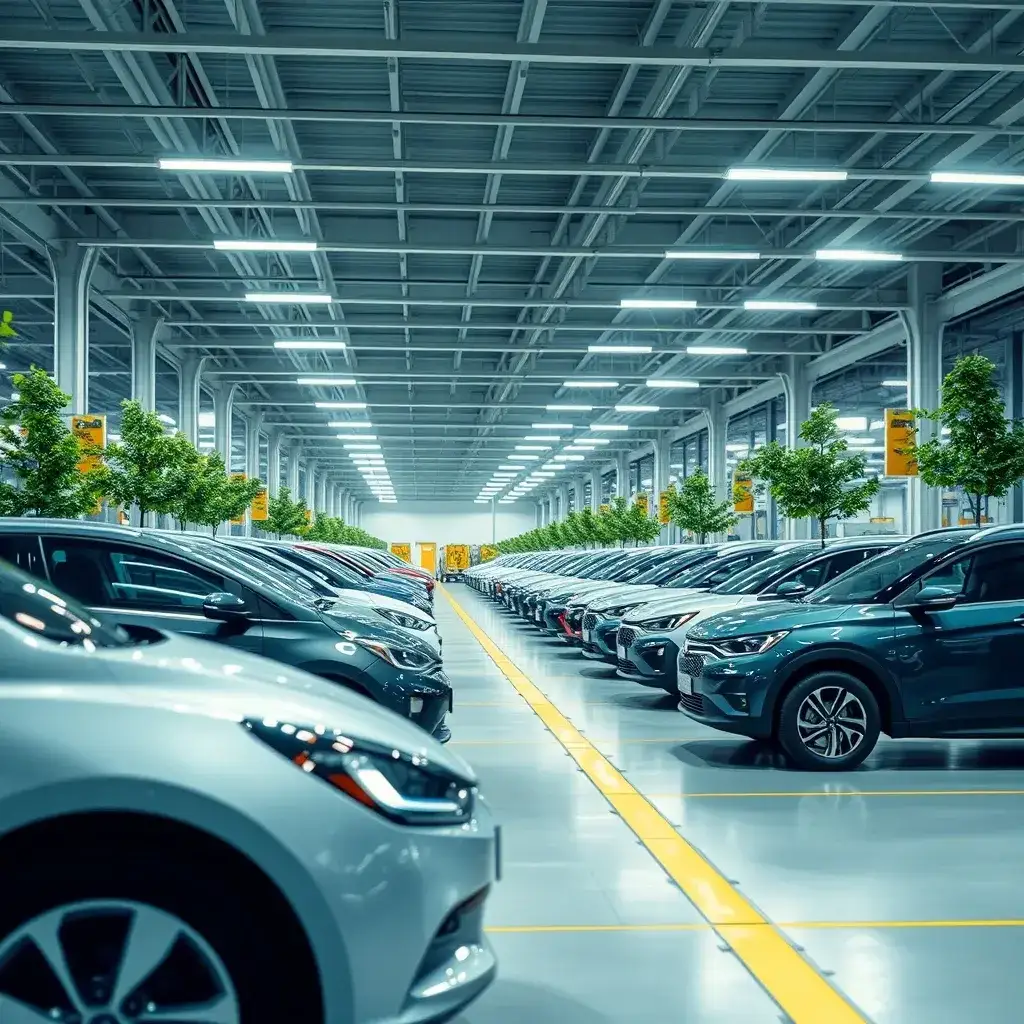

The global automotive industry is undergoing a seismic transformation driven by the rapid adoption of electric vehicles (EVs). This shift is not merely about replacing internal combustion engines with electric motors; it represents a fundamental reengineering of the entire automotive supply chain. From raw material extraction to battery production and vehicle assembly, the rise of EVs is reshaping industries, economies, and geopolitical dynamics. This article explores how electric vehicles are altering the global supply chain, focusing on critical battery materials like lithium, cobalt, and rare earth metals, while also examining the strategic moves by industry leaders to secure sustainable and resilient supply networks.
The transition to electric mobility is accelerating at an unprecedented pace, with governments worldwide implementing policies to phase out gasoline and diesel vehicles. The European Union, for instance, has set a target to ban the sale of new internal combustion engine vehicles by 2035, while China aims to achieve carbon neutrality by 2060. These ambitious goals are pushing automakers to rethink their supply chains, placing immense pressure on the mining and manufacturing sectors to scale up production of essential battery components. The ripple effects of this transformation extend beyond the automotive industry, influencing energy markets, trade policies, and even environmental regulations.
🌍 The Global Shift Toward Electric Mobility
The adoption of electric vehicles is no longer a niche trend but a global phenomenon. In 2023, global EV sales surpassed 14 million units, marking a 35% year-over-year increase. This surge is fueled by several factors, including declining battery costs, government incentives, and growing consumer awareness of environmental issues. However, the most significant driver is the technological advancements in battery chemistry and energy density, which have made EVs more affordable and practical for everyday use.
As EV adoption grows, the demand for lithium-ion batteries has skyrocketed. These batteries are the heart of electric vehicles, providing the energy storage necessary for long-distance travel. The International Energy Agency (IEA) projects that global lithium demand could increase 40-fold by 2040, driven by the electrification of transportation and renewable energy storage. This unprecedented demand is already straining existing supply chains and prompting a scramble for new mining projects and recycling initiatives.
⛏️ The Critical Role of Battery Materials
🔋 Lithium: The New Black Gold
Lithium is the cornerstone of modern battery technology, playing a crucial role in the anodes of lithium-ion batteries. Without lithium, the energy density and longevity of EV batteries would be significantly compromised. The demand for lithium has surged in recent years, with the global market size expected to reach $12.1 billion by 2026, according to industry analysts. This explosive growth is driven by the proliferation of EVs, as well as the increasing use of lithium in energy storage systems for renewable energy projects.
The primary sources of lithium are hard-rock mining and brine extraction. Hard-rock mining, predominantly in Australia, accounts for about 50% of global lithium production. Meanwhile, brine extraction, primarily in South America’s