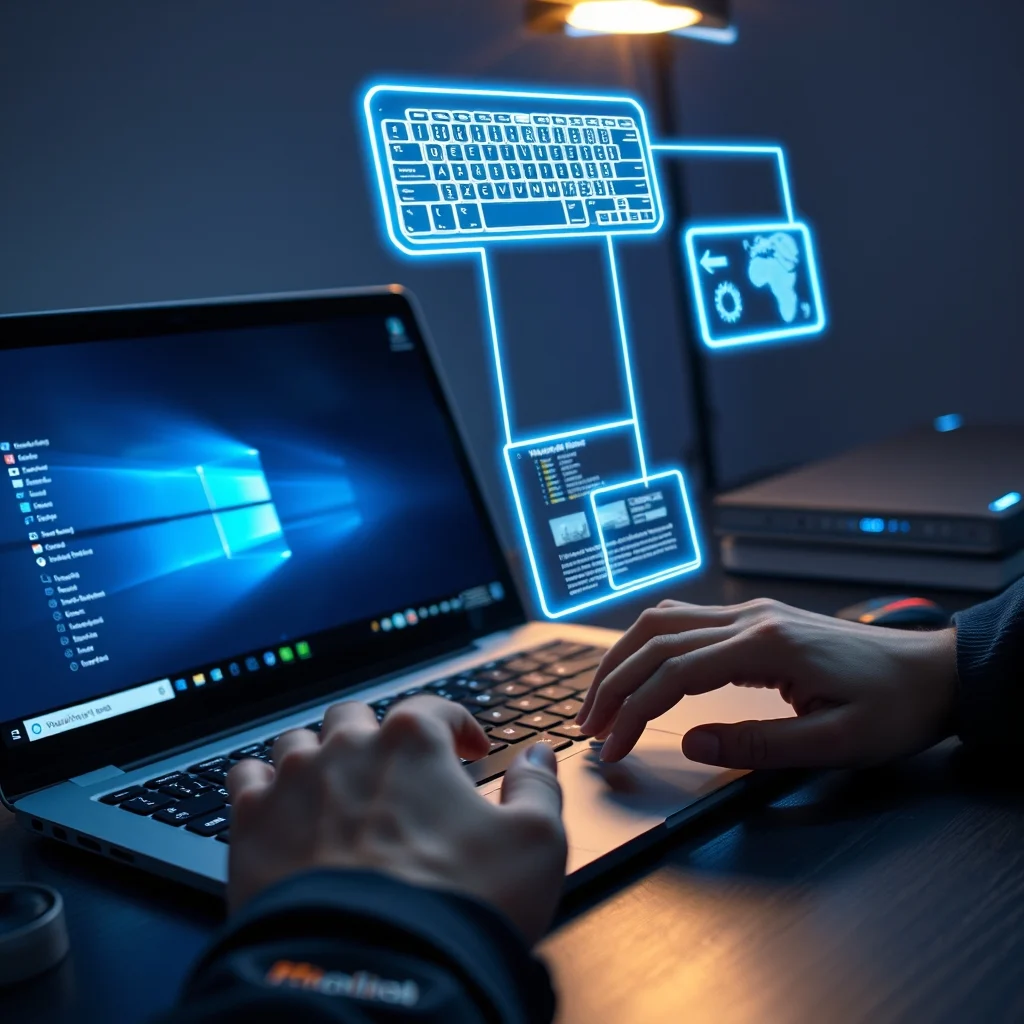

In the fast-paced digital landscape of modern computing, efficiency is the key to unlocking maximum productivity. Windows 11 has evolved into a sophisticated operating system designed not only for visual appeal but also for streamlined workflow management. However, many users remain unaware of the profound efficiency gains that can be achieved by mastering the intricate network of keyboard shortcuts and mouse gestures embedded within the platform. This comprehensive guide explores the hidden depths of Windows 11 navigation, transforming the way you interact with your computer from a passive user into an active operator who commands the system with precision.
Understanding the power of shortcuts is not merely about memorizing a few key combinations. It is about rethinking the physical interaction between human and machine. Every click of a mouse consumes time. Every keystroke is a decision. By optimizing these micro-interactions, you can reduce the cognitive load required to perform routine tasks, allowing your brain to focus on high-level thinking rather than mechanical navigation. Whether you are a software developer compiling code, a graphic designer manipulating complex layers, or a corporate employee managing hundreds of files, the ability to navigate without reaching for the mouse can save hours every week.
Why This Matters Now
As technology continues to advance, the expectation for speed and responsiveness grows. Windows 11 introduces new gestural interfaces that bridge the gap between touch and click, creating a more fluid experience. Yet, the traditional keyboard remains the fastest input method for text and command execution. Combining these two input methods through knowledge of shortcuts creates a synergy that accelerates workflow. This article will dissect the essential shortcuts, the advanced mouse gestures, and the customization options available to tailor the system to your specific needs. By the end of this guide, you will have a toolkit that allows you to move through your digital environment with the speed of light.
🚀 Understanding the Efficiency Revolution
The concept of efficiency in computing is often overlooked. Most users operate at a fraction of their potential speed because they rely on default settings and visual menus. The efficiency revolution begins when you realize that visual menus are designed for discoverability, not for speed. Once a function is known, accessing it via a menu adds unnecessary latency. Shortcuts eliminate this latency entirely.
The Cost of Inefficiency
Consider the average time it takes to use a mouse to open a file, navigate through folders, and close a window. This process involves moving the cursor, clicking, waiting for the menu to load, clicking again, and repeating. Now, consider the alternative. A single keystroke command can open a window, search a file, and execute a command in a fraction of a second. Over the course of a workday, these seconds accumulate into minutes, and over a year, into days of saved time. This is the tangible value of mastering Windows 11 shortcuts.
- ✅ Time Savings: Reducing repetitive actions saves hours weekly.
- 🎯 Reduced Fatigue: Less mouse movement reduces wrist strain.
- ⚠️ Workflow Continuity: Keeps hands on the keyboard for uninterrupted focus.
The goal is not just to make tasks faster, but to make them seamless. When your hands do not need to leave the keyboard or the primary input area, you maintain a state of flow. This state is critical for deep work and complex problem-solving. In the following sections, we will break down the specific mechanisms that enable this flow.
⌨️ Essential Keyboard Shortcuts for Daily Operations
🧩 Navigation and Window Management
One of the most significant productivity killers in Windows is the management of open windows. When you have multiple applications running, switching between them can become a chaotic dance of clicking and dragging. Windows 11 offers a robust suite of keyboard commands to manage this chaos instantly. The Windows key combined with arrow keys allows you to snap windows to different halves of the screen, enabling true side-by-side multitasking without using the mouse.
Win + Left Arrow snaps the active window to the left half of the screen. Pressing it again can maximize it or snap it to a quarter of the screen. Win + Right Arrow performs the mirror operation. This is invaluable for comparing documents, copying data from one source to another, or simply organizing your workspace visually. For users with ultrawide monitors, this feature scales beautifully, allowing you to utilize the entire horizontal space.
Furthermore, the clipboard history feature has been significantly enhanced in Windows 11. The Win + V command brings up a history of everything you have copied in the last few days. This is a game-changer for users who copy and paste frequently. Instead of copying the same item multiple times or losing data to the clipboard, you can scroll through your history and paste exactly what you need. This simple command eliminates a common frustration that plagues daily computer use.
📂 File Explorer Mastery
File management is the backbone of digital organization. Windows 11 File Explorer is powerful, but its full potential is hidden behind menus. The Win + E shortcut opens File Explorer immediately, bypassing the Start Menu. Once inside, the Win + Shift + S shortcut is useful for capturing snippets of the screen, but within File Explorer, knowing how to navigate quickly is key.
Alt + D selects the address bar in File Explorer. This allows you to type a new path directly without clicking or navigating through folders. If you know the full path to a folder, you can jump there in seconds. Similarly, Ctrl + L performs the same function in many applications, allowing for rapid path entry. These shortcuts reduce the cognitive load of remembering folder hierarchies.
- ✅ Win + E: Launch File Explorer instantly.
- ✅ Alt + D: Focus on the address bar.
- ✅ Ctrl + Shift + N: Create a new folder immediately.
Another critical tool for power users is the ability to rename multiple files. By holding Ctrl and clicking multiple files, you can select them all. Then, typing a name and pressing Enter will rename the first file and prompt you to rename the rest sequentially. This is a massive time-saver for organizing large batches of documents or images.
🖱️ Advanced Mouse and Touchpad Gestures
🎮 Touchpad Precision
While the keyboard is king for text entry, the mouse and touchpad offer unique gestural capabilities that can speed up navigation. Windows 11 supports multi-touch gestures on touchpads that mimic the fluidity of smartphones. A two-finger swipe up brings up the Task View. A two-finger swipe down brings up the Notifications center. These gestures are designed to be intuitive, reducing the need to reach for specific icons.
Three-Finger Swipes
You can customize three-finger gestures to perform specific actions. For example, swiping left or right can switch between open applications. This is particularly useful for laptop users who want to avoid switching tabs with a mouse. The settings for these gestures are found under Settings > Bluetooth & devices > Touchpad. Here, you can define exactly what each gesture triggers.
🖱️ Mouse Button Customization
Standard mice often come with extra buttons on the side that are rarely used. Windows 11 allows for significant customization of these buttons through the mouse settings. You can map a side button to perform a specific action, such as opening a browser or executing a macro. This is highly recommended for gamers and productivity enthusiasts who want to keep their hands on the primary controls.
Back and Forward Buttons
The physical back and forward buttons on a mouse are often ignored, yet they are powerful navigation tools. In File Explorer, the back button jumps to the previous folder you visited. In a web browser, it jumps to the previous tab. Using these buttons is faster than looking for the navigation arrow in the browser interface. This is a fundamental habit that speeds up browsing significantly.
🛠️ Customizing Your Workflow
🔧 PowerToys and Advanced Tools
Microsoft provides a suite of free tools called PowerToys that extend the functionality of Windows 11. Among these is the Keyboard Manager, which allows you to remap keys and create custom shortcuts. This is essential for users who find the default keybindings unhelpful or for those who want to replicate shortcuts from other operating systems.
Keyboard Manager
With Keyboard Manager, you can swap the Caps Lock key with Ctrl, which is a popular preference for Vim users. You can also create complex macros that execute multiple commands with a single press. For instance, a single shortcut could open a specific application, type a standard greeting, and press Enter. This automation reduces repetitive typing to a single keystroke.
- ✅ PowerToys: Official Microsoft extension for power users.
- ✅ Keyboard Manager: Remap keys and create macros.
- ✅ Always on Top: Pin windows to stay above others.
🎨 Shortcut Creation Workflow
Creating a custom shortcut involves a few steps. First, identify the action you want to perform. This could be opening a specific program or running a script. Second, assign a combination of keys that does not conflict with existing system shortcuts. Third, test the shortcut to ensure it works as intended. If it conflicts, choose a different combination. Consistency is key in building muscle memory.
🔧 Troubleshooting Common Issues
🛑 Shortcuts Not Working
Sometimes, shortcuts may stop working due to software conflicts or driver issues. If a specific shortcut fails, the first step is to check if the application supports it. Not all applications support every system shortcut. If the shortcut is system-wide, try restarting the Explorer process. This can be done by opening Task Manager, finding Windows Explorer, and selecting Restart.
Driver Updates
Outdated keyboard or mouse drivers can cause input issues. Ensure that your drivers are up to date through the Device Manager or the manufacturer’s software. This ensures that all hardware signals are interpreted correctly by the operating system.
| Issue | Potential Cause | Solution |
|---|---|---|
| Shortcuts Not Responding | Driver Conflict | Update Drivers |
| Windows Key Frozen | Filter Keys Enabled | Disable Filter Keys |
| Mouse Gestures Fail | Touchpad Driver | Reinstall Touchpad Driver |
Filter Keys
Windows has an accessibility feature called Filter Keys that ignores brief or repeated keystrokes. If this is accidentally enabled, it can make your keyboard feel unresponsive. You can disable this in the Settings menu under Accessibility > Keyboard. Ensure that Filter Keys is turned off for standard typing.
📊 Performance Impact Analysis
🚀 Workflow Speed Metrics
Using shortcuts improves workflow speed by reducing the physical distance your hands must travel. A study on computer usage suggests that users who rely on shortcuts complete tasks up to 20% faster than those who rely on the mouse. This gain is compounded over time. In a professional setting, this translates to higher output and less fatigue.
Resource Usage
Using shortcuts does not inherently increase resource usage. In fact, it can reduce it by minimizing the number of windows and processes open at any given time. By managing windows efficiently, you free up RAM and CPU cycles for the actual work you are doing. This is particularly important for users with older hardware.
🏁 Final Verdict and Recommendations
Mastering keyboard shortcuts and mouse gestures in Windows 11 is not a luxury; it is a necessity for anyone who spends significant time at a computer. The efficiency gains are immediate, and the long-term benefits to your workflow and physical health are substantial. By adopting the practices outlined in this guide, you will transform your computer from a tool you use into a tool you command.
Start small. Pick a few shortcuts that apply to your daily tasks and practice them until they feel natural. Over time, you will find yourself reaching for the keyboard more often, and the mouse less often. This shift will change the way you work, making you faster, more efficient, and more productive.
❓ Frequently Asked Questions
- Are these shortcuts compatible with all versions of Windows 11?
Yes, most system-wide shortcuts are compatible across all builds of Windows 11, though some features may vary by version. - Can I use these shortcuts on a laptop trackpad?
Absolutely. Windows 11 recognizes trackpad gestures and maps them to standard shortcuts automatically. - What is the best way to remember all these shortcuts?
Practice is key. Start with the top five most used shortcuts and build from there. - Do shortcuts work in all applications?
No, some applications have their own unique shortcuts. Check the help menu within the specific app. - Can I change the default shortcuts?
Yes, using PowerToys or third-party software allows you to remap keys and change shortcuts. - Is it safe to remap the Caps Lock key?
Yes, it is safe and highly recommended for productivity users. - How do I restore default shortcuts?
Use the Keyboard Manager in PowerToys to reset custom mappings. - Do shortcuts work in the Command Prompt?
Yes, but Command Prompt has its own specific shortcuts like Ctrl + C for copy. - Can I use shortcuts for gaming?
Yes, many games support custom key bindings, but system shortcuts might interfere. - What if I accidentally press a shortcut?
Most shortcuts are reversible or have a confirmation dialog to prevent accidental data loss.
By integrating these tools into your daily routine, you ensure that you are maximizing the potential of your hardware and your operating system. The journey to mastery begins with a single keystroke.