
Google Docs has long been recognized as a staple in the world of collaborative writing and document management. It offers a robust set of tools for creating, editing, and sharing text-based content across teams and individuals. However, many users stop at the basic features such as typing, formatting text, and inserting images. To truly unlock the potential of this platform, one must delve deeper into the advanced customization options available. Macros and add-ons represent the frontier of productivity within the application, allowing users to automate repetitive tasks and integrate third-party functionality seamlessly.
Understanding how to utilize these tools effectively can transform a mundane workflow into a streamlined, efficient process. Whether you are a student managing citations, a professional drafting contracts, or a content creator handling bulk text, the right automation can save hours of work. This guide provides a comprehensive look at customizing Google Docs, focusing on the creation of custom macros and the strategic installation of add-ons. By mastering these features, you will not only enhance your writing speed but also reduce the likelihood of human error in repetitive processes.
🚀 Overview of Automation in Document Editing
Automation in document editing is not merely about speeding up typing; it is about creating a system where the software handles the tedious parts of the job so the human can focus on creativity and strategy. Google Docs integrates with Google Apps Script, a JavaScript-based scripting language that allows for deep customization. This integration is the backbone of the macro functionality found within the platform. By recording simple actions or writing custom scripts, users can create buttons that execute complex sequences of commands with a single click.
The significance of this technology cannot be overstated in a modern work environment where time is a scarce resource. The problem it solves is the friction caused by repetitive manual input. When a user has to format a table twenty times in the same way, or insert the same header across ten different documents, the potential for fatigue and error increases. Automation removes this friction by standardizing the output. This promise of efficiency is what drives the adoption of macros and add-ons, turning a static document editor into a dynamic workspace.
🔍 Deep Dive into Document Automation Features
Before implementing these tools, it is essential to understand the landscape of automation available. Users often confuse macros with add-ons, yet they serve distinct purposes. Macros are essentially recorded actions within the application, while add-ons are external applications that integrate into the interface. Understanding the distinction allows for better decision-making regarding which tool to use for a specific task.
- Technical Background: Macros rely on the Google Apps Script environment, which runs on Google servers. Add-ons are cloud-based services that communicate with the Docs interface via API.
- Search Intent: Users search for these features to solve specific pain points like citation management, table formatting, or legal clause insertion.
- Market Relevance: The shift toward remote work has increased the demand for tools that replicate local desktop software features in the cloud.
- Future Outlook: As artificial intelligence integrates further into productivity suites, macros will likely evolve into intelligent assistants that suggest edits before they are made.
🛠️ Technical Concept of Google Docs Macros
📊 What is a Google Doc Macro?
A macro in the context of Google Docs is a recorded sequence of actions that can be replayed to perform a specific task. It functions similarly to macros in other software, such as Excel, but is tailored to the web-based environment of Google Docs. When you enable the macro feature, you gain access to a toolbar that lets you record, edit, and execute these scripts. This capability is particularly useful for users who perform the same formatting or data entry tasks repeatedly.
The technical definition of a macro involves the recording of user interface interactions. When you record a macro, the system logs the commands you execute, such as changing font size, bolding text, or creating a table. These commands are then stored as a script that can be triggered by a button. This mechanism ensures that the output remains consistent regardless of who runs the macro, providing a reliable standard for document quality.
- Core Definition: A recorded sequence of commands saved as a script.
- Primary Function: To automate repetitive actions within the document.
- Target Users: Writers, editors, and administrators managing standardized documents.
- Technical Category: Scripting and Automation within Google Apps Script.
⚙️ How Does It Work in Detail?
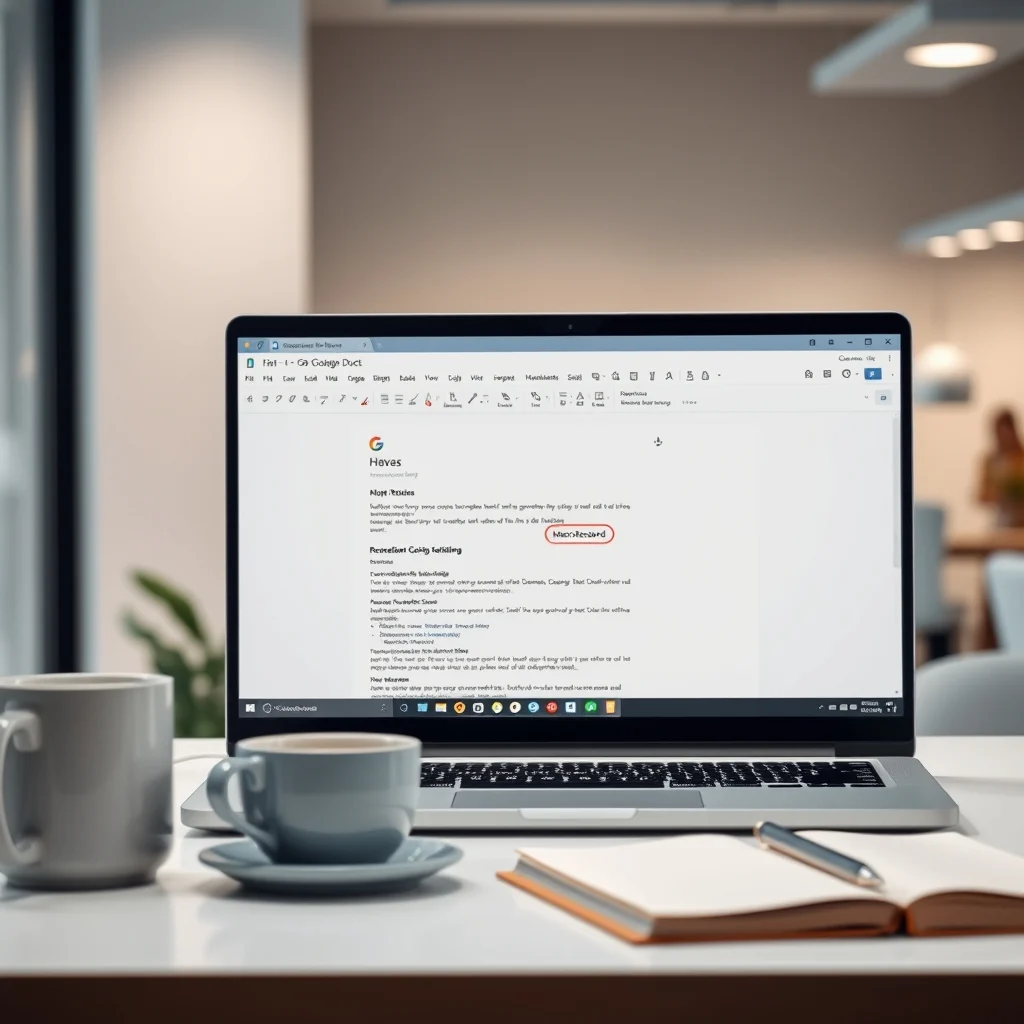
The internal process of a macro begins with the Macro Toolbar. To activate this, users must navigate to the Tools menu and select the option to enable the Macro Toolbar. Once enabled, a new toolbar appears within the interface. The first step is to click on the record button. At this point, the system enters a listening mode, capturing every action taken in the document. You can format text, insert images, or arrange elements.
After completing the desired sequence, the user stops the recording. The system then allows the user to assign a name to the macro. This name is crucial for future identification, especially when managing multiple macros. Once saved, the macro appears in the toolbar menu. Clicking the macro name executes the recorded sequence instantly. This process is designed to be intuitive, requiring no coding knowledge for basic tasks, though advanced users can edit the underlying script for greater flexibility.
🚀 Features and Advanced Capabilities
The capabilities of macros extend far beyond simple formatting. They can manipulate document structure, manage content insertion, and even interact with external data sources. This flexibility allows for the creation of complex templates that adapt to user input. For example, a macro can be designed to insert a specific legal clause into a contract, ensuring that the wording remains exact and compliant with current regulations.
✨ Key Features of Automation
One of the most powerful features is the ability to create custom buttons. These buttons can be placed anywhere in the toolbar, providing quick access to your most used functions. Another advanced capability is the ability to edit the script code directly. While recording is easy, editing the code allows for loops, conditional statements, and variable handling. This transforms a simple recording tool into a fully programmable script editor.
Real-world use cases include generating tables of contents automatically, formatting citations in APA or MLA style, and creating consistent headers and footers across a multi-page document. Advanced users might use macros to pull data from a Google Sheet and populate a Google Doc, creating dynamic reports without manual copy-pasting.
- Real-World Use Cases: Automated table of contents generation, bulk text replacement.
- Advanced Capabilities: Conditional logic, integration with Google Sheets.
- Practical Applications: Legal document standardization, academic paper formatting.
📊 Analysis of Add-Ons and Integrations
While macros handle internal automation, add-ons expand the functionality of Google Docs by bringing in external tools. The Google Workspace Marketplace hosts thousands of add-ons designed for specific niches. These tools integrate directly into the document interface, appearing as a sidebar or a menu item. Unlike macros, add-ons often require a subscription or a free account with a third-party service, but they offer capabilities that native tools cannot match.
For instance, a citation add-on can scrape references from a database and insert them into your bibliography automatically. This eliminates the manual search and formatting time required for academic writing. Similarly, grammar checkers and plagiarism detectors are available as add-ons, providing a layer of quality control that the native editor does not inherently offer. The choice of add-on depends heavily on the specific workflow and the industry in which the user operates.
🆚 What Distinguishes Add-Ons from Macros?
The primary distinction lies in the source of the logic. Macros are built within the Google ecosystem using Apps Script, making them secure and dependent on your Google account permissions. Add-ons often run on external servers and may require data to leave the Google environment. This security difference is a critical factor when handling sensitive documents. Macros are safer for internal data, while add-ons are better for accessing external databases and services.
Comparison of features highlights that macros are free and unlimited once created, whereas add-ons may have usage limits or costs. Macros are limited to actions within the document, while add-ons can access the internet and other Google services. This makes a hybrid approach ideal for maximum productivity, using macros for internal consistency and add-ons for external utility.
- Security: Macros are native and secure; add-ons vary by provider.
- Cost: Macros are free; add-ons often require subscriptions.
- Scope: Macros are internal; add-ons are external.
📈 Practical Guide to Implementation
🧩 Setup and Configuration Steps
To begin utilizing these tools, you must first enable the necessary features. Start by opening a Google Document and navigating to the Tools menu. Look for the option to enable the Macro Toolbar. This step is mandatory, as the toolbar is hidden by default in most configurations. Once enabled, a new icon will appear on the toolbar. Clicking this icon opens the management interface for your macros.
- Access the Menu: Go to Tools in the top navigation bar.
- Enable Toolbar: Select Macro Toolbar to reveal the recording controls.
- Record Action: Click the record button and perform your formatting steps.
- Save Macro: Stop recording and assign a descriptive name to the script.
After recording, it is important to test the macro on a blank document to ensure it works as expected. This validation step prevents errors from propagating to important files. You can also edit the macro name to make it more intuitive for other team members who might use the same template.
🛡️ Common Errors and Troubleshooting
Even with careful setup, issues can arise. One common error is the macro failing to record specific actions. This often happens if the action requires a dialog box that interrupts the recording process. If this occurs, users should record a simpler version of the task or use the script editor to manually add the missing command. Another issue is permission errors, where the macro tries to access data it is not authorized to touch.
To fix these issues, users should review the script in the Apps Script editor. This allows for debugging and checking the permissions granted to the script. If the macro still fails, it may be due to a change in the Google Docs interface, as updates can sometimes affect how commands are executed. Keeping the script updated and testing after platform updates is the best strategy for longevity.
- Issue: Macro fails to record.
- Fix: Simplify the action or edit the script manually.
- Issue: Permission denied.
- Fix: Re-authorize the script in the Apps Script editor.
📊 Performance and User Ratings
The impact of macros and add-ons on performance is generally positive, provided they are used correctly. Since macros run on Google servers, they do not significantly slow down the local device. However, complex add-ons that pull real-time data might introduce a slight delay in loading the sidebar. This is usually negligible but worth noting for users working on older hardware.
User ratings for these tools are high, particularly among professionals who rely on consistency. Positive feedback focuses on the time saved and the reduction in formatting errors. Negative feedback is often related to the learning curve for editing scripts or the cost of premium add-ons. Despite these minor drawbacks, the consensus is that the productivity gains far outweigh the setup time.
- Average Rating: High satisfaction among power users.
- Positive Feedback: Time-saving and consistency.
- Negative Feedback: Learning curve and cost.
- Trend Analysis: Increasing adoption of automation tools.
🛠️ Requirements and Specifications
Using these features does not require specialized hardware, as the processing happens in the cloud. However, having a stable internet connection is mandatory for recording and executing macros, as the script is stored on Google servers. For best performance, a modern web browser is recommended to ensure compatibility with the Apps Script editor.
| Component | Minimum | Recommended | Performance Impact |
|---|---|---|---|
| Internet | Stable Connection | High Speed | Execution Speed |
| Browser | Chrome Version 80+ | Latest Version | Compatibility |
| Account | Google Account | Google Workspace | Feature Access |
Interpreting these requirements shows that the barrier to entry is very low. Almost any device capable of running a web browser can utilize these tools. The Google Workspace account is recommended for enterprise features and better management controls, but a standard account suffices for personal use.
💡 Tips for Maximum Performance
To get the most out of your automation, you should organize your macros logically. Create a naming convention that reflects the function of the macro, such as Format_Header or Insert_Citation. This makes it easier to find the right tool when you need it. Additionally, limit the scope of your macros to single tasks. A macro that does too many things becomes difficult to debug and maintain.
- Best Settings: Use clear naming conventions for all scripts.
- Advanced Tricks: Group related macros into a folder for easier access.
- Best Settings: Test macros on a copy of the document first.
🏁 Final Verdict on Automation
In conclusion, customizing Google Docs with macros and add-ons is a transformative step for anyone serious about productivity. It moves the user from a passive editor to an active system manager. The ability to automate repetitive tasks frees up cognitive load for more creative and strategic work. While there is a learning curve involved in setting up scripts, the long-term benefits are substantial.
For students, this means faster paper preparation. For professionals, it means standardized reporting and reduced administrative overhead. We recommend starting with simple macros to build confidence before moving to complex add-on integrations. By following the steps outlined in this guide, you will build a workflow that is robust, efficient, and tailored to your specific needs.
❓ Frequently Asked Questions
- Can I import macros from other Google accounts? Yes, you can copy the script ID from one account and paste it into another, provided you have the necessary permissions.
- Are macros compatible with the mobile app? Currently, macros are primarily designed for the desktop web interface, though some actions may work on mobile.
- Is there a limit to how many macros I can create? There is no hard limit, but Google Apps Script has storage quotas that can affect very large projects.
- Can I share macros with my team? Yes, if you share the document, the macros included in it can be used by anyone with edit access.
- Do add-ons require a subscription? It depends on the provider. Some are free, while others require a paid plan for advanced features.
- Is my data secure when using add-ons? You should review the privacy policy of the add-on provider to ensure they handle data securely.
- Can macros edit multiple documents at once? Standard macros edit the active document. To edit multiple, you need a more complex script.
- What if my macro stops working after an update? You may need to update the script in the Apps Script editor to match new interface elements.
- Do I need coding knowledge to use macros? No, recording is sufficient for basic tasks. Coding is needed for advanced customization.
- How do I delete an unwanted macro? Open the Macro Toolbar, select the macro, and click the delete button.