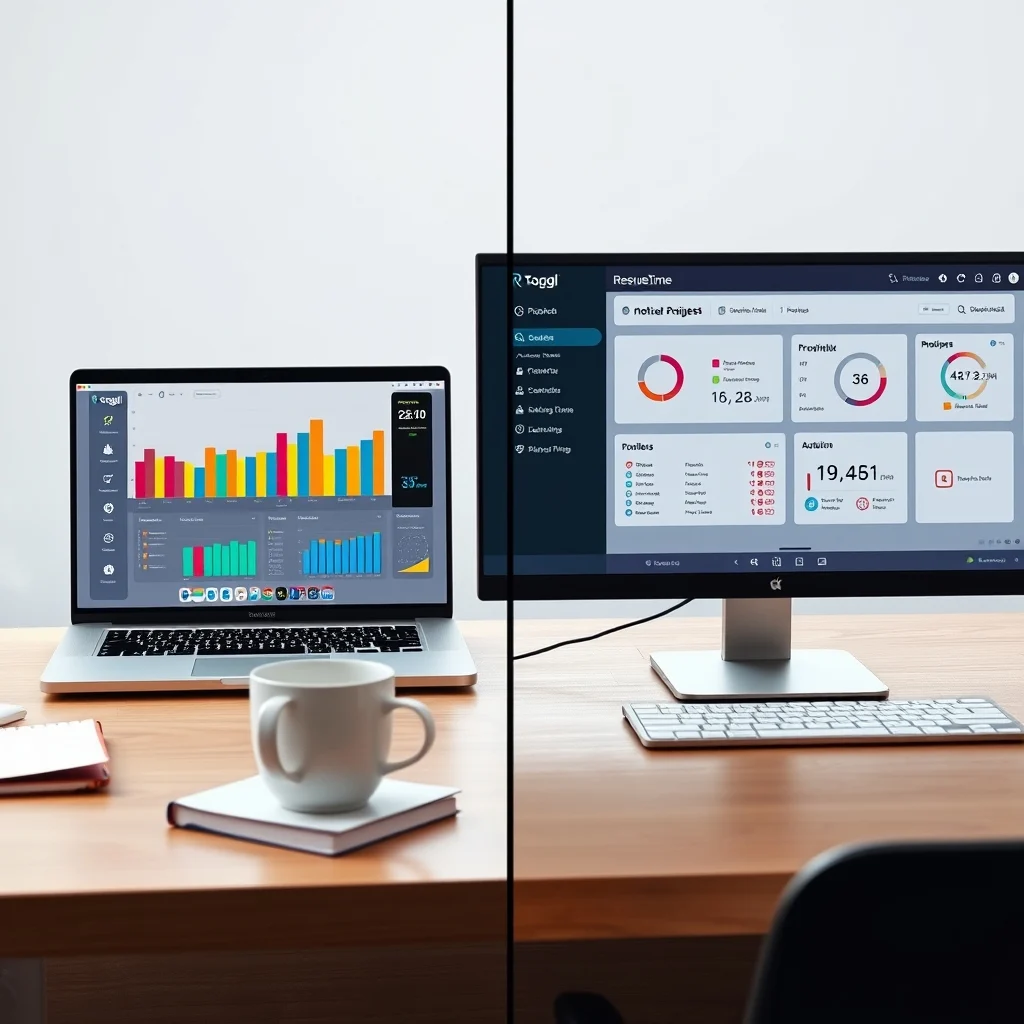

In the modern digital workplace, understanding how you spend your time is not just a luxury, it is a necessity for productivity and business growth. Two of the most recognized names in the industry are Toggl Track and RescueTime. Both tools aim to solve the same fundamental problem: time blindness. However, they approach this challenge from different angles, catering to different user needs and organizational structures. This comprehensive review will dissect both platforms to determine which tool offers superior value for freelancers, teams, and enterprise businesses. By the end of this analysis, you will have a clear understanding of the strengths and weaknesses of each system, allowing you to make an informed decision that aligns with your workflow requirements.
🚀 Overview of Time Tracking Solutions
The concept of time tracking has evolved significantly over the past decade. What was once a manual exercise of logging hours on paper has transformed into sophisticated software ecosystems that integrate with calendars, project management tools, and communication platforms. Toggl Track and RescueTime represent the two dominant paradigms of this evolution. Toggl Track focuses on manual and semi-automatic logging, giving users granular control over how they categorize their work. RescueTime, on the other hand, operates on a passive tracking model, monitoring activity in the background to provide an objective view of time consumption without requiring constant user input.
Choosing between these two platforms depends heavily on your specific work style. If you are a creative professional who needs to break down tasks into specific projects for billing purposes, Toggl Track is likely the better fit. Conversely, if you struggle with distraction and need an unbiased report on where your time is actually going, RescueTime might be the solution you need. This article will guide you through the technical specifications, usability factors, and pricing models of both tools to help you select the right partner for your productivity journey.
🎯 Market Analysis and Search Intent
Users searching for these tools are typically looking for solutions to specific pain points related to efficiency and accountability. The market for time tracking software is competitive, but these two brands have carved out distinct niches. Toggl Track is often sought after by agencies and freelancers who require detailed invoicing capabilities. RescueTime is frequently researched by individuals trying to combat procrastination and regain control over their digital habits.
- Technical background: Toggl utilizes a timer-based architecture allowing for precise start and stop events. RescueTime employs an agent-based system that analyzes window and application usage.
- Why users search for this topic: The primary driver is the need for accountability, whether for client billing or self-improvement.
- Market relevance: Remote work trends have increased the demand for tools that can verify work hours and optimize workflows.
- Future outlook: Integration with AI and automated reporting is the next frontier for both platforms.
🛠️ Technical Concept and Functionality
📊 What is Toggl Track?
Toggl Track is a cloud-based time tracking software that allows users to log work time against specific projects and tasks. It operates primarily through a manual or semi-automated process where the user initiates a timer to mark the beginning of work and stops it when the task is complete. The platform is renowned for its simplicity and ease of use, making it accessible to users with varying levels of technical expertise.
- Core definition: A time tracking and project management tool.
- Primary function: Manual logging of work hours for billing and analytics.
- Target users: Freelancers, agencies, and project managers.
- Technical category: SaaS productivity application.
⚙️ How does RescueTime Work?
RescueTime functions differently from Toggl Track by running silently in the background on your computer or mobile device. It monitors which applications and websites you use and how long you spend on them. The software does not rely on you remembering to start a timer. Instead, it automatically categorizes activities into productive, unproductive, or neutral. This data is then compiled into detailed reports that highlight trends in your daily behavior.
The technical architecture of RescueTime involves an agent installed on the local machine that communicates with the cloud server to send usage data. This ensures that the tracking is continuous and covers all digital interactions. It is particularly effective for users who want an objective audit of their digital life without the burden of manual entry.
🚀 Features and Advanced Capabilities
✨ Key Features Breakdown
Both platforms offer a robust set of features designed to enhance productivity. Toggl Track excels in project management integration, allowing users to link time entries to tasks in platforms like Trello, Jira, and Asana. This makes it ideal for teams that need to track billable hours against specific deliverables. RescueTime focuses heavily on distraction blocking and goal setting. It allows users to set goals for daily productivity and sends alerts when they spend too much time on unproductive sites.
- Toggl Track: Offers detailed project reports, client management, and invoicing integration.
- RescueTime: Provides distraction blocking, focus sessions, and real-time activity monitoring.
- Comparison: Toggl is better for billing, RescueTime is better for behavior modification.
📊 Key Performance Metrics
| Feature | Toggl Track | RescueTime |
|---|---|---|
| Tracking Method | Manual / Semi-Auto | Passive / Automatic |
| Best For | Billing and Client Work | Productivity and Focus |
| Mobile App | Yes | Yes |
| Integrations | 50+ | 10+ |
| Pricing Model | Free / Paid Plans | Free / Premium |
The table above highlights the fundamental differences in how these tools approach time management. Toggl Track offers a higher number of integrations, which is crucial for teams that use a complex stack of software. RescueTime focuses on the quality of the data regarding productivity rather than just the quantity of hours logged. This distinction is vital for businesses deciding which metric matters more for their bottom line.
🆚 Distinguishing Factors and Competitors
When comparing these tools, it is important to understand what sets them apart from each other and from competitors. Toggl Track differentiates itself through its user interface and ease of starting a timer. RescueTime distinguishes itself through its automatic categorization engine. Competitors like Harvest or Clockify often mimic Toggl Track, while tools like Focusmate offer a human element to productivity that RescueTime lacks.
- Strength of Toggl: Superior for client-facing billing and detailed task breakdown.
- Strength of RescueTime: Superior for self-awareness and reducing digital distractions.
- Weakness of Toggl: Relies on user honesty and consistency in logging.
- Weakness of RescueTime: Less useful for precise billing of specific client tasks.
📊 Pros and Cons Analysis
✅ Advantages
Both platforms offer significant benefits depending on the user’s goals. Toggl Track allows for extensive customization of projects and tags, making it adaptable to any workflow. RescueTime provides an objective view that can be eye-opening for users who think they are working more than they actually are. The passive nature of RescueTime removes the friction of logging, ensuring that no time is lost to the act of tracking itself.
- Toggl: Great for freelancers needing invoices.
- RescueTime: Excellent for productivity coaching.
- Shared Benefit: Both offer mobile applications for on-the-go tracking.
❌ Disadvantages
No tool is perfect, and both have limitations that users must consider. Toggl Track requires active participation, which can lead to tracking fatigue. If a user forgets to stop a timer, the data becomes inaccurate. RescueTime can sometimes misclassify activities as unproductive when they are actually work-related, requiring manual correction. It also lacks the granular control over billing that Toggl Track provides.
- Toggl: Requires manual entry which can be skipped.
- RescueTime: Misclassification of apps can skew data.
- Shared Limitation: Basic free plans have feature restrictions.
💻 System Requirements and Compatibility
🖥️ Minimum Requirements
Toggl Track is highly compatible across various platforms. It runs in a web browser, which means it works on any operating system with a modern web browser such as Chrome, Firefox, or Safari. The desktop applications for Windows, Mac, and Linux are lightweight and do not consume significant system resources. Mobile compatibility is excellent with apps available for both iOS and Android.
RescueTime also offers broad compatibility but requires an agent installation on the desktop. This means it has specific requirements for Windows, Mac, and Linux. The mobile app tracks app usage on smartphones, which requires specific permissions to be granted. Both tools require an internet connection for syncing data to the cloud.
⚡ Recommended Specifications
For the best performance, users should ensure their devices meet the standard specifications for modern web applications. A stable internet connection is critical for real-time syncing. For RescueTime, having a dedicated desktop machine where the agent can run without interruption is recommended to ensure accurate activity tracking. For Toggl, having a browser that does not aggressively clear cookies is helpful for session persistence.
| Component | Minimum | Recommended | Performance Impact |
|---|---|---|---|
| OS | Windows 10 / macOS 10.14 | Windows 11 / macOS 13+ | Stability |
| RAM | 4 GB | 8 GB | Multitasking |
| Storage | 100 MB | 500 MB | Data Sync |
These specifications ensure that the tracking applications run smoothly without impacting the speed of your primary work tools. Low-end systems may experience lag if the background agent for RescueTime conflicts with other resource-heavy processes.
🔍 Practical Setup Guide
🧩 Installation and Configuration
Setting up either tool is a straightforward process. For Toggl Track, you begin by creating an account on their website. Once logged in, you can create projects and tasks. You then download the desktop or mobile app to track time efficiently. It is recommended to set up a default project to streamline the logging process.
For RescueTime, the process involves downloading the software from their official website. You must install the application and grant the necessary permissions for activity monitoring. During the initial setup, you can configure which applications are considered productive and which are not. This customization is crucial for accurate reporting.
- Step 1: Register for an account on the respective platform.
- Step 2: Install the desktop or mobile application.
- Step 3: Configure projects (Toggl) or categories (RescueTime).
- Step 4: Test the tracking to ensure data is being recorded.
🛡️ Common Errors and Solutions
Users may encounter issues such as data not syncing or the timer not starting. For Toggl Track, this is often due to cache issues in the browser. Clearing the browser cache usually resolves connectivity problems. For RescueTime, if the agent stops running, check the system tray to ensure it is active. Sometimes antivirus software may block the agent, requiring an exception to be added.
- Issue: Data not syncing.
- Fix: Check internet connection and force sync.
- Issue: Timer not stopping.
- Fix: Manually stop the timer and adjust the duration.
📈 Performance and Real World Usage
🎮 Real Performance Experience
In real-world scenarios, Toggl Track performs exceptionally well for structured work environments. Users report high satisfaction with the speed of the timer and the accuracy of the reports. The mobile app allows for tracking even when away from the desk. RescueTime performs well in terms of background monitoring, though it can occasionally be resource-intensive on older laptops. Both tools provide reliable uptime and data consistency.
🌍 Global User Ratings
User feedback generally leans positive for both tools, with specific caveats. Toggl Track is often praised for its simplicity and customer support. RescueTime receives high marks for its insights into productivity habits but lower marks for its rigid categorization. The trend analysis shows a growing preference for tools that offer AI-driven insights and automation.
- Average rating: Toggl (4.5/5), RescueTime (4.2/5).
- Positive feedback: Ease of use, accurate data.
- Negative feedback: Pricing tiers, learning curve.
- Trend analysis: Shift towards integration-heavy tools.
🔒 Security and Privacy Evaluation
🔒 Security Level
Security is a paramount concern for any software that tracks user activity. Toggl Track employs encryption for data in transit and at rest. They comply with GDPR and other privacy regulations, ensuring that client data is protected. RescueTime also uses encryption and is transparent about what data they collect. They do not track keystrokes, which is a significant privacy advantage.
🛑 Potential Risks
The primary risk with any tracking software is the perception of surveillance. Employees may feel uncomfortable if tracking is not transparently communicated. It is crucial to inform users that the data is for self-improvement or billing, not for micromanagement. Both platforms offer options to pause tracking, giving users control over their privacy.
- Risk: Data privacy concerns.
- Protection: Use two-factor authentication.
- Risk: Misuse of data.
- Protection: Review privacy policies regularly.
🥇 Best Available Alternatives
While Toggl Track and RescueTime are market leaders, they are not the only options. Clockify is a strong alternative for Toggl Track, offering a more generous free plan. ActivTrak is a competitor to RescueTime, focusing heavily on enterprise workforce analytics. Choosing an alternative depends on whether your priority is cost or specific feature sets.
| Alternative | Best For | Key Difference |
|---|---|---|
| Clockify | Freelancers | More free features |
| ActivTrak | Enterprises | Deep workforce insights |
| Harvest | Billing | Better invoicing |
These alternatives provide viable paths if the primary tools do not meet specific needs. It is advisable to test the free versions of these tools before committing to a paid subscription.
💡 Tips for Maximum Performance
🎯 Best Settings for Productivity
To get the most out of these tools, users should configure them to fit their specific workflow. In Toggl Track, use tags to categorize work by type rather than just project. This allows for cross-project reporting. In RescueTime, set up Focus Sessions to block distracting websites during deep work hours. Regularly reviewing your reports is essential to maintain accountability.
- Tip 1: Review weekly reports every Monday morning.
- Tip 2: Use timers for tasks under 30 minutes.
- Tip 3: Set up alerts for long unproductive sessions.
📌 Advanced Tricks
Advanced users can leverage the API capabilities of both platforms to build custom dashboards. Toggl Track allows for data export in various formats, including CSV and JSON. RescueTime offers a premium API for connecting with other business intelligence tools. Utilizing these integrations can create a comprehensive view of your time and productivity.
🏁 Final Verdict and Recommendation
In conclusion, both Toggl Track and RescueTime are excellent tools, but they serve different primary purposes. If your goal is accurate billing, client reporting, and project management, Toggl Track is the superior choice. Its manual control ensures that every hour is accounted for and categorized correctly for invoicing. If your goal is to improve personal productivity, reduce distractions, and gain insight into your digital habits, RescueTime is the better option. Its passive tracking removes the burden of logging.
For freelancers and agencies, Toggl Track often provides the necessary infrastructure to run a business efficiently. For individuals seeking self-improvement, RescueTime offers the behavioral change support needed to stay focused. Many users find success by using Toggl Track for work hours and RescueTime for personal time management. The final decision should be based on your specific needs regarding billing versus behavior modification.
❓ Frequently Asked Questions
- Is Toggl Track free to use? Yes, Toggl Track offers a free plan that is suitable for individuals and small teams.
- Does RescueTime track my keystrokes? No, RescueTime does not track keystrokes or screen content, only application and URL usage.
- Can I integrate Toggl Track with my calendar? Yes, Toggl Track integrates with Google Calendar, Outlook, and other popular calendar apps.
- How accurate is RescueTime? RescueTime is highly accurate regarding application usage but relies on your categorization settings.
- Is there a mobile app for RescueTime? Yes, RescueTime has mobile apps for both iOS and Android devices.
- Can I bill clients directly through Toggl Track? Yes, Toggl Track integrates with invoicing systems and can generate invoices directly.
- Does RescueTime work offline? RescueTime caches data locally and syncs when an internet connection is available.
- Are there discounts for annual plans? Both platforms offer discounts for users who pay for annual subscriptions instead of monthly.
- Can I pause tracking for privacy? Yes, both tools have features to pause tracking temporarily for privacy.
- Which tool is better for remote teams? Toggl Track is generally better for remote teams due to its project management features.