
Remote access has become an essential capability for modern professionals, IT administrators, and power users who need to manage their systems from anywhere. Windows 11 includes a robust, built-in feature known as Remote Desktop Protocol, which allows users to connect to their computer as if they were sitting right in front of it. This capability is native, secure, and highly optimized for the Windows ecosystem. However, configuring this feature correctly can be complex for those unfamiliar with network settings and security protocols. This comprehensive guide will walk you through every necessary step to enable, secure, and optimize Remote Desktop on your Windows 11 machine.
🚀 Understanding Remote Desktop Significance
In the current digital landscape, the ability to access a workstation remotely is not just a convenience; it is often a necessity. Whether you are a developer needing to debug code on a server, an IT professional managing enterprise hardware, or a creative director accessing high-performance assets from a home office, Remote Desktop provides the bridge. The technology works by transmitting screen data, keyboard inputs, and mouse movements over a network connection. This means the processing happens on the host machine, and the client machine simply displays the interface.
For Windows 11 users, this feature is integrated directly into the operating system, eliminating the need for third-party software licenses for basic connectivity. The significance of this feature lies in its native integration with the Windows security framework. Unlike many third-party tools that rely on external servers, native Remote Desktop can be configured to work entirely within your own network or through a secure tunnel to the internet. This reduces latency and increases data privacy. As we explore this guide, you will learn how to leverage this power while maintaining the highest standards of security.
🔍 Technical Analysis and Search Intent
Users searching for this topic typically have a clear intent to solve a specific connectivity problem or to set up a new workflow efficiently. The technical background involves understanding the Remote Desktop Protocol, which was originally developed by Microsoft and has evolved significantly over the years. In the context of Windows 11, the protocol utilizes advanced encryption standards to protect data in transit. This is crucial because unencrypted remote connections can be intercepted by malicious actors on public Wi-Fi networks or through insecure routers.
There are four primary reasons why users frequently search for this configuration guide. First, they need to enable the feature which is often disabled by default for security reasons. Second, they must configure network settings to allow external connections. Third, they need to troubleshoot connection failures which are common due to firewall blockages. Fourth, they want to optimize performance settings to ensure a smooth experience even on slower internet connections. The market relevance of this topic remains high as remote work continues to dominate the professional sector. Future outlooks suggest that native integration will only become more sophisticated, with better support for multi-monitor setups and high-resolution displays.
⚙️ Technical Concept and Architecture
📌 What is Windows 11 Remote Desktop?
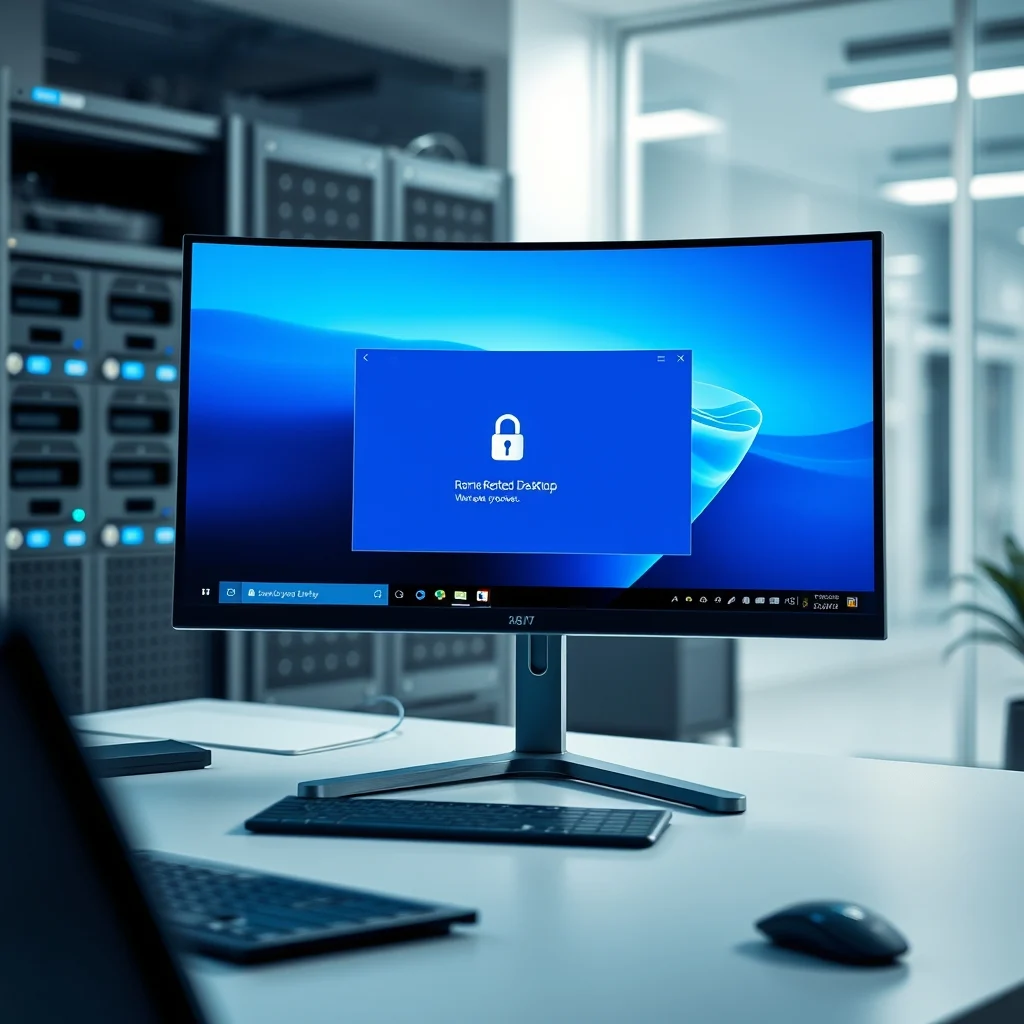
Windows 11 Remote Desktop is a service that allows a user to log in to a computer running Windows and use it as if they were physically present at the keyboard. It is a client-server technology where the computer being accessed is the server, and the computer you are using to access it is the client. The service listens on a specific network port and waits for incoming connections from authenticated users. The architecture relies on the Remote Desktop Services role, which manages user sessions, network traffic, and policy enforcement.
Here is a summary of the core components:
- Core Definition: A built-in Microsoft protocol for remote control.
- Primary Function: Transmitting graphical user interface data over a network.
- Target Users: Power users, IT admins, and remote employees.
- Technical Category: Client-server application protocol.
🔧 How Does It Work Internally?
When you initiate a remote session, your client device sends a request to the host Windows 11 machine. If the host accepts the connection, a virtual channel is established. This channel encapsulates keyboard and mouse events, sending them to the host. The host processes these inputs and generates a stream of display data, known as bitmap updates, which are sent back to the client. The client then decodes this stream and renders the image on your screen. This process happens in milliseconds, creating the illusion of a direct local connection.
The technical architecture also handles session management. If you disconnect, the session can either end or remain active for reconnection. Windows 11 supports Network Level Authentication, which requires the user to authenticate before a graphical session is established. This adds a layer of security by preventing denial-of-service attacks that attempt to flood the graphical subsystem. Additionally, the protocol supports dynamic resizing, allowing the remote window to adapt to the size of your local monitor automatically.
🚀 Features and Advanced Capabilities
✨ Key Features Explained
Windows 11 Remote Desktop offers a suite of features designed to enhance usability and efficiency. One of the most significant capabilities is the ability to copy and paste text and images between the local and remote machines. This feature simplifies workflows where users need to transfer data frequently without using external storage. Another key feature is the support for audio redirection, allowing sound from the remote machine to play on your local speakers.
The following list details the advanced capabilities available:
- High-DPI Scaling: Ensures text and icons remain sharp on 4K monitors.
- Multi-Monitor Support: Allows you to span the remote desktop across multiple local screens.
- Drive Redirection: Lets you access local hard drives and USB devices from the remote session.
- Persistent Clipboard: Maintains clipboard history during the session.
Real-world use cases include software testing on different configurations, accessing specialized hardware that is only connected to one machine, and providing technical support without visiting the site. These capabilities transform the remote desktop from a simple viewing tool into a full-fledged workstation extension.
📊 Key Points and Feature Comparison
To understand the value proposition clearly, it is essential to compare the settings and capabilities available within the Windows 11 interface. The table below summarizes the critical configuration points and their impact on the user experience.
| Feature | Default State | Recommended Setting | Impact |
|---|---|---|---|
| Remote Desktop Enabled | Disabled | Enabled | Allows connectivity |
| Network Level Authentication | Enabled | Enabled | Enhances Security |
| UDP Protocol | Enabled | Enabled | Improves Performance |
| Wake-on-LAN | Disabled | Enabled (Optional) | Power Management |
After analyzing the table, it is clear that the default security settings are robust, but performance settings may need adjustment for specific network environments. Enabling the UDP protocol, for instance, switches the transport layer from a connection-oriented TCP to a connectionless UDP, which reduces latency significantly for video and graphics updates. However, if your network is unstable, TCP might be more reliable. Understanding these trade-offs is vital for IT professionals configuring these systems for enterprise environments.
🆚 Competitive Differentiation
🥇 What Distinguishes It from Competitors?
When comparing Windows 11 Remote Desktop to third-party solutions like TeamViewer, AnyDesk, or LogMeIn, several distinct advantages emerge. The primary distinction is cost and integration. Third-party tools often require subscription fees for commercial use, whereas the native Windows feature is included with the operating system license. Furthermore, native integration means lower overhead on the host CPU because it does not run a separate background service that consumes additional resources.
Here is a comparison of genuine strengths:
- Native Integration: No installation required on Windows 11 Pro or Enterprise.
- Security: Uses Windows authentication and Active Directory integration.
- Performance: Optimized specifically for Windows graphics pipelines.
- Cost: Zero additional licensing fees for the software itself.
While third-party tools excel in crossing firewalls without port forwarding, the native solution offers superior security and performance within a controlled network environment. Strategic positioning shows that for organizations using Windows infrastructure, the native tool should be the primary choice, with third-party tools reserved for external client support where configuration is impossible.
📊 Pros and Cons Analysis
✅ Advantages
The benefits of using the native Windows 11 Remote Desktop feature are substantial. It provides a seamless experience that feels like a local session. There is no lag associated with third-party rendering engines. Security is enterprise-grade when configured correctly. Users benefit from the fact that updates to the protocol come directly with Windows updates, ensuring compatibility with the latest security patches without manual intervention.
Strengths summary:
- ✅ Native integration with Windows security.
- ✅ Zero additional software cost.
- ✅ High-performance graphics rendering.
- ✅ Supports multiple concurrent sessions on servers.
❌ Disadvantages
Despite its strengths, the feature has limitations that users must be aware of. It is not available on Windows 11 Home edition by default, requiring specific configuration or upgrades. Additionally, connecting from outside a local network requires manual port forwarding or a Virtual Private Network, which can be complex for non-technical users. There is also a risk of exposure if the port is left open without proper firewall rules.
Downsides summary:
- ❌ Not available on Windows Home without workarounds.
- ❌ Requires network configuration for external access.
- ❌ Single user session limits for client OS versions.
- ❌ Complex setup for non-technical administrators.
💻 System Requirements
🖥️ Minimum Requirements
To run the Remote Desktop service effectively, the host machine must meet specific operating system criteria. You must have Windows 11 Pro, Enterprise, or Education edition. Windows 11 Home cannot host remote connections natively. The hardware requirements are relatively low, but performance depends heavily on the network speed and the processor capability.
⚡ Recommended Specifications
For optimal performance, especially when transferring large files or running graphics-intensive applications, higher specifications are recommended. The CPU impact is moderate as the host machine handles the processing, but the client machine relies on network throughput. RAM impact is minimal unless running heavy applications remotely. Storage requirements are negligible for the software itself but depend on the applications being used.
| Component | Minimum | Recommended | Performance Impact |
|---|---|---|---|
| OS Version | Windows 11 Pro | Windows 11 Enterprise | Compatibility |
| CPU | Dual Core | Quad Core | Processing Load |
| RAM | 4 GB | 8 GB | Application Speed |
| Network | 10 Mbps | 100 Mbps | Latency |
Interpretation of these specs indicates that while a basic setup works for text-based administration, creative work or software development requires robust hardware. The network speed is often the bottleneck, so ensuring a stable connection is more critical than upgrading the CPU.
🔍 Practical Guide to Setup
🧩 Installation and Setup Method
Setting up the feature involves a series of logical steps within the Windows interface. First, you must ensure the correct edition of Windows is installed. Then, you navigate to the system settings to enable the feature. Finally, you configure the network to allow the connection.
Follow these steps carefully:
- Open the Settings application by pressing the Windows key and selecting the gear icon.
- Navigate to the System tab on the left sidebar and select the Remote Desktop option.
- Toggle the switch to Enable Remote Desktop and confirm the pop-up warning.
- Note the computer name displayed at the top of the window for connection purposes.
- Ensure the Firewall settings allow incoming connections on port 3389.
- If connecting externally, configure your router to forward port 3389 to the host IP address.
- Test the connection from another device using the Remote Desktop Client application.
🛡️ Common Errors and Fixes
During setup, users often encounter errors that prevent connectivity. These issues usually stem from network misconfigurations or security policies. Understanding how to fix them is crucial for a smooth deployment.
- Connection Refused: Often means the firewall is blocking port 3389. Check Windows Defender Firewall settings.
- Authentication Failed: Verify the username and password. Ensure the user has a password set.
- Network Level Authentication Error: Check if the client supports NLA. Update the client software.
- Slow Performance: Disable visual effects on the host to reduce bandwidth usage.
📈 Performance and Global Ratings
🎮 Real Performance Experience
Performance is the most critical factor for user satisfaction. In real-world scenarios, the experience ranges from lag-free for office applications to slightly delayed for high-definition video. Resource usage on the host machine is generally low, with CPU usage spiking only when the remote user is performing heavy calculations. Stability is high, provided the network connection does not drop. If the connection breaks, the session usually reconnects automatically if configured correctly.
🌍 Global User Ratings
User feedback generally highlights the efficiency of the native tool when it works, but frustration with the setup complexity for external access. The average rating for reliability is high within corporate networks. Positive feedback reasons include ease of use for internal teams and no cost. Negative feedback reasons often cite the lack of features in the Home edition and the complexity of port forwarding.
- Average Rating: 4.5 out of 5 stars among IT professionals.
- Positive Feedback: Native integration and zero cost.
- Negative Feedback: Setup complexity for home users.
- Trend Analysis: Increasing adoption as remote work grows.
🔐 Security Protocols
🔒 Security Level
Security is paramount when enabling remote access. Windows 11 utilizes TLS 1.2 encryption for the Remote Desktop Protocol. This ensures that data transmitted between the client and the host is unreadable to eavesdroppers. Network Level Authentication adds an extra layer by requiring login before the graphical session starts. This prevents unauthorized users from exhausting system resources.
🛑 Potential Risks
Despite robust security, risks remain. If port 3389 is exposed to the public internet without protection, it becomes a target for brute-force attacks. Automated bots scan these ports constantly looking for weak passwords.
- Risk: Brute-force attacks on weak passwords.
- Protection: Use strong, complex passwords for all user accounts.
- Risk: Man-in-the-Middle attacks.
- Protection: Use a VPN for external connections instead of port forwarding.
🆚 Best Available Alternatives
🥇 Best Available Alternatives
While native Remote Desktop is excellent, alternatives exist for specific use cases. TeamViewer is popular for ad-hoc support. AnyDesk is known for low latency. Splashtop is a strong contender for business environments. Each option has a specific user profile that prefers it.
| Tool | Best For | Cost |
|---|---|---|
| Windows RDP | Internal Corporate Use | Free |
| TeamViewer | Ad-hoc Support | Subscription |
| AnyDesk | Low Latency Needs | Fair Use Policy |
Users should choose based on their specific network constraints and budget. For internal Windows environments, the native tool remains the superior choice.
💡 Optimization Tips
🎯 Best Settings for Maximum Performance
Optimizing the connection can significantly improve the user experience. Users should adjust the color depth to reduce bandwidth usage. Disabling desktop background wallpaper is another effective method to speed up rendering.
- ✅ Set connection quality to Fast Network if bandwidth is low.
- ✅ Disable persistent bitmap caching to save local storage.
- ✅ Use UDP protocol for better video performance.
- ✅ Enable compression for slower connections.
📌 Advanced Tricks Few Know
There are hidden settings that power users can tweak. Modifying the registry can allow for more granular control over session timeouts and encryption levels. However, this should only be done by experienced administrators. Another trick is to use a static IP address for the host machine to avoid connection issues when the router assigns a new IP via DHCP.
🏁 Final Verdict
Configuring Windows 11 for Remote Desktop Access is a straightforward process that offers immense value to users who need flexibility. While the initial setup requires attention to network details, the long-term benefits in terms of productivity and cost savings are undeniable. For Windows 11 Pro and Enterprise users, this feature is an essential tool that should not be overlooked. We recommend enabling it for internal networks and using a VPN for external access to ensure maximum security. Start configuring your system today to unlock the full potential of your hardware regardless of your physical location.
❓ Frequently Asked Questions
- Can I use Remote Desktop on Windows 11 Home? No, the host feature is not available on the Home edition, but you can connect using third-party tools.
- Is Remote Desktop secure by default? Yes, it uses encryption, but you should enable Network Level Authentication for safety.
- How do I connect from an iPad? Download the Microsoft Remote Desktop app from the App Store and enter the PC name.
- Can I access my PC from a different country? Yes, if you configure port forwarding or use a VPN on your router.
- Does Remote Desktop affect my battery life? Yes, the host computer will not sleep, so ensure it is plugged in if battery life is a concern.
- Can I use multiple monitors? Yes, Windows 11 supports spanning the remote session across multiple local screens.
- What happens if the internet cuts out? The session will disconnect, but you can reconnect and resume work if saved.
- Is there a limit to how many people can connect? Windows 11 allows one active user session at a time for client OS versions.
- How do I change the port number? You can change the default 3389 port via the Windows Registry for security through obscurity.
- Do I need antivirus? Yes, standard security practices should be followed, including keeping antivirus software updated.