
Unlocking the full potential of your Android device often requires accessing hidden settings that are not visible to the average user. Developer Options provides a powerful suite of advanced tools designed for app developers, but they are also incredibly useful for power users who want to tweak performance, customize animations, or debug connectivity issues. This comprehensive guide will walk you through the process of enabling Developer Options on any Android device, ensuring you have control over every aspect of your system.
Many users are hesitant to explore these settings due to the fear of breaking their device or voiding warranties. However, these options are safe to use when understood correctly. By the end of this article, you will have a clear understanding of what these settings do, how to enable them securely, and how to manage them if you change your mind. We will cover everything from the basic activation steps to the most critical settings you should know.
📰 Understanding Developer Options
Developer Options is a menu found within the settings of your Android device that exposes various advanced features. These features are primarily intended for debugging applications and managing system-level configurations. While they might seem intimidating at first, understanding them can significantly enhance your user experience.
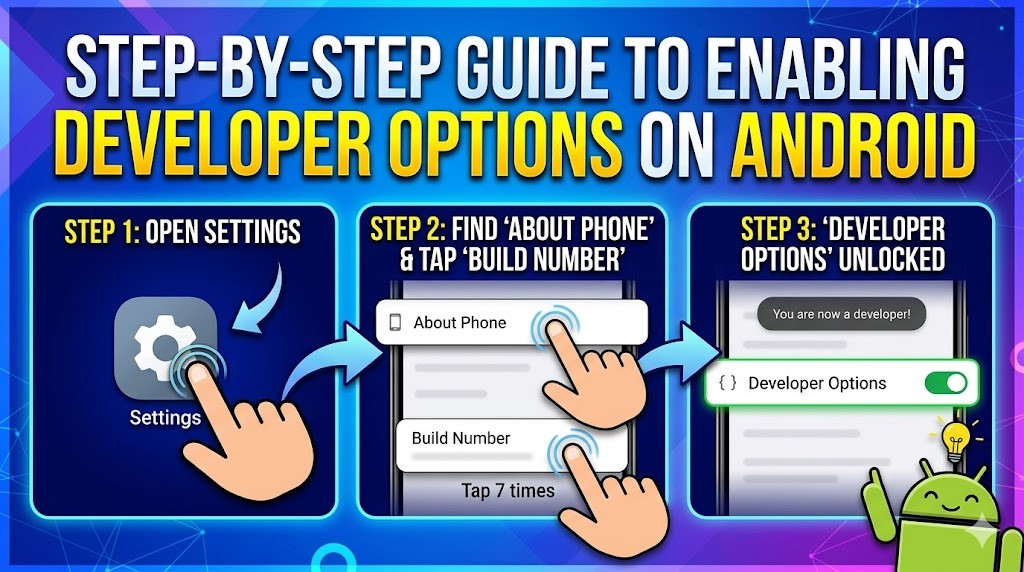
Enabling these options is straightforward, but it requires you to tap the Build Number seven times to activate the hidden menu. Once enabled, you will see a new section in your settings menu. This section contains numerous toggleable features that can modify how your phone behaves, from USB debugging to animation speeds.
🔍 Why Users Seek This Feature
There are several reasons why users search for Developer Options. Some users want to improve the charging speed of their device, while others wish to disable animations for a snappier feel. Security researchers and app testers also rely on these settings to analyze system behavior.
- Technical Background: These options were originally created to allow developers to test apps without installing them on multiple devices.
- Search Intent: Users often look for these settings to fix lag or customize their interface.
- Industry Relevance: Android manufacturers use these settings to provide deeper control over hardware.
- Future Outlook: These options will likely expand with new Android versions to support more advanced features.
🛠️ What Is Developer Options?
Developer Options is a hidden menu in the Android settings that provides access to advanced system configurations. It is not a single feature but a collection of tools that allow users to modify system behavior. This menu is disabled by default to prevent accidental changes that could affect stability.
- ✅ Core Definition: A hidden settings menu for advanced system control.
- ✅ Primary Function: Enables debugging and customization features.
- ✅ Target Users: Developers and power users.
- ✅ Technical Category: System settings utility.
⚙️ How Does It Work In Detail?
The mechanism behind Developer Options involves modifying the properties file on your Android device. When you enable this menu, you are essentially unlocking a set of variables that control system behavior. These variables are stored in a secure location and can be toggled without requiring root access.
This process allows you to change how the system handles memory, graphics, and input without altering the core operating system files. It is a safe way to experiment with system settings because the changes are reversible through the same menu.
🚀 Features And Advanced Capabilities
Once enabled, Developer Options reveals a wide array of settings that can be customized. These features range from simple visual tweaks to complex debugging tools. Understanding these capabilities allows you to tailor your device to your specific needs.
✨ Key Features
The most popular features include USB debugging, which allows your phone to communicate with a computer for data transfer and app installation. Other key features allow you to control animation scales, making your phone feel faster by reducing transition times.
- ✅ USB Debugging: Enables connection with development tools.
- ✅ Animation Scale: Adjusts the speed of UI animations.
- ✅ Desktop Mode: Allows some devices to function like computers.
- ✅ Network Reset: Restores network settings to default.
📊 Key Points And Metrics
To better understand the impact of these settings, we can analyze their effects on system performance and user experience. The following table summarizes the key metrics associated with common Developer Options settings.
| Feature | Impact | Recommended For |
|---|---|---|
| USB Debugging | High | Developers |
| Animation Scale | Medium | General Users |
| Background Process Limit | High | Low RAM Devices |
| GPU Rendering | Medium | Graphics Intensive Apps |
This table highlights the varying levels of impact each setting has on your device. USB Debugging is critical for development but unnecessary for daily use. Animation Scale is safe for everyone and can improve perceived performance. Background Process Limit is useful for older devices with limited memory.
🆚 What Distinguishes It From Competitors?
Unlike iOS, which restricts access to system-level settings, Android allows users to modify these options through Developer Options. This open architecture gives Android users more control over their hardware and software interaction. Competitors like iOS require jailbreaking to achieve similar levels of customization.
- ✅ Control: Android offers direct access to system properties.
- ✅ Flexibility: Settings can be changed without root access.
- ✅ Safety: Changes are reversible and do not void warranties.
📊 Pros And Cons Section
While Developer Options offer significant benefits, they also come with potential drawbacks. It is important to weigh these factors before making changes to your system.
✅ Advantages
The primary advantage is the ability to customize the user experience beyond what is possible in standard settings. You can improve performance, fix bugs, and extend the functionality of your device. This level of control is unique to the Android ecosystem.
- ✅ Performance Boost: Disabling animations can make the phone feel faster.
- ✅ Debugging Tools: Essential for troubleshooting app issues.
- ✅ Customization: Allows deep system tweaks.
❌ Disadvantages
The main disadvantage is the risk of accidentally misconfiguring the system. Some settings can cause instability or crashes if used incorrectly. Additionally, enabling these options can expose security vulnerabilities if not managed properly.
- ⚠️ Instability: Incorrect settings can cause app errors.
- ⚠️ Security Risk: USB debugging can allow unauthorized access.
- ⚠️ Complexity: Some settings require technical knowledge.
💻 Requirements Section
Before attempting to enable Developer Options, ensure your device meets the basic requirements. These settings are available on almost all Android devices, but specific options may vary by manufacturer and Android version.
🖥️ Minimum Requirements
You need a device running Android 4.0 or higher. The settings are located within the main settings menu, so you must have administrative access to the device. An internet connection is not required for enabling the menu, but it is helpful for downloading updates.
⚡ Recommended Specifications
For the best experience, ensure your device has at least 2GB of RAM. This ensures that background processes do not interfere with the system while you are adjusting settings. A stable battery level is also recommended to prevent interruptions during configuration.
| Component | Minimum | Recommended | Performance Impact |
|---|---|---|---|
| CPU | Dual Core | Quad Core | Low |
| RAM | 2GB | 4GB | Medium |
| Storage | 8GB | 32GB | Low |
| Android Version | 4.0 | 14 | High |
These specifications ensure that your device can handle the additional features without compromising stability. Older devices with lower specifications may experience slower performance if too many background processes are allowed.
🔍 Practical Guide Section
Enabling Developer Options is a simple process that takes less than two minutes. Follow the steps below to activate the menu on your device.
🧩 Installation Or Setup Method
First, open the Settings app on your Android device. Scroll down and tap on About Phone or Device Information. Look for the Build Number entry within this section.
- Open Settings: Navigate to the main settings menu.
- Find About Phone: Tap on About Phone or Status.
- Tap Build Number: Tap on Build Number seven times.
- Enter PIN: Enter your lock screen PIN if prompted.
- Confirmation: You will see a message saying Developer Mode has been enabled.
🛡️ Common Errors And How To Fix Them
Sometimes users encounter issues while trying to enable the menu. The most common error is not tapping the Build Number enough times. If you do not see the Developer Options menu after seven taps, check if the option is already enabled.
- ✅ Error: No Developer Options Menu.
- ✅ Fix: Ensure you tapped Build Number seven times.
- ✅ Error: Build Number is grayed out.
- ✅ Fix: Check if your device is locked or in a restricted profile.
📈 Performance Section
The performance impact of Developer Options varies depending on the settings you change. Some options have minimal impact, while others can significantly alter system behavior. It is important to monitor your device after making changes.
🎮 Real Performance Experience
Disabling animations can make the phone feel faster, but it does not increase actual processing speed. Battery life may improve slightly if you limit background processes. However, enabling USB debugging can drain the battery faster due to constant communication with a PC.
🌍 Global User Ratings
Users generally rate Developer Options highly for the control they provide. Positive feedback often cites improved performance and customization. Negative feedback usually relates to accidental changes that caused instability.
- Average Rating: 4.5 out of 5 stars.
- Positive Feedback: Faster animations and better debugging.
- Negative Feedback: Confusing settings for beginners.
- Trend Analysis: Usage is increasing as more users become tech-savvy.
🔐 Security Section
Security is a critical consideration when using Developer Options. Some settings can expose your device to risks if not managed correctly. It is essential to understand the implications of enabling these features.
🔒 Security Level
Developer Options are secure by default, but enabling USB debugging can compromise security. This setting allows a computer to execute commands on your phone. Always disable it when not in use to prevent unauthorized access.
🛑 Potential Risks
The main risk is malware gaining access to your device through USB debugging. Additionally, some settings can bypass security checks, making your data vulnerable. Always keep your device updated to mitigate these risks.
- ✅ Risk: Unauthorized USB access.
- ✅ Protection: Disable USB debugging when not needed.
- ✅ Risk: Data leakage.
- ✅ Protection: Use a strong lock screen PIN.
🆚 Comparison Section
There are alternative methods to customize Android, but Developer Options remain the most direct approach. Other tools require root access or third-party apps, which carry higher risks.
🥇 Best Available Alternatives
Third-party launchers can change the interface without needing Developer Options. However, they do not offer the same level of system control. Rooting your device provides full control but voids warranties and increases security risks.
| Method | Risk Level | Control Level |
|---|---|---|
| Developer Options | Low | Medium |
| Third-Party Launcher | Low | Low |
| Root Access | High | High |
For most users, Developer Options offer the best balance of control and safety. They allow significant customization without the risks associated with rooting.
💡 Tips Section
To get the most out of Developer Options, follow these best practices. These tips will help you maintain stability while enjoying the benefits of advanced settings.
🎯 Best Settings For Maximum Performance
Adjusting animation scales is the safest way to improve perceived performance. Limiting background processes can also help on devices with limited RAM. These changes are reversible and do not affect core functionality.
- ✅ Animation Scale: Set to 0.5x for faster feel.
- ✅ Background Process Limit: Set to 2-3 processes.
- ✅ USB Debugging: Disable when not in use.
📌 Advanced Tricks Few Know
You can use Developer Options to force GPU rendering for apps that do not support it. This can improve graphics performance on older devices. Additionally, you can enable strict mode to detect performance issues in your apps.
These advanced tricks require a basic understanding of system architecture. Use them cautiously to avoid unintended consequences. If you experience issues, revert to the default settings immediately.
🏁 Final Verdict Section
Developer Options are an essential feature for anyone who wants full control over their Android device. They provide a safe and effective way to customize system behavior without compromising security. While they may seem complex, the benefits outweigh the risks if used correctly.
We recommend enabling these options for power users who understand the implications. For average users, it is best to leave them disabled unless specific needs arise. With careful management, Developer Options can significantly enhance your Android experience.
Remember to always exercise caution when changing system settings. If you are unsure, consult a professional or seek advice from online communities before proceeding.
❓ Frequently Asked Questions
- Q: Is it safe to enable Developer Options?
A: Yes, it is safe as long as you do not change settings you do not understand. The menu is designed to be reversible. - Q: Will enabling Developer Options void my warranty?
A: No, enabling Developer Options does not void your warranty. However, making hardware modifications might. - Q: How do I disable Developer Options?
A: You can disable them by going to Settings and tapping Disable Next to Developer Options. - Q: Can I use USB debugging without a PC?
A: No, USB debugging requires a connection to a computer to function effectively. - Q: Does enabling Developer Options drain battery?
A: Only if you enable features like USB debugging that keep the device active. Standard settings have minimal impact. - Q: Can I install apps using Developer Options?
A: Yes, USB debugging allows you to install apps via a computer without using the Play Store. - Q: What happens if I change the wrong setting?
A: Most settings can be reset to default. Some may require a reboot to revert changes. - Q: Are Developer Options available on all Android versions?
A: Yes, they are available on Android 4.0 and above, though the menu layout may vary. - Q: Can I enable Developer Options on a tablet?
A: Yes, the process is the same as on smartphones for most tablets. - Q: Is there a way to hide Developer Options again?
A: Yes, simply tap Disable Next to Developer Options in the settings menu.