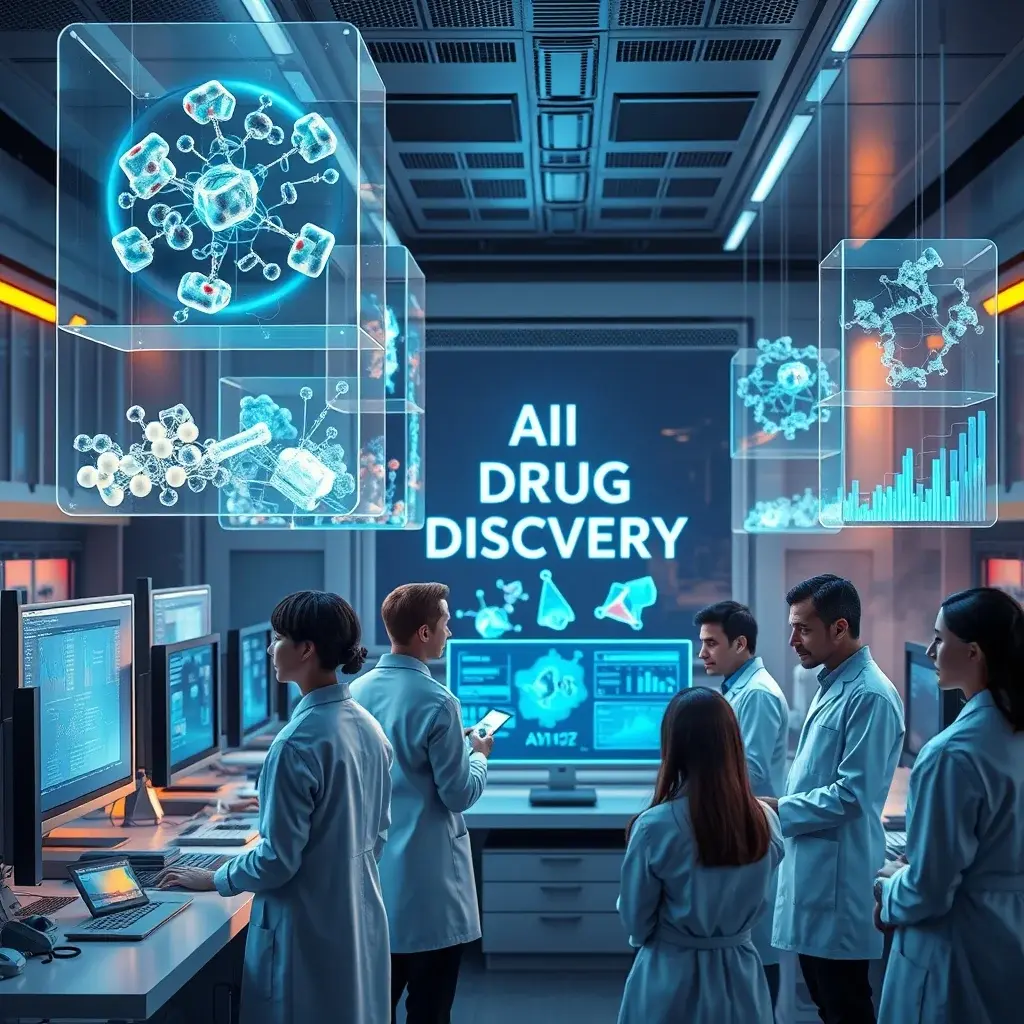

The pharmaceutical industry stands on the precipice of a revolution, one that is being driven not by the discovery of new chemical compounds or the refinement of clinical trials, but by the silent, relentless march of artificial intelligence. AI in drug discovery is no longer a futuristic concept confined to the pages of science fiction—it is a tangible, rapidly evolving reality reshaping how researchers approach the most fundamental challenges of medicine. From predicting the three-dimensional structures of proteins to identifying novel drug interactions before a single molecule ever touches a test tube, AI is accelerating the pace of discovery at an unprecedented scale.
The implications are staggering. Consider that the average cost of developing a new drug exceeds $2.6 billion, and the process can take over a decade. Yet, with AI, pharmaceutical companies are slashing these timelines and costs by identifying viable drug candidates in a fraction of the time. Platforms like BenevolentAI, DeepMind’s AlphaFold, and IBM Watson are not just tools—they are game-changers, redefining the boundaries of what is possible in medical research. This article delves into the technical advancements fueling this transformation, examines the real-world impact on both the industry and patients, and explores the challenges and ethical considerations that accompany this technological leap.
📰 The AI Revolution in Pharmaceutical Research
The integration of artificial intelligence into drug discovery is not merely an incremental improvement—it represents a paradigm shift in how science and technology collaborate to address global health challenges. Historically, drug discovery has been a painstakingly slow process, characterized by trial and error, costly failures, and a reliance on serendipity. Researchers would screen thousands of compounds, often with little insight into how they might interact with biological systems, leading to a success rate of less than 10% for drugs that make it to clinical trials.
Enter AI. By leveraging vast datasets, advanced algorithms, and computational power, AI systems can analyze biological data, predict molecular interactions, and even design entirely new compounds with precision. This shift is not just about speed—it’s about intelligence. AI can process and interpret data in ways that human researchers cannot, uncovering patterns and connections that might otherwise remain hidden. The result is a more efficient, targeted, and cost-effective approach to drug development.
The urgency of this transformation cannot be overstated. The world faces a growing burden of diseases, from neurodegenerative disorders like Alzheimer’s to the relentless threat of antimicrobial resistance. Traditional drug discovery methods have struggled to keep pace with these challenges, leaving millions of patients without effective treatments. AI offers a lifeline—a way to navigate the complexity of biological systems and deliver life-saving therapies faster than ever before.
To understand the full scope of AI’s impact, it is essential to explore the specific technologies and platforms that are leading this charge. From machine learning models that predict protein folding to AI-driven platforms that simulate drug interactions, each innovation represents a critical piece of the puzzle. This article will dissect these advancements, examining how they work, why they matter, and what they mean for the future of medicine.
🔬 The Core Problem: Why Drug Discovery Needs AI
- ✅ High Failure Rates: Only about 10% of drugs that enter clinical trials receive FDA approval, often due to unforeseen toxicity or lack of efficacy.
- ✅ Exponential Costs: The average cost to bring a new drug to market is estimated at $2.6 billion, with timelines stretching 10-15 years.
- ✅ Biological Complexity: Human biology is one of the most complex systems known, with interactions between proteins, genes, and environmental factors that are difficult to model.
- ✅ Data Overload: Modern research generates an overwhelming volume of data—genomic sequences, protein structures, clinical trial results—which is nearly impossible for humans to analyze comprehensively.
- ✅ Slow Iteration Cycles: Traditional drug discovery relies on iterative testing, where each round of experiments can take months or years to complete.
AI addresses these challenges by automating the analysis of vast datasets, predicting outcomes with greater accuracy, and identifying novel drug candidates that might have been overlooked by human researchers. For example, AI can simulate how a drug molecule will interact with a protein target before any physical experiments are conducted, drastically reducing the number of compounds that need to be synthesized and tested in the lab. This not only saves time and money but also minimizes the risk of costly late-stage failures.
🌍 Market and Industry Relevance
- Pharmaceutical Giants Embracing AI: Companies like Pfizer, Novartis, and Merck have partnered with AI startups or developed in-house AI capabilities to accelerate their drug discovery pipelines. For instance, Pfizer used AI to identify potential drug candidates for Parkinson’s disease, cutting the discovery timeline by 50%.
- AI Startups Leading the Charge: Platforms like BenevolentAI, Exscientia, and Recursion Pharmaceuticals are raising billions in funding, demonstrating investor confidence in AI-driven drug discovery. BenevolentAI, for example, went public in 2021 with a valuation exceeding $2 billion.
- Government and Academic Collaborations: Initiatives such as the NIH’s Bridge2AI program and partnerships between universities and tech companies (e.g., DeepMind’s collaboration with the European Bioinformatics Institute) are fostering innovation in AI-driven biomedical research.
- Patient-Centric Outcomes: AI is enabling the development of personalized medicine, where treatments are tailored to an individual’s genetic makeup. This is particularly impactful for diseases like cancer, where targeted therapies can significantly improve survival rates.
The adoption of AI in drug discovery is not just a trend—it is a necessity. As diseases become more complex and the demand for innovative therapies grows, the pharmaceutical industry must evolve or risk falling behind. AI offers a pathway to not only reduce costs and timelines but also to unlock treatments for diseases that have long been considered untreatable.
⚙️ Understanding the Technical Foundations of AI in Drug Discovery
🧩 What Is AI-Driven Drug Discovery?
AI-driven drug discovery refers to the use of artificial intelligence techniques—such as machine learning, deep learning, and natural language processing—to streamline and enhance the process of identifying, designing, and developing new drugs. Unlike traditional methods, which rely heavily on empirical testing and human intuition, AI-driven approaches leverage vast datasets and computational models to make data-informed predictions about drug efficacy, toxicity, and interactions.
The process typically begins with the identification of a biological target—often a protein or gene associated with a disease. AI systems then analyze this target in the context of existing knowledge, such as genomic data, protein structures, and drug libraries, to predict which compounds might interact with the target in a therapeutically beneficial way. These predictions are refined through iterative modeling, where AI systems simulate how the drug molecule will behave in a biological system, accounting for factors like binding affinity, metabolic stability, and potential side effects.
Once promising candidates are identified, AI can further optimize these compounds, suggesting modifications to enhance their efficacy or reduce toxicity. This AI-guided optimization process can drastically reduce the number of iterations required in the lab, accelerating the transition from concept to clinical candidate.
- ✅ Core Definition: AI-driven drug discovery uses artificial intelligence to analyze biological data, predict drug interactions, and design novel compounds with enhanced efficiency and accuracy.
- ✅ Primary Function: To reduce the time, cost, and failure rate of drug development by leveraging computational models and large-scale data analysis.
- ✅ Target Users: Pharmaceutical companies, academic researchers, and biotech startups seeking to accelerate drug discovery and improve patient outcomes.
- ✅ Technical Category: A subset of computational biology and bioinformatics, integrating AI, machine learning, and big data analytics.
🛠️ How AI Systems Work: A Deep Dive
The technical architecture of AI-driven drug discovery is built on several foundational components, each playing a critical role in transforming raw data into actionable insights. At the heart of these systems are machine learning models, which are trained on vast datasets to recognize patterns, make predictions, and generate hypotheses. These models operate at multiple stages of the drug discovery pipeline, from target identification to clinical trial design.
1. Data Collection and Preprocessing
The first step in any AI-driven drug discovery pipeline is the collection and preprocessing of data. This data can come from a variety of sources, including:
- ✅ Genomic Data: Whole-genome sequences, gene expression profiles, and single-cell RNA sequencing data.
- ✅ Protein Structures: Three-dimensional models of proteins, often derived from techniques like X-ray crystallography or cryo-electron microscopy.
- ✅ Drug Libraries: Databases of known drug compounds, their chemical structures, and their pharmacological properties.
- ✅ Literature and Clinical Data: Published research papers, clinical trial results, and electronic health records.
- ✅ Real-World Evidence: Data from wearable devices, patient-reported outcomes, and other sources that capture the nuances of disease progression.
Once collected, this data must be cleaned, normalized, and structured to ensure consistency and accuracy. For example, genomic data might need to be aligned to a reference genome, while protein structures must be standardized to a common format. This preprocessing step is critical, as the quality of the AI model’s predictions depends entirely on the quality of the input data.
Example: DeepMind’s AlphaFold, a breakthrough AI system for predicting protein structures, relies on a massive dataset of known protein sequences. Before training its models, AlphaFold preprocesses this data to identify patterns in the amino acid sequences that correspond to specific protein folds.
2. Machine Learning Models: The Engines of Prediction
At the core of AI-driven drug discovery are machine learning models, which can be broadly categorized into three types:
- ✅ Supervised Learning: Models are trained on labeled datasets, where the input data is paired with known outcomes. For example, a model might be trained on a dataset of drug compounds and their corresponding binding affinities to a protein target. Once trained, the model can predict the binding affinity of new compounds.
- ✅ Unsupervised Learning: Models identify patterns in unlabeled data, such as clustering similar drug compounds or identifying subgroups of patients with distinct disease profiles. This is particularly useful in exploratory research, where the goal is to uncover hidden relationships in the data.
- ✅ Reinforcement Learning: Models learn by trial and error, optimizing their predictions based on feedback from simulations or real-world experiments. For example, a reinforcement learning model might iteratively design new drug compounds, testing each iteration in silico to determine which modifications improve efficacy.
Deep learning, a subset of machine learning, has emerged as a particularly powerful tool in drug discovery due to its ability to model complex, nonlinear relationships in data. Neural networks, such as convolutional neural networks (CNNs) and recurrent neural networks (RNNs), are commonly used to analyze biological data. For instance, CNNs can process images of protein structures to identify binding sites, while RNNs can analyze sequences of amino acids to predict protein folding.
Example: BenevolentAI uses a combination of graph neural networks and natural language processing to analyze scientific literature and clinical data. By representing biological entities (e.g., genes, proteins, drugs) as nodes in a graph, BenevolentAI’s models can uncover connections between disparate pieces of information, such as linking a gene variant to a specific disease.
3. Predictive Modeling: From Data to Drug Candidates
The true power of AI in drug discovery lies in its ability to predict outcomes before they are tested in a lab. This predictive capability is enabled by a variety of modeling techniques, each tailored to specific aspects of the drug discovery process:
- ✅ Virtual Screening: AI models screen vast libraries of drug compounds to identify those most likely to interact with a target protein. This is far more efficient than traditional high-throughput screening, which tests thousands of compounds in the lab.
- ✅ Binding Affinity Prediction: Machine learning models predict how strongly a drug compound will bind to its target protein. This is critical for determining the potency and selectivity of a drug.
- ✅ Toxicity Prediction: AI systems analyze the chemical structure of a drug compound to predict potential toxicity. For example, models can flag compounds that may interact with off-target proteins, leading to adverse side effects.
- ✅ ADMET Prediction: ADMET (Absorption, Distribution, Metabolism, Excretion, Toxicity) models predict how a drug will behave in the human body. This includes factors like how well the drug is absorbed, how long it stays in the bloodstream, and how it is metabolized by the liver.
- ✅ De Novo Drug Design: AI systems can generate entirely new drug compounds from scratch, optimizing for properties like efficacy, safety, and synthetic feasibility. This is particularly valuable for diseases where no existing treatments are available.
Example: Generative adversarial networks (GANs), a type of deep learning model, have been used to design new drug compounds with specific properties. For instance, researchers at the University of Toronto used GANs to generate molecules with high binding affinity to a protein target associated with multiple sclerosis.
4. Simulation and Optimization: Refining the Candidates
Once potential drug candidates are identified, AI systems can further refine these compounds through simulation and optimization. This process involves:
- ✅ Molecular Dynamics Simulations: AI models simulate the physical interactions between a drug compound and its target protein over time, accounting for factors like binding kinetics and conformational changes.
- ✅ Free Energy Perturbation (FEP): A computational technique that predicts the change in binding affinity when a drug compound is modified. This allows researchers to systematically optimize lead compounds for improved efficacy.
- ✅ Quantum Mechanics/Molecular Mechanics (QM/MM): Hybrid models that combine quantum mechanics (for electronic interactions) and molecular mechanics (for atomic interactions) to provide highly accurate predictions of drug behavior.
Example: Schrödinger’s Glide software uses AI-driven molecular dynamics simulations to predict how a drug compound will interact with a protein target. This information is then used to optimize the compound’s chemical structure, improving its binding affinity and reducing potential side effects.
5. Clinical Trial Design and Patient Stratification
AI is not limited to the early stages of drug discovery—it also plays a critical role in designing clinical trials and stratifying patients for personalized medicine. Machine learning models can analyze patient data to identify subgroups that are most likely to respond to a particular treatment, reducing the risk of failed trials and improving patient outcomes.
For example, AI can predict which patients are at higher risk of adverse reactions to a drug, allowing researchers to exclude these individuals from trials. Alternatively, AI can identify patients who are most likely to benefit from a treatment, increasing the likelihood of success in clinical trials.
Example: IBM Watson for Oncology uses AI to analyze patient records, genomic data, and clinical literature to recommend personalized cancer treatments. By tailoring therapies to individual patients, Watson has demonstrated significant improvements in treatment outcomes.
🚀 Key Features and Advanced Capabilities of AI in Drug Discovery
✨ The Transformative Features of AI-Driven Drug Discovery
AI-driven drug discovery is not a monolithic technology—it encompasses a suite of advanced features and capabilities that work together to streamline and enhance the entire drug development process. These features are what set AI apart from traditional methods, enabling researchers to tackle challenges that were once considered insurmountable. Below, we explore the most transformative features of AI in drug discovery and their real-world applications.
1. Protein Structure Prediction: Unlocking the 3D Blueprint of Life
One of the most groundbreaking advancements in AI-driven drug discovery has been the ability to predict the three-dimensional structures of proteins with unprecedented accuracy. Proteins are the molecular machines of life, and their structure determines their function. Until recently, determining a protein’s structure was a labor-intensive process, often requiring years of experimental work. However, AI has revolutionized this field by enabling researchers to predict protein structures in a matter of days or even hours.
DeepMind’s AlphaFold, a deep learning system developed by Google’s DeepMind, has achieved remarkable success in this area. In 2020, AlphaFold won the Critical Assessment of Structure Prediction (CASP) competition, a biennial event that evaluates the accuracy of protein structure prediction methods. AlphaFold’s predictions were so accurate that they were compared favorably to experimental methods like X-ray crystallography and cryo-electron microscopy.
AlphaFold works by analyzing the amino acid sequence of a protein and predicting its three-dimensional structure based on patterns learned from a vast dataset of known protein structures. This capability has far-reaching implications for drug discovery:
- ✅ Target Identification: By predicting the structure of disease-related proteins, researchers can identify new targets for drug development. For example, AlphaFold has been used to predict the structure of proteins associated with Alzheimer’s disease and COVID-19, enabling the design of targeted therapies.
- ✅ Drug Design: Knowing the structure of a protein target allows researchers to design drugs that fit precisely into the protein’s binding sites. This increases the likelihood of efficacy and reduces the risk of off-target effects.
- ✅ Repurposing Existing Drugs: AI can predict how existing drugs might interact with newly discovered protein structures, enabling researchers to repurpose approved drugs for new diseases. For example, AlphaFold was used to predict the structure of the SARS-CoV-2 spike protein, which led to the rapid identification of existing drugs that could bind to the protein and inhibit the virus.
Real-World Impact: In 2021, researchers used AlphaFold to predict the structure of 200 million proteins, covering nearly every protein known to science. This dataset is now publicly available, providing researchers with a treasure trove of structural information to accelerate drug discovery across a wide range of diseases.
2. Virtual Screening: Accelerating the Hunt for Drug Candidates
Traditional drug discovery relies on high-throughput screening (HTS), a process where thousands of chemical compounds are tested in the lab to identify those that interact with a target protein. While HTS has been a cornerstone of drug discovery for decades, it is time-consuming, expensive, and often yields a high percentage of false positives. AI-driven virtual screening offers a compelling alternative by simulating these interactions in silico, drastically reducing the number of compounds that need to be tested experimentally.
Virtual screening works by training machine learning models on datasets of known drug-protein interactions. These models learn to recognize patterns in the chemical structures of compounds that are likely to bind to a target protein. Once trained, the models can screen vast libraries of compounds—often containing millions of molecules—in a matter of hours or days.
The advantages of virtual screening are manifold:
- ✅ Speed: Virtual screening can evaluate millions of compounds in parallel, whereas traditional HTS might test only a few thousand per day.
- ✅ Cost-Effectiveness: By reducing the number of compounds that need to be synthesized and tested in the lab, virtual screening lowers the overall cost of drug discovery.
- ✅ Accuracy: Machine learning models can identify subtle patterns in the data that might be missed by human researchers, leading to more accurate predictions of drug efficacy.
- ✅ Exploration of Chemical Space: Virtual screening allows researchers to explore chemical spaces that are difficult or impossible to access experimentally. For example, AI can suggest entirely new classes of compounds that have never been synthesized before.
Example: Exscientia, an AI-driven drug discovery company, used virtual screening to identify a potent inhibitor of the TAAR1 receptor, a target for schizophrenia. The AI screened over 10 million compounds in silico, identifying a lead candidate that was subsequently optimized and entered clinical trials—all within 12 months.
3. De Novo Drug Design: Creating Drugs from Scratch
One of the most exciting capabilities of AI in drug discovery is its ability to design entirely new drug compounds from scratch—a process known as de novo drug design. Traditional drug discovery relies on modifying existing compounds or screening libraries of known molecules. In contrast, de novo drug design uses AI to generate novel chemical structures with specific properties, such as high binding affinity to a target protein or low toxicity.
This capability is enabled by generative models, such as generative adversarial networks (GANs) and variational autoencoders (VAEs), which can create new molecular structures that satisfy predefined criteria. For example, a generative model might be trained to produce molecules that bind strongly to a target protein while avoiding interactions with off-target proteins that could cause side effects.
The process of de novo drug design typically involves the following steps:
- Define the Objective: Researchers specify the desired properties of the drug, such as binding affinity, solubility, and metabolic stability.
- Train the Generative Model: The model is trained on a dataset of known drug compounds, learning the chemical rules that govern molecular structure and function.
- Generate Novel Compounds: The model generates new molecular structures that meet the predefined criteria.
- Evaluate and Optimize: The generated compounds are evaluated using predictive models (e.g., for binding affinity or toxicity) and optimized for improved properties.
- Synthesize and Test: The most promising compounds are synthesized in the lab and tested experimentally to validate their efficacy and safety.
Example: Researchers at the University of Toronto used a GAN to design new inhibitors of the JAK2 kinase, a target for myeloproliferative neoplasms. The AI generated novel compounds that were subsequently synthesized and tested in the lab, demonstrating potent inhibitory activity.
4. Predictive Toxicology: Minimizing Risks Before They Arise
One of the most significant challenges in drug discovery is the risk of toxicity. Even if a drug candidate demonstrates high efficacy in preclinical tests, it may fail in clinical trials or post-market surveillance due to unforeseen toxic effects. AI-driven predictive toxicology addresses this challenge by analyzing the chemical structure of a drug compound to predict its potential toxicity before it is tested in humans.
Machine learning models for predictive toxicology are trained on datasets of known toxic compounds and their chemical structures. These models learn to recognize patterns associated with toxicity, such as the presence of specific functional groups or structural motifs that are known to cause adverse effects. Once trained, the models can predict the toxicity of new compounds with high accuracy.
The benefits of predictive toxicology are substantial:
- ✅ Early Risk Mitigation: By identifying toxic compounds early in the drug discovery process, researchers can avoid costly late-stage failures.
- ✅ Reduced Animal Testing: Predictive toxicology reduces the need for animal testing, aligning with ethical and regulatory guidelines.
- ✅ Improved Safety Profiles: AI can predict not only acute toxicity but also long-term effects, such as carcinogenicity or organ-specific toxicity.
Example: Lhasa Limited, a company specializing in predictive toxicology, developed Derek Nexus, an AI-driven platform that predicts the toxicity of drug compounds based on their chemical structures. Derek Nexus has been used by pharmaceutical companies to screen thousands of compounds, reducing the risk of toxicity-related failures in clinical trials.
5. Personalized Medicine: Tailoring Treatments to the Individual
AI is also revolutionizing the field of personalized medicine, where treatments are tailored to an individual’s genetic, molecular, and clinical profile. This approach is particularly impactful for diseases like cancer, where targeted therapies can significantly improve survival rates. AI-driven personalized medicine leverages machine learning models to analyze patient data and recommend the most effective treatment options.
The process typically involves the following steps:
- Data Collection: Patient data is collected, including genomic sequences, protein expression profiles, clinical history, and lifestyle factors.
- Data Integration: The data is integrated into a unified model that captures the complex interactions between genetic, molecular, and environmental factors.
- Predictive Modeling: Machine learning models analyze the integrated data to predict how a patient will respond to different treatments. For example, models can identify which chemotherapy regimen is most likely to be effective for a specific cancer patient.
- Treatment Recommendation: Based on the model’s predictions, clinicians can recommend the most suitable treatment for the patient, increasing the likelihood of a positive outcome.
Example: IBM Watson for Oncology uses AI to analyze patient records, genomic data, and clinical literature to recommend personalized cancer treatments. In a study published in Nature, Watson demonstrated a 96% agreement with expert oncologists in recommending treatment plans for lung cancer patients.
📊 Critical Comparison: AI vs. Traditional Drug Discovery
To fully appreciate the impact of AI in drug discovery, it is essential to compare its capabilities and outcomes with those of traditional methods. While traditional drug discovery has been refined over decades and has led to the development of life-saving therapies, it is also plagued by inefficiencies, high costs, and low success rates. AI, on the other hand, offers a paradigm shift that addresses many of these challenges. Below is a detailed comparison of AI-driven drug discovery and traditional methods across key dimensions.
| Category | Traditional Drug Discovery | AI-Driven Drug Discovery | Comparison Notes |
|---|---|---|---|
| Time to Identify Candidates | 5-10 years | Months to 2 years | AI reduces the time to identify viable drug candidates by up to 80%. |
| Cost per Drug | $2.6 billion (average) | $500 million – $1 billion (estimated) | AI-driven methods significantly reduce costs by minimizing experimental iterations and failures. |
| Success Rate in Clinical Trials | 10% or less | 20-30% (estimated) | AI improves the likelihood of success by predicting efficacy and toxicity earlier in the process. |
| Data Analysis Capability | Limited to manual analysis of small datasets | Handles terabytes of data, including genomic, proteomic, and clinical data | AI can identify patterns and connections that are invisible to human analysts. |
| Target Identification | Reliant on serendipity and limited experimental data | Uses predictive modeling to identify novel targets based on large-scale data analysis | AI enables the discovery of targets that were previously overlooked. |
| Drug Repurposing | Slow and labor-intensive | Rapid identification of existing drugs for new indications | AI accelerates repurposing efforts by predicting drug interactions with new targets. |
| Personalization | One-size-fits-all approach | Tailored treatments based on patient-specific data | AI enables precision medicine, improving patient outcomes and reducing adverse effects. |
| Scalability | Limited by experimental constraints | Highly scalable, capable of screening millions of compounds virtually | AI allows researchers to explore vast chemical spaces that are inaccessible to traditional methods. |
The table above highlights the stark differences between AI-driven drug discovery and traditional methods. While traditional approaches rely on empirical testing and human intuition, AI leverages computational power and data analytics to accelerate and refine the process. This shift is not just about efficiency—it’s about fundamentally changing how we approach the discovery of new therapies. By reducing the time, cost, and risk associated with drug development, AI is democratizing the process, enabling smaller biotech companies and academic researchers to compete with industry giants.
🆚 Where AI Outperforms Traditional Methods
AI’s superiority over traditional drug discovery methods is evident in several key areas:
- Speed: AI can process and analyze data at a scale and speed that is impossible for humans. For example, AlphaFold can predict protein structures in hours, whereas experimental methods might take years. This acceleration is critical for addressing urgent health crises, such as pandemics.
- Accuracy: Machine learning models can identify subtle patterns in data that are invisible to human analysts. This leads to more accurate predictions of drug efficacy, toxicity, and interactions, reducing the risk of failures in clinical trials.
- Cost-Effectiveness: By minimizing the number of experimental iterations required, AI reduces the overall cost of drug discovery. This is particularly important for rare diseases, where the market for treatments is small, and the cost of development must be kept low.
- Exploration of Chemical Space: Traditional methods are limited to screening known compounds, whereas AI can generate entirely new chemical structures. This opens up the possibility of discovering drugs for diseases that have no existing treatments.
- Personalization: AI enables the development of personalized therapies, where treatments are tailored to an individual’s genetic and molecular profile. This approach is transforming the treatment of diseases like cancer, where targeted therapies have significantly improved survival rates.
⚠️ Limitations and Challenges of AI in Drug Discovery
Despite its transformative potential, AI-driven drug discovery is not without its challenges. These limitations must be addressed to fully realize the benefits of this technology:
- Data Quality and Bias: AI models are only as good as the data they are trained on. If the training data is incomplete, biased, or of poor quality, the model’s predictions will be unreliable. For example, many genomic datasets are skewed toward populations of European descent, which can lead to biased predictions for other ethnic groups.
- Interpretability: Machine learning models, particularly deep learning models, are often described as