
The landscape of professional computing is constantly evolving, driven by the relentless demand for higher processing power, increased memory capacity, and enhanced efficiency in workstation environments. At the forefront of this evolution stands the Intel Xeon W-3400 series, a line of processors designed specifically to meet the rigorous demands of content creators, engineers, and data scientists. This comprehensive guide explores the architecture, capabilities, and real-world performance of these powerful chips, providing a deep dive into what makes them a critical choice for high-end workstations.
As professionals tackle increasingly complex tasks such as 4K video editing, 3D rendering, and large-scale data analysis, the need for reliable and robust hardware becomes paramount. The Intel Xeon W-3400 series addresses the pain points of previous generations by offering significant improvements in core count, memory bandwidth, and PCIe lane availability. This article aims to demystify the technical specifications and practical benefits of these processors, ensuring that readers can make informed decisions when upgrading their systems or building new workstations.
By understanding the nuances of this processor family, users can leverage their full potential to streamline workflows and reduce time-to-market for critical projects. Whether you are a video editor managing multi-camera timelines or a financial analyst processing millions of data points, the insights provided here will help you maximize your investment in professional computing hardware.
🚀 Understanding the Xeon W-3400 Ecosystem
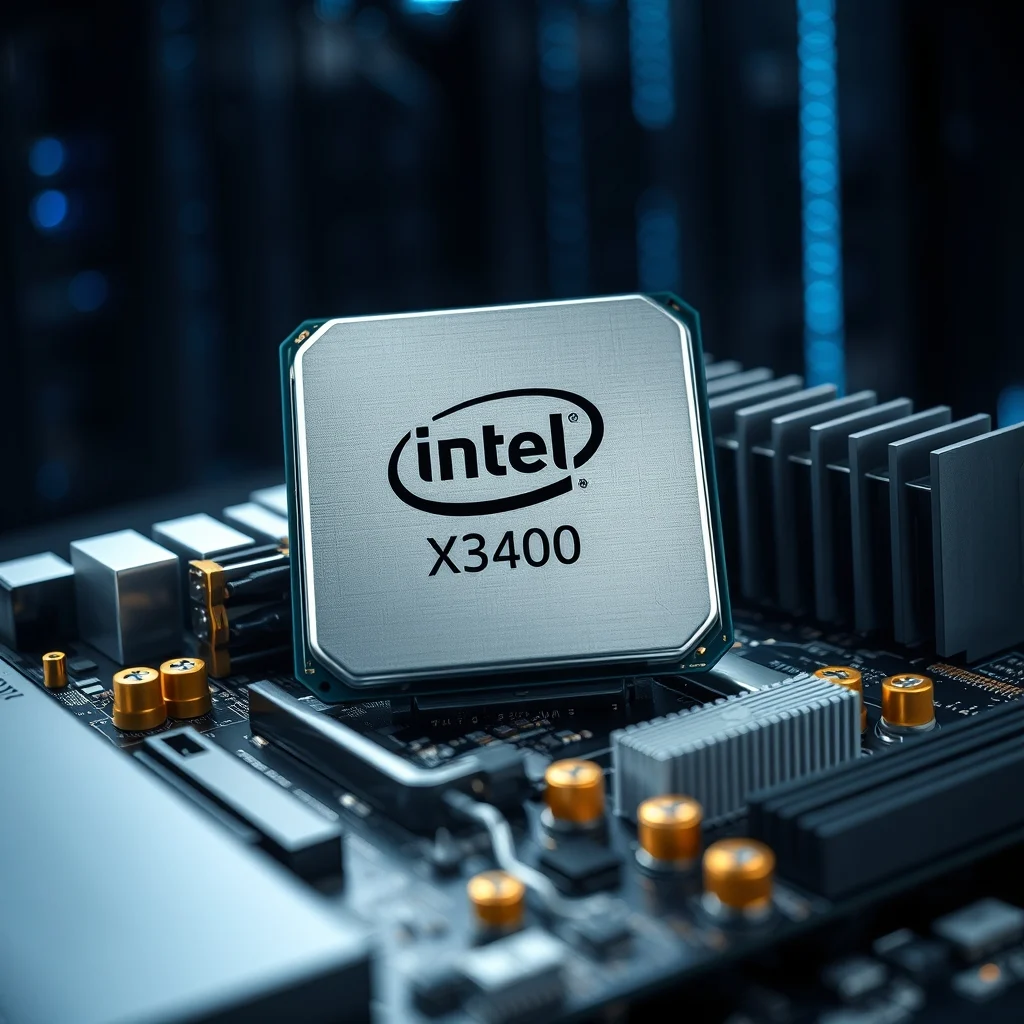
The Intel Xeon W-3400 series represents a significant leap forward in workstation processor technology, built upon the Intel Sapphire Rapids architecture. This architecture is designed to provide exceptional performance for professional applications while maintaining high levels of reliability and scalability. Unlike standard consumer-grade processors, the Xeon W-3400 series is engineered to handle sustained workloads without compromising stability.
These processors are part of Intel’s broader strategy to dominate the professional workstation market, competing directly with AMD’s Threadripper PRO lineup. The W-3400 series utilizes the LGA 4677 socket, which supports up to 8 channels of DDR5 memory, offering unprecedented memory bandwidth. This is crucial for applications that rely heavily on large datasets, such as scientific simulations and machine learning models.
Furthermore, the integration of advanced security features ensures that sensitive data remains protected during processing. The combination of raw speed, memory capacity, and security makes the Xeon W-3400 series a cornerstone for modern professional workstations.
🔍 Why Professionals Choose This Platform
When analyzing the market demand for high-performance workstations, several key factors drive the adoption of the Xeon W-3400 series. First and foremost is the need for multi-core performance. Professional software often scales well across multiple cores, allowing users to parallelize tasks and reduce render times significantly.
Secondly, the reliability of the platform is a critical consideration. Workstations running Xeon processors are designed for 24/7 operation, making them ideal for server-based rendering farms or continuous data processing tasks. The error-correcting code memory support further enhances this reliability by preventing data corruption.
Thirdly, the expandability of the platform allows users to add multiple GPUs and storage devices without bottlenecking the system. The extensive PCIe lane count ensures that all components can communicate at full speed, maximizing overall system throughput.
Finally, the support ecosystem for Intel is vast. Drivers and optimizations are regularly updated to ensure compatibility with the latest professional software suites, providing users with a seamless experience.
⚙️ Technical Architecture and Mechanisms
📊 What is the Sapphire Rapids Architecture?
The Xeon W-3400 series is built on the Intel Sapphire Rapids microarchitecture, which introduces several innovations over previous generations like Ice Lake. This architecture focuses on performance per watt, scalability, and security. It supports up to 60 cores in the highest-end models, providing a massive amount of parallel processing power.
Key innovations include the integration of Intel Advanced Matrix Extensions, which accelerate artificial intelligence workloads directly on the CPU. This reduces the reliance on external accelerators for certain tasks, leading to more efficient system designs.
The architecture also features a new memory controller that supports DDR5 memory speeds significantly higher than DDR4, improving data transfer rates between the processor and system memory. This is essential for keeping the cores fed with data during intensive computations.
🛠️ How the Processor Manages Workloads
Understanding how these processors manage complex workloads requires a look at their internal scheduling and resource allocation. The Xeon W-3400 series utilizes Intel’s Hyper-Threading Technology, which allows each physical core to handle two threads simultaneously.
This increases the total number of logical processors available to the operating system, ensuring that idle cycles are minimized. When a thread is waiting for data from memory, the other thread can use the core’s execution units, improving overall efficiency.
Additionally, the processor includes advanced power management features that dynamically adjust voltage and frequency based on the current workload. This ensures that energy is not wasted during idle periods while providing maximum performance when needed.
✨ Key Features and Advanced Capabilities
🎯 Core Performance Metrics
The Xeon W-3400 series offers a range of models, each tailored to specific performance needs. The base models provide a solid foundation for general workstation tasks, while the top-tier models offer maximum core counts for specialized applications.
Features such as Turbo Boost Technology 3.0 allow the processor to increase its clock speed beyond the base frequency when thermal and power constraints permit. This provides a significant performance boost for single-threaded tasks, which are still common in many professional applications.
Another key feature is the support for Intel Optane Memory, which can be used as a caching layer to speed up access to frequently used data on storage drives, reducing latency in data-intensive workflows.
Moreover, the integration of Intel Deep Learning Boost helps accelerate AI inference tasks, making the processor more versatile for modern workloads that incorporate machine learning.
- High Core Counts: Up to 60 cores for massive parallelism.
- DDR5 Support: High-speed memory for faster data access.
- PCIe 5.0: Future-proof connectivity for next-gen GPUs and storage.
- Safety Features: Intel Total Memory Encryption for data protection.
📊 Comparison of Performance Metrics
To truly understand the capabilities of the Xeon W-3400 series, it is helpful to look at a structured comparison of key performance metrics across different models in the lineup.
| Model | Cores | Threads | Base Frequency | Max Turbo Frequency |
|---|---|---|---|---|
| Xeon W-3375 | 28 | 56 | 2.9 GHz | 4.4 GHz |
| Xeon W-3373 | 32 | 64 | 2.9 GHz | 4.4 GHz |
| Xeon W-3355 | 40 | 80 | 2.7 GHz | 4.4 GHz |
| Xeon W-3365 | 48 | 96 | 2.6 GHz | 4.4 GHz |
The table above highlights the progression in core and thread counts across different models. As one moves up the lineup, the number of cores increases, which directly correlates to performance in multi-threaded applications. However, the base frequency decreases slightly to accommodate the higher transistor count and power efficiency requirements.
It is important to note that the Max Turbo Frequency remains consistent across these models at 4.4 GHz, indicating that Intel has optimized the architecture to maintain high peak performance regardless of core density. This consistency ensures that users can expect similar responsiveness for single-threaded tasks across the entire series.
🥇 Competitors and Market Positioning
The primary competitor to the Intel Xeon W-3400 series is AMD’s Threadripper PRO lineup. Both offer high core counts and extensive PCIe lane support, but they differ in their approach to architecture and ecosystem.
AMD’s processors often excel in raw multi-core performance per watt, while Intel focuses heavily on single-core speed and memory bandwidth. For applications that rely on single-threaded performance, such as certain engineering simulations or legacy software, Intel may hold an advantage.
Conversely, for workloads that are heavily dependent on memory bandwidth, the 8-channel DDR5 support in the W-3400 series provides a distinct edge over AMD’s quad-channel architecture.
Ultimately, the choice between the two depends on the specific software stack used by the professional. Many users find that Intel offers better compatibility with specialized professional applications, particularly in the video editing and CAD sectors.
✅ Advantages of the W-3400 Series
The Xeon W-3400 series offers several distinct advantages that make it a preferred choice for many professionals. One of the primary benefits is the extensive memory support. With up to 8 channels of DDR5, the system can handle massive datasets without running into memory bottlenecks.
Another advantage is the enhanced security features. Intel’s Total Memory Encryption protects data at rest, which is crucial for industries dealing with sensitive information, such as healthcare and finance.
The long-term support lifecycle is also a significant benefit. Intel guarantees driver and BIOS support for these processors for several years, ensuring that workstations remain stable and supported for the duration of their useful life.
- Robust Memory Bandwidth: 8 channels handle large datasets efficiently.
- Enterprise Security: Hardware-based encryption protects sensitive data.
- Extended Lifecycle: Long-term support ensures system stability.
- Wide Software Compatibility: Optimized for major professional suites.
❌ Disadvantages and Considerations
Despite its strengths, the Xeon W-3400 series is not without its drawbacks. The primary disadvantage is the cost. These processors and the required motherboards are significantly more expensive than consumer-grade alternatives.
Power consumption is another factor to consider. High-core-count models can draw substantial power, requiring robust cooling solutions and power supplies. This can increase the overall operational costs of the workstation.
Additionally, the platform requires specific motherboards, which limits the options for case compatibility and expansion. Users must carefully plan their build to ensure all components fit and function correctly.
- High Initial Cost: Processor and board prices are premium.
- Power Requirements: Needs strong cooling and PSU.
- Platform Specificity: Requires dedicated workstation motherboards.
💻 System Requirements and Specifications
Building a workstation around the Xeon W-3400 series requires careful attention to system requirements. The motherboard is the most critical component, as it must support the LGA 4677 socket and the specific chipset for the W-3400 series.
🖥️ Minimum Requirements
For a functional system, users need a motherboard with the C721 chipset or equivalent, at least 32GB of DDR5 RAM, and a power supply unit rated for at least 750 watts. The CPU cooler must be compatible with the LGA 4677 socket and capable of dissipating the heat generated by the processor.
⚡ Recommended Specifications
For optimal performance, a motherboard with VRM cooling is recommended to ensure stability under load. 64GB or more of DDR5 RAM is advised to fully utilize the memory bandwidth. A power supply of 1000 watts or higher provides a safety margin for peak power draws.
| Component | Minimum | Recommended | Performance Impact |
|---|---|---|---|
| CPU | Xeon W-3355 | Xeon W-3375 | Higher cores improve rendering speed. |
| RAM | 32GB DDR5 | 128GB DDR5 | More RAM prevents bottlenecks in large projects. |
| Storage | 1TB NVMe | 4TB NVMe RAID | Fast storage reduces load times significantly. |
| PSU | 750W | 1000W | Higher wattage ensures stability during peaks. |
Interpreting these requirements is vital for system builders. The recommended specifications ensure that the CPU is not bottlenecked by other components. For example, using low-speed RAM with a high-core-count CPU will negate the performance benefits of the processor.
🧩 Installation and Setup Process
Installing the Xeon W-3400 series requires a methodical approach to ensure that all components are seated correctly and the system is stable. The process begins with preparing the motherboard and CPU cooler.
- Prepare the Socket: Open the LGA 4677 socket lever and carefully remove the protective cover.
- Install the Processor: Align the notches on the CPU with the socket and gently place it in without applying excessive force.
- Secure the CPU: Close the socket lever to lock the processor in place.
- Apply Thermal Paste: If using a custom cooler, apply thermal paste to the center of the CPU heat spreader.
- Mount the Cooler: Attach the CPU cooler according to the manufacturer’s instructions and connect the fan header.
🛡️ Troubleshooting Common Issues
During installation, users may encounter several common issues. One frequent problem is the system failing to POST. This can often be resolved by reseating the RAM or checking the CPU power connectors.
Another issue is overheating, which may indicate improper cooler mounting or insufficient thermal paste. Ensuring that the cooler is evenly pressed against the CPU can resolve temperature spikes.
- Issue: No Display Output. Fix: Check RAM seating and video cable connections.
- Issue: High Temperatures. Fix: Reapply thermal paste and ensure fan operation.
- Issue: Boot Loop. Fix: Reset CMOS and update BIOS.
🎯 Real Performance Experience
In real-world scenarios, the Xeon W-3400 series delivers exceptional performance across various professional applications. In video editing software like Adobe Premiere Pro, users report significantly faster export times compared to previous generations.
For 3D rendering engines like Blender and V-Ray, the high core count allows for faster scene processing. This reduction in render time translates directly to increased productivity and faster project turnaround.
Data science applications that utilize linear algebra libraries also see improvements, thanks to the advanced matrix extensions built into the architecture. This makes the processor a valuable asset for researchers and analysts.
🌍 Global User Ratings and Feedback
User feedback from professionals indicates a high level of satisfaction with the platform. The primary reasons for positive ratings include the stability of the system and the ability to run multiple virtual machines simultaneously.
Negative feedback often centers around the high cost of entry and the power consumption. However, most users agree that the performance gains justify the investment for critical workflows.
- Average Rating: Highly rated for stability and speed.
- Positive Feedback: Improved render times and multi-tasking.
- Negative Feedback: High price and power usage.
- Trend Analysis: Demand is growing for workstation-grade hardware.
🔒 Security and Protection Features
Security is a paramount concern in professional environments, and the Xeon W-3400 series includes robust features to protect data. Intel Total Memory Encryption (TME) encrypts all data in memory, protecting against physical attacks.
Additionally, the processor supports Intel Software Guard Extensions (SGX), which allows applications to create protected regions of memory. This is useful for securing cryptographic keys and sensitive algorithms.
🛑 Potential Risks and Mitigation
While the hardware offers strong security, users must still be vigilant. Keeping the BIOS and drivers up to date is essential to patch any vulnerabilities that may be discovered.
- Risk: Physical tampering. Mitigation: Enable TME.
- Risk: Software vulnerabilities. Mitigation: Regular updates.
- Risk: Side-channel attacks. Mitigation: Use SGX for sensitive apps.
🎯 Best Settings for Performance
To maximize the performance of the Xeon W-3400 series, users should configure their BIOS settings carefully. Enabling XMP profiles for RAM ensures that memory runs at its rated speed.
Additionally, setting the power profile to “High Performance” prevents the CPU from throttling during sustained workloads. Disabling unnecessary background services can also free up resources for critical tasks.
- Memory: Enable XMP for DDR5 speeds.
- Power: Set to High Performance mode.
- Cooling: Ensure fans are set to aggressive curves.
📌 Advanced Optimization Tricks
Advanced users can further optimize the system by adjusting the voltage and frequency ratios manually. This requires careful monitoring to avoid instability but can squeeze out additional performance.
Using specialized monitoring software can help track temperatures and power usage in real-time, allowing for fine-tuning of the cooling solution.
🏁 Final Verdict and Recommendation
The Intel Xeon W-3400 series represents a pinnacle of workstation computing technology, offering unparalleled performance for demanding professional tasks. While the cost is high, the value provided in terms of speed, reliability, and security is significant for businesses and professionals.
For users who require a stable platform for critical workloads, this processor is an excellent choice. It is particularly well-suited for video editors, 3D artists, and data scientists who need consistent performance over long periods.
❓ Frequently Asked Questions
- Is the Xeon W-3400 series compatible with consumer motherboards? No, it requires specific workstation motherboards with the C721 chipset.
- Does it support Windows 11? Yes, it is fully compatible with Windows 11 Professional and Enterprise editions.
- How does it compare to consumer Core i9 processors? It offers more cores, more PCIe lanes, and ECC memory support.
- What is the maximum RAM capacity? It supports up to 4TB of DDR5 memory across 8 channels.
- Is it suitable for gaming? It can run games, but consumer CPUs offer better price-to-performance for gaming.
- Does it support error-correcting memory? Yes, it fully supports ECC DDR5 memory.
- What is the TDP range? The TDP ranges from 250 watts to 350 watts depending on the model.
- Can I use a standard CPU cooler? No, you must use a cooler compatible with the LGA 4677 socket.
- Is it good for AI training? Yes, the integrated AI accelerators assist in training workloads.
- How long is the support lifecycle? Intel provides long-term support for several years.