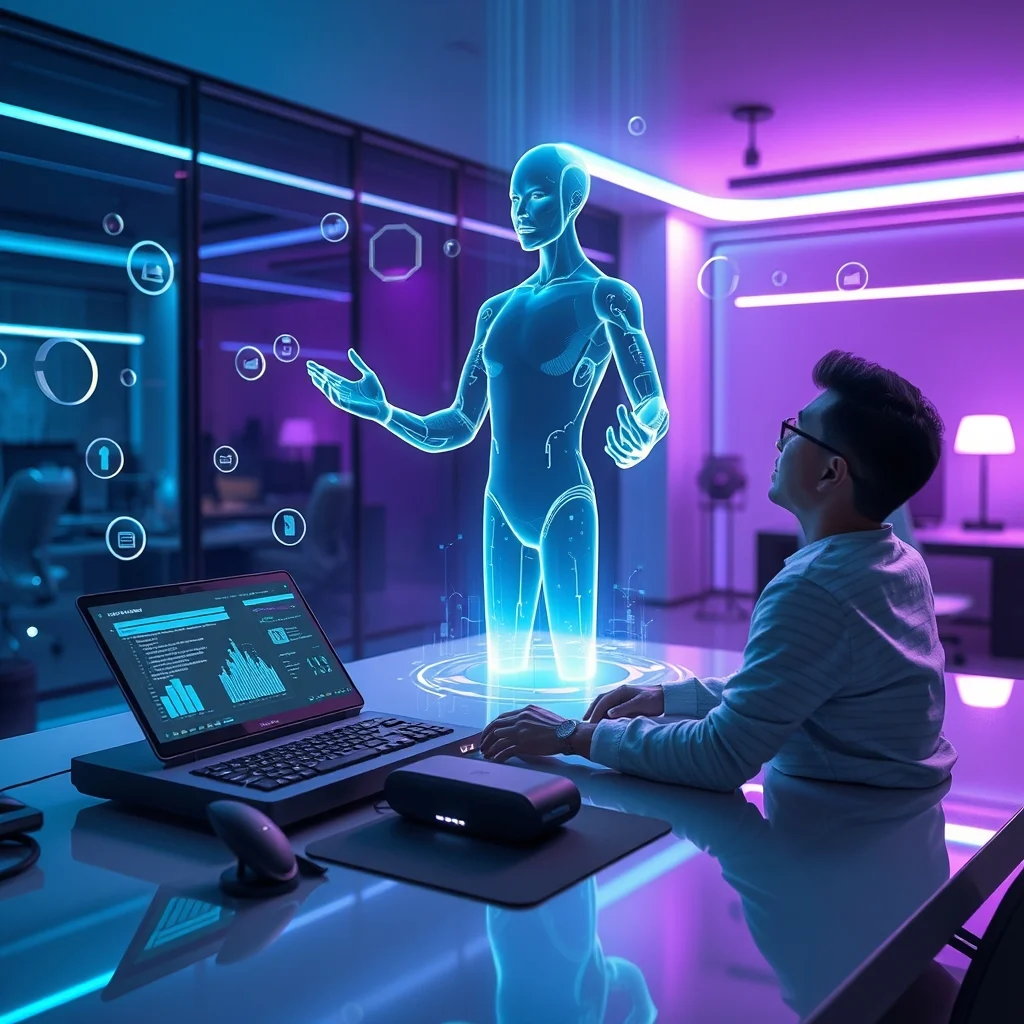

The evolution of artificial intelligence has fundamentally transformed how we interact with technology, particularly in the realm of personal digital assistants. While platforms like Siri and Alexa have dominated the market for over a decade, a new wave of AI-powered assistants is emerging, promising to redefine the boundaries of human-computer interaction. These next-generation assistants are not merely voice-activated tools; they are sophisticated systems capable of understanding context, processing multimodal inputs, and delivering hyper-personalized experiences. This article explores the cutting-edge advancements in AI-powered personal assistants, examining the technologies that power them, their real-world applications, and the implications they hold for privacy, security, and the future of digital assistance.
📰 Why the Next Generation of AI Assistants Matters
The first generation of AI assistants, exemplified by Siri and Alexa, revolutionized how users interact with their devices. However, their capabilities were often limited to basic task automation, such as setting reminders, playing music, or providing weather updates. While these features were groundbreaking at the time, the limitations of early natural language processing (NLP) systems became apparent. Users frequently encountered frustration when assistants failed to understand context, misinterpreted commands, or provided generic responses devoid of personalization.
The next wave of AI assistants addresses these shortcomings by leveraging advancements in machine learning, deep neural networks, and multimodal interaction. These systems are designed to go beyond simple voice commands, offering dynamic, context-aware interactions that adapt to user behavior and preferences. For instance, an AI assistant might not only schedule a meeting but also analyze your schedule, suggest optimal times based on your productivity patterns, and even draft an email summarizing the meeting’s key points. This shift from reactive to proactive assistance represents a paradigm shift in how we perceive and utilize digital tools.
The implications of these advancements extend far beyond convenience. AI-powered assistants are becoming integral to sectors such as healthcare, education, and business, where they assist professionals in managing complex workflows, analyzing data, and making informed decisions. In healthcare, for example, an AI assistant can transcribe doctor-patient conversations, extract critical information, and even flag potential inconsistencies in medical records. In the corporate world, assistants are being integrated into customer service platforms to handle inquiries, resolve issues, and escalate complex problems to human agents. These use cases highlight the transformative potential of AI assistants as tools that enhance productivity, accuracy, and efficiency across industries.
📊 The Core Technologies Driving the Revolution
The leap from basic voice assistants to advanced AI systems is powered by three foundational technologies: natural language processing (NLP), context awareness, and multimodal interaction. Each of these components plays a crucial role in enabling assistants to deliver seamless, intuitive experiences.
💡 Key Insight: The integration of these technologies allows AI assistants to move beyond scripted responses and engage in meaningful, human-like conversations. This evolution is driven by advancements in transformer-based models, which have significantly improved the ability of machines to understand and generate human language.
Natural Language Processing (NLP): NLP is the backbone of AI assistants, enabling them to interpret, analyze, and generate human language. Modern NLP systems, such as those based on transformer architectures like Google’s BERT or OpenAI’s GPT models, can parse complex sentences, understand nuances, and even detect emotional tone. This capability is essential for tasks like sentiment analysis, where an assistant might gauge a user’s frustration during a customer service interaction and adjust its approach accordingly.
Context Awareness: Traditional assistants often struggle with context, leading to misinterpretations or irrelevant responses. For example, a user might ask, “What’s the weather like today?” followed by “Should I wear a jacket?