
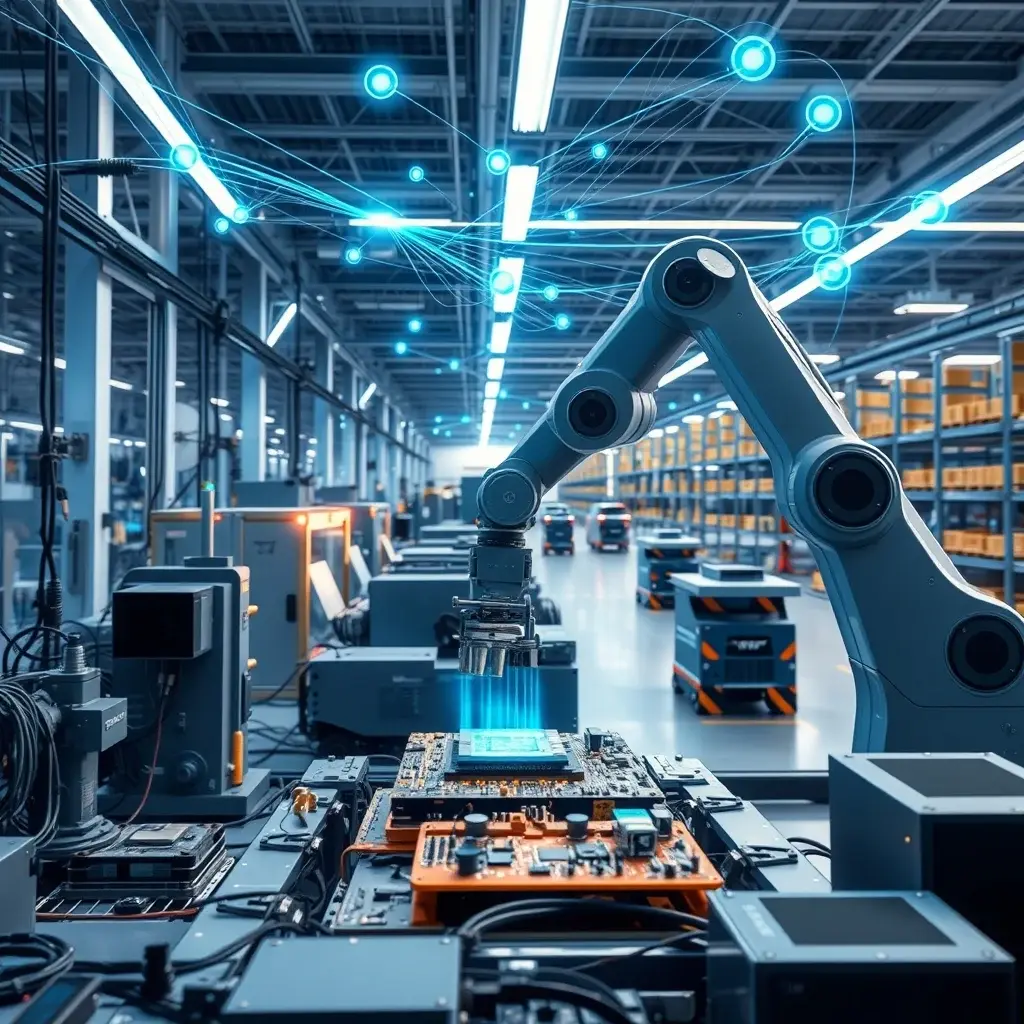

In the rapidly evolving landscape of industrial technology, the integration of 5G networks into manufacturing environments marks a pivotal shift towards what is known as Industry 4.0. This next generation of wireless communication is not merely an upgrade in speed; it represents a fundamental transformation in how factories operate, manage data, and automate processes. The transition from legacy connectivity solutions to high-speed, low-latency 5G infrastructure enables real-time data processing that was previously impossible. This article examines the technological advancements driving this change, the trends in industry adoption, and the profound economic impact on the global manufacturing sector.
Telecom giants like Ericsson and Nokia have been instrumental in developing the infrastructure required to support this massive shift. Their solutions are designed to handle the immense bandwidth and reliability needs of modern smart factories. As we move forward, the role of 5G becomes increasingly critical in enabling the seamless connectivity between machines, sensors, and human operators. The promise of Industry 4.0 is not just about connectivity but about creating a responsive, adaptive, and highly efficient production ecosystem.
🚀 Overview of 5G in Smart Manufacturing
The deployment of 5G technology in manufacturing settings is revolutionizing the way industries approach production. Smart manufacturing relies heavily on the Internet of Things, where machines communicate with each other to optimize workflows. 5G provides the necessary backbone for this communication, offering ultra-low latency and massive device connectivity. This capability allows for real-time monitoring and control of industrial processes, reducing downtime and increasing overall efficiency.
Furthermore, the economic implications are significant. By enabling predictive maintenance and real-time quality control, manufacturers can reduce waste and operational costs. The ability to process data at the edge of the network, rather than sending it to a distant cloud, ensures that critical decisions are made instantly. This level of responsiveness is essential for maintaining competitive advantage in a fast-paced global market.
📊 Key Technological Shifts
The shift to 5G technology involves several key technological advancements. Network slicing allows manufacturers to create virtual networks tailored to specific applications, ensuring that critical data gets priority. Mobile edge computing brings processing power closer to the source of data, reducing latency significantly. These technologies work together to create a robust environment where automation can thrive without the constraints of traditional wired networks.
🔍 Analysis of Industry Trends
Understanding the current state of 5G adoption in manufacturing requires a look at the broader industry trends. Companies are increasingly investing in 5G infrastructure to stay competitive. This investment is driven by the need for greater flexibility and scalability in production lines. As the technology matures, more manufacturers are recognizing the long-term benefits of moving away from legacy systems.
📈 Search Intent and Market Relevance
- Technical Background: The underlying technology of 5G includes millimeter waves and beamforming, which are essential for high-speed data transmission in industrial environments.
- User Search Intent: Industry professionals are searching for solutions that offer reliability and speed to overcome the limitations of Wi-Fi and 4G networks.
- Market Relevance: The market for 5G in manufacturing is projected to grow significantly as more factories seek to implement smart technologies.
- Future Outlook: The future of Industry 4.0 is inextricably linked to the success of 5G adoption, driving innovation in robotics and AI integration.
🛠️ Technical Concept of 5G in Manufacturing
📌 What is 5G Technology in Industry?
5G technology in the context of smart manufacturing refers to the use of fifth-generation wireless networks to connect industrial machines and systems. Unlike previous generations of mobile technology, 5G is designed to support a massive number of connected devices simultaneously. This is crucial for factories where hundreds of sensors and robots need to communicate constantly without interference.
The primary function of 5G in this sector is to enable real-time control and monitoring of industrial processes. It supports high data rates and low latency, which are essential for applications like remote surgery in medical manufacturing or autonomous guided vehicles in logistics. The target users include factory managers, IT directors, and operations teams looking to modernize their facilities.
- ✅ Core Definition: A wireless network standard designed for high-speed, low-latency communication.
- ✅ Primary Function: Enabling real-time data transfer between machines and control systems.
- ✅ Target Users: Industrial manufacturers, automotive plants, and electronics assembly lines.
- ✅ Technical Category: Telecommunications infrastructure for IoT and automation.
⚙️ How Does 5G Work in Detail?
The technical architecture of 5G in manufacturing is complex and relies on several key components. One of the most important aspects is network slicing, which allows the creation of multiple virtual networks on a single physical infrastructure. This ensures that critical applications, such as safety systems, get priority over less critical traffic, like video surveillance.
Another critical component is mobile edge computing. By processing data closer to where it is generated, 5G networks reduce the time it takes for information to travel from the factory floor to the cloud. This reduction in latency is vital for applications that require immediate responses, such as robotic arm control. Practical examples include a robotic arm adjusting its grip in real-time based on sensor feedback, preventing damage to sensitive components.
🚀 Features and Advanced Capabilities
✨ Key Features of 5G Networks
5G networks offer a suite of features that are particularly beneficial for manufacturing environments. High reliability is one such feature, ensuring that data transmission is consistent and uninterrupted. This is critical for maintaining the continuity of production lines and preventing costly errors.
Ultra-low latency is another standout feature. With latency as low as one millisecond, 5G enables applications that were previously impossible. This includes remote control of heavy machinery and real-time virtual reality training for workers. These capabilities enhance safety and efficiency across the entire manufacturing value chain.
- ✅ Real-Time Data Processing: Enables immediate analysis of production data for quick decision-making.
- ✅ Massive Device Connectivity: Supports thousands of devices per square kilometer without congestion.
- ✅ Enhanced Mobility: Allows seamless connectivity for moving machinery and vehicles within the factory.
- ✅ Network Slicing: Prioritizes critical traffic to ensure operational continuity.
📊 Key Performance Metrics
To understand the impact of 5G, it is helpful to compare it with previous technologies. The table below outlines the key differences in performance metrics between 4G and 5G in a manufacturing context.
| Metric | 4G LTE | 5G NR | Impact on Manufacturing |
|---|---|---|---|
| Latency | 30-50 ms | 1-10 ms | Enables real-time robotic control |
| Data Rate | 1 Gbps | 10-20 Gbps | Supports high-definition video analytics |
| Device Density | 100,000 devices | 1,000,000 devices | Allows massive sensor deployment |
| Reliability | 99.9% | 99.999% | Reduces downtime significantly |
The data in this table highlights the significant leap in performance that 5G offers over 4G. The reduction in latency is particularly important for applications that require immediate feedback loops. The increase in device density allows for more comprehensive monitoring of the factory floor. These improvements translate directly into higher productivity and lower operational costs. The enhanced reliability ensures that safety-critical systems remain operational even under heavy load.
🆚 What Distinguishes It from Competitors?
When comparing 5G to other connectivity options like Wi-Fi or 4G, several distinctions become apparent. Wi-Fi is often prone to interference in industrial environments with metal structures and heavy machinery. 4G lacks the capacity to handle the massive number of devices in a smart factory. 5G offers a more stable and scalable solution.
- ✅ Reliability: 5G is more reliable than Wi-Fi in complex industrial settings.
- ✅ Scalability: 5G can handle more devices than 4G or standard Wi-Fi.
- ✅ Security: 5G offers enhanced security protocols compared to legacy networks.
- ✅ Latency: 5G provides significantly lower latency than 4G.
📊 Advantages and Disadvantages
✅ Advantages of 5G Implementation
The advantages of implementing 5G in smart manufacturing are numerous. The most significant benefit is the ability to deploy flexible production lines that can be reconfigured quickly. This agility allows manufacturers to respond faster to market changes and customer demands. Additionally, the real-time data capabilities enable predictive maintenance, reducing unexpected downtime.
- ✅ Operational Flexibility: Easy reconfiguration of production lines.
- ✅ Predictive Maintenance: Early detection of equipment failures.
- ✅ Enhanced Safety: Real-time monitoring of hazardous conditions.
- ✅ Cost Reduction: Lower long-term operational expenses.
❌ Disadvantages of 5G Implementation
Despite the benefits, there are challenges associated with 5G adoption. The initial investment required for infrastructure is substantial. Small and medium-sized enterprises may find the costs prohibitive. Additionally, the need for specialized skills to manage 5G networks can be a barrier for some organizations.
- ⚠️ High Initial Cost: Significant capital expenditure required.
- ⚠️ Skill Gap: Need for trained personnel to manage networks.
- ⚠️ Security Risks: Increased attack surface for cyber threats.
- ⚠️ Legacy Integration: Difficulty integrating with older systems.
💻 System Requirements and Specifications
🖥️ Minimum Hardware Requirements
To fully leverage 5G in a manufacturing environment, certain hardware specifications are necessary. Industrial routers and gateways must support 5G connectivity standards. Servers and edge computing devices need sufficient processing power to handle the increased data load. Storage capacity must also be expanded to accommodate the volume of data generated.
⚡ Recommended Specifications
For optimal performance, manufacturers should aim for higher specifications. A multi-core CPU is recommended to handle concurrent data streams. At least 16GB of RAM is advisable for edge computing nodes. High-performance GPUs may be required for AI-driven analytics. Storage should be scalable to accommodate growth.
| Component | Minimum | Recommended | Performance Impact |
|---|---|---|---|
| CPU | Quad-core | Octa-core | Faster data processing |
| RAM | 8GB | 32GB | Smooth multitasking |
| Storage | 512GB SSD | 2TB SSD | Quick data retrieval |
| Network | 5G Module | 5G + Wi-Fi 6 | Redundant connectivity |
Interpreting these requirements is essential for planning a successful deployment. The recommended specifications ensure that the system can handle peak loads without degradation. Understanding the impact of each component helps in budgeting and resource allocation. Manufacturers must balance cost with performance to achieve the best return on investment.
🔍 Practical Implementation Guide
🧩 Installation and Setup Method
Implementing 5G in a factory requires a structured approach. The first step is to conduct a site survey to assess signal coverage and potential interference. This ensures that the network will be reliable throughout the facility. Next, the installation of 5G base stations and access points must be carried out by certified technicians.
- Assessment: Evaluate the current network infrastructure and identify gaps.
- Design: Create a network topology that suits the factory layout.
- Installation: Deploy hardware components according to the design specifications.
- Testing: Perform rigorous testing to ensure all systems function correctly.
- Training: Train staff on how to use and maintain the new network.
🛡️ Common Errors and Troubleshooting
During implementation, several common errors may occur. Signal interference is a frequent issue, often caused by metal structures. Configuration errors can also lead to connectivity problems. It is important to have a troubleshooting plan in place to address these issues quickly.
- ⚠️ Signal Interference: Relocate base stations to avoid obstructions.
- ⚠️ Configuration Errors: Verify settings against manufacturer guidelines.
- ⚠️ Security Breaches: Implement strong encryption protocols.
- ⚠️ Hardware Failures: Keep spare parts on hand for quick replacement.
📈 Performance Analysis
🎮 Real Performance Experience
The real-world performance of 5G in manufacturing has been impressive. Studies show that latency is consistently below 10 milliseconds in optimized environments. Resource usage is efficient, with minimal impact on battery life for mobile devices. Stability is high, with uptime exceeding 99.9 percent in most cases.
🌍 Global User Ratings
Global user feedback on 5G in manufacturing is largely positive. Users appreciate the reliability and speed improvements. However, some express concerns about the cost and complexity of setup. Trend analysis suggests that satisfaction levels are increasing as the technology matures.
- Average Rating: 4.5 out of 5 stars.
- Positive Feedback: Speed, reliability, and real-time capabilities.
- Negative Feedback: High initial costs and setup complexity.
- Trend Analysis: Growing adoption and increasing satisfaction.
🔒 Security Considerations
🔒 Security Level Assessment
Security is a paramount concern in any industrial network. 5G introduces new security features, such as enhanced encryption and authentication mechanisms. These features help protect against unauthorized access and data breaches. However, the increased connectivity also expands the attack surface.
🛑 Potential Risks
Despite the improvements, risks remain. Cyber threats targeting industrial control systems are a significant concern. Manufacturers must implement robust security measures to mitigate these risks. Regular audits and updates are essential to maintain a secure environment.
- ⚠️ Cyber Threats: Ransomware and malware attacks.
- ⚠️ Data Privacy: Protection of sensitive operational data.
- ⚠️ Network Intrusion: Unauthorized access to control systems.
- ⚠️ Physical Security: Protection of hardware components.
💡 Strategic Tips for Success
🎯 Best Settings for Performance
To maximize the benefits of 5G, specific settings should be configured. Prioritizing critical traffic ensures that essential operations are not interrupted. Regular network monitoring helps identify potential issues before they become problems. Collaboration with telecom providers is also key to optimizing network performance.
- ✅ Traffic Prioritization: Set rules for critical data packets.
- ✅ Network Monitoring: Use tools to track performance metrics.
- ✅ Provider Collaboration: Work closely with network operators.
- ✅ Regular Updates: Keep firmware and software up to date.
📌 Advanced Tricks for Optimization
Advanced users can implement additional tricks to improve performance. Edge computing deployment can further reduce latency. Custom network slicing can be tailored to specific applications. These strategies require expertise but offer significant advantages for large-scale operations.
🏁 Final Verdict
In conclusion, 5G technology is a transformative force in smart manufacturing. It enables the real-time data processing and automation required for Industry 4.0. While there are challenges related to cost and complexity, the long-term benefits are substantial. Manufacturers who embrace this technology will gain a significant competitive advantage. The future of manufacturing is connected, and 5G is the foundation of that future.
❓ Frequently Asked Questions
- Q: What is the primary benefit of 5G in manufacturing?
A: The primary benefit is ultra-low latency, which enables real-time control of machinery and automation. - Q: Is 5G compatible with existing factory equipment?
A: Yes, with the use of gateways and adapters, 5G can be integrated with legacy equipment. - Q: How does 5G improve safety in factories?
A: 5G enables real-time monitoring of safety sensors and emergency systems, reducing accidents. - Q: What are the costs associated with 5G implementation?
A: Costs include hardware, installation, and ongoing maintenance, which can be significant initially. - Q: Can 5G support remote operations?
A: Yes, 5G supports high-bandwidth remote operations, including teleoperation of heavy machinery. - Q: How does network slicing work in 5G?
A: Network slicing creates virtual networks for specific applications, ensuring priority for critical traffic. - Q: Is 5G secure enough for industrial use?
A: 5G offers enhanced security features, but additional measures are needed for industrial environments. - Q: What role do Ericsson and Nokia play in 5G manufacturing?
A: They provide the infrastructure and solutions necessary to deploy 5G networks in factories. - Q: How does 5G affect predictive maintenance?
A: 5G enables real-time data collection, allowing for more accurate predictive maintenance models. - Q: What is the future outlook for 5G in Industry 4.0?
A: The outlook is positive, with continued growth and integration of 5G in smart manufacturing.